To establish a universal personal savings program, and for other purposes.
Analysis under review: This bill has generated analysis that may be too generic or incomplete. Clause-level evidence remains available below.
Summary
What This Bill Does
The "Saving for the Future Act" creates a new national retirement savings system requiring most employers to contribute to retirement accounts for their workers. It establishes portable "UP Accounts" (Universal Personal accounts) managed by a new federal board, similar to how the Thrift Savings Plan works for federal employees. The bill aims to address the retirement savings crisis where nearly half of older Americans have no retirement savings.
Who Benefits and How
- Workers without current retirement access: The 30% of private-sector workers who lack any workplace retirement plan would gain mandatory employer contributions of at least $0.50-$0.60 per hour worked
- Low and moderate income savers: Individuals can receive a 50% tax credit on their own retirement contributions
- Small employers: Receive tax credits covering 25-50% of their required contributions, plus an increased startup credit of up to $2,000
- Investment management firms: Will receive contracts to administer UP Account assets (with a $500 billion cap per firm)
Who Bears the Burden and How
- Employers with 10+ employees: Must make mandatory hourly contributions to employee retirement accounts, increasing labor costs
- High-income individuals: Face increased top tax rate from 37% to 39.6%
- All C corporations: Face increased corporate tax rate from 21% to 23%
- Federal government/taxpayers: New agency costs and tax credit revenue losses
Key Provisions
- Requires employers with 10+ full-time equivalent employees to contribute $0.50-$0.60/hour to worker retirement accounts
- Creates portable UP Retirement Accounts with 4% auto-enrollment and automatic escalation to 10%
- Establishes UP Savings Accounts ($2,500 max) for penalty-free emergency withdrawals
- Provides 50% individual tax credit for retirement contributions by those without employer plans
- Raises top individual income tax rate from 37% to 39.6% and corporate rate from 21% to 23% to offset costs
Evidence Chain:
This summary is generated from the full bill text using AI analysis. Expand "Detailed Analysis" below for identified beneficiaries/burden bearers.
At a Glance
What This Bill Does
Establishes a universal personal savings program requiring employers to contribute to retirement accounts and creates a new federal infrastructure for portable retirement savings accounts (UP Accounts)
Who Benefits
- Workers without access to employer retirement plans
- Part-time workers
- Low and moderate income individuals (tax credits)
Who Bears Costs
- Employers with 10+ FTE employees (mandatory contributions)
- Federal government/taxpayers (new agency costs, tax credits)
- Existing 401(k) and IRA providers (potential competition from UP Accounts)
Key Policy Areas
Retirement Security, Employee Benefits, Taxation, Financial Services
Primary Purpose
Establishes a universal personal savings program requiring employers to contribute to retirement accounts and creates a new federal infrastructure for portable retirement savings accounts (UP Accounts)
Policy Domains
Legislative Strategy
"Expand retirement coverage by mandating employer contributions and creating a federally-administered portable savings system with tax incentives"
Identified Gains
- Workers without access to employer retirement plans
- Part-time workers
- Low and moderate income individuals (tax credits)
- Small employers (tax credits for contribution costs)
- Private investment management firms (contracts to administer UP Accounts)
Identified Costs
- Employers with 10+ FTE employees (mandatory contributions)
- Federal government/taxpayers (new agency costs, tax credits)
- Existing 401(k) and IRA providers (potential competition from UP Accounts)
Sponsors
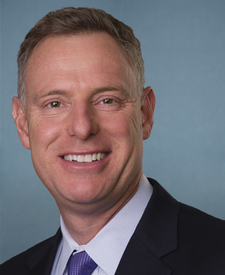
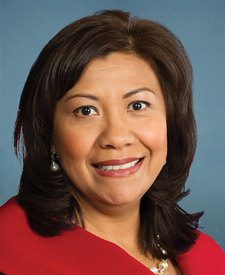
Legislative Progress
IntroducedMr. Peters (for himself and Mrs. Torres of California) introduced …
Stakeholder Effects
cui bono?How this legislation distributes effects. Mention counts reflect frequency, not effect magnitude.
Individuals without employer retirement plans, Low and moderate income workers needing emergency savings, UP Account participants
Federal government revenue
Federal government revenue faces effects in multiple directions
Small employers making qualified retirement contributions, Small employers starting new pension plans, Small employers with 30 or fewer employees making required contributions
Employers with 10 or more FTE employees, Employers with 10+ FTE employees not offering defined benefit plans, Employers with 10+ full-time equivalent employees
Financial professionals with pension/investment expertise, Private investment firms administering UP Accounts, Private investment management firms
High-income individuals in the top tax bracket, Unemployed individuals making retirement contributions
Positive-direction: Unemployed individuals making retirement contributions
Negative-direction: High-income individuals in the top tax bracket
Tax-exempt organizations making retirement contributions
Bill Structure & Actor Mappings
Who is "The Secretary" in each section?
- "the_board"
- → Federal Universal Personal Savings Investment Board
- "the_secretary"
- → Secretary of Labor
- "the_executive_director"
- → Executive Director of the UP Account Board
- "the_secretary"
- → Secretary of the Treasury
Note: 'The Secretary' refers to Secretary of Labor in ERISA Part 8 provisions but Secretary of the Treasury in tax credit provisions
Key Definitions
Terms defined in this bill
An employer with at least 10 full-time equivalent employees that has employed at least 10 FTE employees for not less than 2 years
40 hours per week with respect to employment
The sum of employees working full time plus the full-time equivalent of part-time employees
Safe, short-to-medium-term savings vehicles with a maximum balance amount, designed for emergency/hardship withdrawals
Portable, defined contribution pension plans established by the Federal UP Investment Board
We use a combination of our own taxonomy and classification in addition to large language models to assess meaning and potential beneficiaries. High confidence means strong textual evidence. Always verify with the original bill text.
Learn more about our methodology