Clean Water Affordability Act
Summary
What This Bill Does
The Clean Water Affordability Act changes how States can use Clean Water State Revolving Fund capitalization grants for additional subsidization. It clarifies that assistance can help ratepayers maintain access to wastewater, including stormwater, treatment services. It raises the annual cap on additional subsidization to the greater of 50 percent of the State's federal capitalization grant or the State's 10-year average of deposits from State money above required matching deposits. When enough qualifying applications exist, the State must use at least 20 percent of the capitalization grant for additional subsidization. The bill also says a loan with an interest rate equal to or greater than zero percent does not count as additional subsidization, so States need to provide actual principal forgiveness, negative-interest support, grants, or comparable subsidy rather than treating ordinary zero-interest loans as the required affordability aid.
Who Benefits and How
Low-income wastewater ratepayers benefit because States can use more subsidy to maintain access to wastewater and stormwater treatment services. Municipal wastewater utilities benefit when affordability subsidies help customers pay for required treatment investments. State water pollution control revolving fund programs benefit from clearer maximum and minimum subsidy rules. Communities with qualifying affordability applications benefit from the 20 percent minimum subsidization requirement.
Who Bears the Burden and How
State revolving fund administrators must calculate the greater-of cap and satisfy the 20 percent minimum when qualifying applications exist. States relying on zero-interest loans must change accounting because those loans no longer count as additional subsidization. EPA clean water financing staff must oversee compliance with the revised subsidy limits. Federal taxpayers and State matching funds bear the cost of larger affordability subsidies.
Key Provisions
- Expands additional subsidization uses to help ratepayers maintain wastewater and stormwater treatment access.
- Raises the annual additional-subsidization cap to the greater of 50 percent of capitalization grants or a 10-year State deposit average.
- Requires at least 20 percent additional subsidization when sufficient qualifying applications exist.
- Provides that loans with interest rates of zero percent or higher do not count as additional subsidization.
Evidence Chain:
This summary is generated from the full bill text using AI analysis. Expand "Detailed Analysis" below for identified beneficiaries/burden bearers with clause-level evidence links.
At a Glance
What This Bill Does
Expands Clean Water State Revolving Fund additional subsidization authority by increasing the maximum subsidy amount, creating a 20 percent minimum when qualifying applications exist, and clarifying that zero-or-positive-interest loans do not count as additional subsidization.
Key Policy Areas
Water Infrastructure, State Revolving Funds, Affordability
Primary Purpose
Expands Clean Water State Revolving Fund additional subsidization authority by increasing the maximum subsidy amount, creating a 20 percent minimum when qualifying applications exist, and clarifying that zero-or-positive-interest loans do not count as additional subsidization.
Policy Domains
Substantive provisions
Identified Gains
- Low-income wastewater ratepayers
- Municipal wastewater utilities
- State revolving fund programs
- Communities with affordability applications
Identified Costs
- State revolving fund administrators
- States using zero-interest loans
- EPA clean water financing staff
- Federal taxpayers
Sponsors

Legislative Progress
In CommitteeReferred to the Subcommittee on Water Resources and Environment.
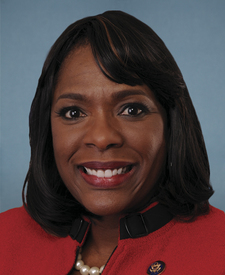
Ms. Wilson of Florida (for herself and Ms. Sewell) introduced …
Referred to the House Committee on Transportation and Infrastructure.
Introduced in House
Stakeholder Effects
cui bono?How this legislation distributes effects. Mention counts reflect frequency, not effect magnitude.
Low-income wastewater ratepayers and projects receiving additional subsidization
Bill Structure & Actor Mappings
Who is "The Secretary" in each section?
We use a combination of our own taxonomy and classification in addition to large language models to assess meaning and potential beneficiaries. High confidence means strong textual evidence. Always verify with the original bill text.
Learn more about our methodology