Restoring America’s Leadership in Innovation Act of 2025
Summary
What This Bill Does
The Restoring America's Leadership in Innovation Act is a broad pro-patent-owner rewrite of U.S. patent law. It repeals America Invents Act inter partes review and post-grant review, repeals Patent Trial and Appeal Board provisions, and recreates a Board of Patent Appeals and Interferences that can review examiner decisions and interferences but generally cannot invalidate issued patents except through ex parte reexamination. It creates a USPTO Innovation Promotion Fund so patent and trademark fees remain available to the Director until expended for Office operations. It rewrites patent eligibility to protect processes, machines, manufactures, compositions of matter, and improvements unless the claimed invention exists in nature independently of human activity or solely in the human mind, expressly abrogating Alice, Bilski, Myriad, Mayo, and related subject-matter cases. It restores older novelty and prior-art rules, reinforces patents as private property rights revocable only by a court unless the owner consents to administrative review, strengthens transferability and license restrictions with notice, preserves a clear-and-convincing invalidity burden, tolls patent term during validity challenges, allows bad-faith validity challenge damages, creates a presumption of irreparable harm after infringement, and restores best-mode consequences removed by the AIA.
Who Benefits and How
Patent owners benefit because issued patents become harder to invalidate administratively and easier to enforce in court. Independent inventors benefit from stronger private-property framing, patent-term tolling during validity challenges, and a presumption of irreparable harm after infringement. Life sciences and software innovators benefit because the bill broadens patent eligibility beyond the Supreme Court's recent subject-matter limits. USPTO operations benefit because collected patent and trademark fees would remain available in a revolving fund until expended. Exclusive licensees benefit because they are treated as patent owners for injunction purposes.
Who Bears the Burden and How
Patent challengers bear higher litigation burdens because inter partes review and post-grant review disappear and invalidity must be proved by clear and convincing evidence. Accused infringers face greater injunction risk because infringement triggers a rebuttable presumption of irreparable harm. PTAB administrative patent judges lose the AIA tribunal structure and move back toward appeals and interferences. Generic drug manufacturers, software defendants, and other repeat patent challengers lose fast administrative paths to invalidate patents. Federal courts shoulder more patent-validity disputes because revocation generally must happen in judicial proceedings.
Key Provisions
- Repeals AIA inter partes review, post-grant review, and chapters 31 and 32 of title 35.
- Repeals PTAB provisions and restores a Board of Patent Appeals and Interferences with limited power over issued patents.
- Creates the USPTO Innovation Promotion Fund so patent and trademark fees remain available until expended.
- Expands patent-eligible subject matter and abrogates Alice, Bilski, Myriad, Mayo, and related decisions.
- Restores older novelty and prior-art rules under section 102.
- Establishes patents as private property rights revocable only by courts unless the patent owner consents to another procedure.
- Strengthens validity presumptions, clear-and-convincing burdens, term tolling, bad-faith challenge damages, injunction presumptions, and best-mode enforcement.
Evidence Chain:
This summary is generated from the full bill text using AI analysis. Expand "Detailed Analysis" below for identified beneficiaries/burden bearers with clause-level evidence links.
At a Glance
What This Bill Does
Rolls back major America Invents Act patent-review changes, abolishes inter partes and post-grant review and the Patent Trial and Appeal Board, restores a Board of Patent Appeals and Interferences, funds USPTO through a revolving fee fund, expands patent-eligible subject matter, restores first-to-invent prior-art rules, treats patents as private property revocable only by courts absent owner consent, strengthens validity presumptions and injunctions, and restores the best-mode requirement.
Key Policy Areas
Intellectual Property, Courts, Innovation
Primary Purpose
Rolls back major America Invents Act patent-review changes, abolishes inter partes and post-grant review and the Patent Trial and Appeal Board, restores a Board of Patent Appeals and Interferences, funds USPTO through a revolving fee fund, expands patent-eligible subject matter, restores first-to-invent prior-art rules, treats patents as private property revocable only by courts absent owner consent, strengthens validity presumptions and injunctions, and restores the best-mode requirement.
Policy Domains
Resolution provisions
Identified Gains
- Patent owner organizations
- Independent inventor applicants
- Biotechnology researchers
- Software developers
- USPTO fee-funded programs
- Exclusive patent licensees
Identified Costs
- Patent challengers
- Accused infringer companies
- Board of Patent Appeals staff
- Generic drug manufacturers
- Software defendants
- Federal courts
- Patent litigation attorneys
Sponsors
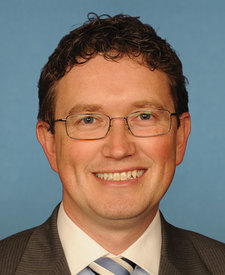

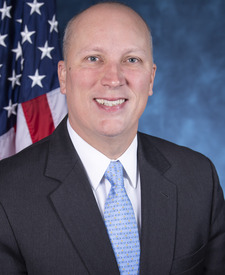

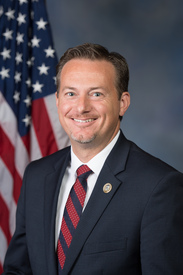
Legislative Progress
In CommitteeMr. Massie (for himself, Ms. Kaptur, Mr. Roy, Mr. Davidson, …
Referred to the House Committee on the Judiciary.
Introduced in House
Stakeholder Effects
cui bono?How this legislation distributes effects. Mention counts reflect frequency, not effect magnitude.
Exclusive licensees, First inventors, Patent applicants
Patent applicants faces effects in multiple directions
Positive-direction: Exclusive licensees, First inventors, Patent applicants paying fees, Patent defendants, Patent owners
Negative-direction: Patent challengers
Board of Patent Appeals staff, PTAB administrative patent judges, Patent examiners
Positive-direction: USPTO operations
Negative-direction: Board of Patent Appeals staff, PTAB administrative patent judges, Patent examiners
Accused infringers, Software innovators
Positive-direction: Software innovators
Negative-direction: Accused infringers
Bill Structure & Actor Mappings
Who is "The Secretary" in each section?
We use a combination of our own taxonomy and classification in addition to large language models to assess meaning and potential beneficiaries. High confidence means strong textual evidence. Always verify with the original bill text.
Learn more about our methodology