Main Street Parity Act
Summary
What This Bill Does
This bill amends the Small Business Investment Act's section 502 criteria for SBA 504 loans used for plant acquisition, construction, conversion, or expansion. It strikes clauses (ii) and (iii) from section 502(3)(C), adds "or" at the end of the remaining clause (i), and redesignates clause (iv) as clause (ii). It also amends section 502(3)(B)(ii) so the cross-reference points only to clause (i) of subparagraph (C), rather than clauses (i), (ii), or (iii).
Because section 502 is the SBA 504 development-company loan program, the practical effect is to simplify the statutory eligibility criteria used for certain plant and facility projects. The bill does not appropriate new money or create a new loan program. It changes how the existing 504 loan statute identifies qualifying projects, which can affect small businesses seeking financing and certified development companies packaging loans.
Who Benefits and How
Small businesses seeking SBA 504 loans benefit if the simplified criteria reduce barriers for plant acquisition, construction, conversion, or expansion financing. Certified development companies benefit from a cleaner statutory test when structuring 504 projects. SBA 504 loan officers benefit from fewer cross-referenced criteria to apply in eligibility reviews. Small manufacturers benefit if facility acquisition or expansion loans become easier to qualify for. Local economic development officials benefit if more small-business facility projects can use 504 financing.
Who Bears the Burden and How
SBA 504 program staff must update guidance, forms, eligibility review instructions, and lender communications to reflect the revised criteria. Certified development companies must retrain loan packaging staff and adjust underwriting checklists. SBA oversight staff must monitor whether the narrower cross-reference changes program risk or loan mix. Competing commercial lenders may face more SBA-backed competition for facility-finance deals. Applicants still must satisfy remaining SBA 504 requirements, collateral standards, fees, and project-review obligations.
Key Provisions
- Modifies section 502(3)(C) of the Small Business Investment Act by striking two existing criteria.
- Provides a simplified remaining clause structure for plant acquisition, construction, conversion, or expansion projects.
- Redesignates the former clause (iv) as clause (ii).
- Modifies section 502(3)(B)(ii) to reference only clause (i) of subparagraph (C).
- Provides no new appropriation or new loan program, only revised eligibility wording for the existing SBA 504 framework.
Evidence Chain:
This summary is generated from the full bill text using AI analysis. Expand "Detailed Analysis" below for identified beneficiaries/burden bearers with clause-level evidence links.
At a Glance
What This Bill Does
Simplifies SBA 504 plant-acquisition, construction, conversion, and expansion loan criteria by striking two existing criteria in section 502(3)(C), redesignating the remaining clause, and conforming section 502(3)(B)(ii), which narrows the statutory cross-reference used for certified development company project eligibility.
Key Policy Areas
Small Business, Credit, Real Estate Finance
Primary Purpose
Simplifies SBA 504 plant-acquisition, construction, conversion, and expansion loan criteria by striking two existing criteria in section 502(3)(C), redesignating the remaining clause, and conforming section 502(3)(B)(ii), which narrows the statutory cross-reference used for certified development company project eligibility.
Policy Domains
House resolution provisions
Identified Gains
- Small businesses seeking SBA 504 loans
- Certified development companies
- SBA 504 loan officers
- Small manufacturers
- Local economic development officials
Identified Costs
- SBA 504 program staff
- Certified development companies
- SBA oversight staff
- Competing commercial lenders
- SBA 504 applicants
Sponsors
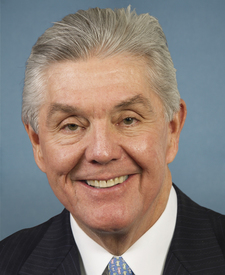

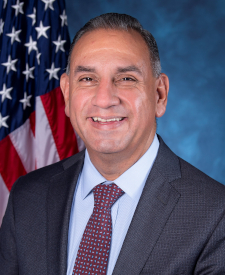


Legislative Progress
ReportedReceived; read twice and referred to the Committee on Small …
Received in the Senate and Read twice and referred to …
Motion to reconsider laid on the table Agreed to without …
Motion to reconsider laid on the table Agreed to without …
On motion to suspend the rules and pass the bill …
Passed/agreed to in House: On motion to suspend the rules …
Considered as unfinished business. (consideration: CR H939-940)
DEBATE - The House proceeded with forty minutes of debate …
At the conclusion of debate, the Yeas and Nays were …
Considered under suspension of the rules. (consideration: CR H930-931)
Stakeholder Effects
cui bono?How this legislation distributes effects. Mention counts reflect frequency, not effect magnitude.
SBA 504 loan officers, SBA oversight staff, Small businesses seeking SBA 504 loans
Positive-direction: SBA 504 loan officers, Small businesses seeking SBA 504 loans
Negative-direction: SBA oversight staff
Bill Structure & Actor Mappings
Who is "The Secretary" in each section?
- "cdc"
- → Certified development company
- "sba"
- → Small Business Administration
We use a combination of our own taxonomy and classification in addition to large language models to assess meaning and potential beneficiaries. High confidence means strong textual evidence. Always verify with the original bill text.
Learn more about our methodology