To eliminate racial, religious, and other discriminatory profiling by law enforcement, and for other purposes.
Analysis under review: This bill has generated analysis that may be too generic or incomplete. Clause-level evidence remains available below.
Summary
What This Bill Does
The Developing and Advancing Innovative Learning Models Act creates two federal grant programs to support new educational approaches in K-12 schools. Title I provides competitive grants for organizations to develop, test, and research innovative learning models through the Institute of Education Sciences. Title II distributes formula grants to states and local school districts to adopt and implement these innovative learning models in classrooms.
Who Benefits and How
Education technology companies and innovative learning model providers benefit from new federal funding streams to develop and scale their products. State and local educational agencies receive formula grants to implement new learning approaches. Students in schools adopting these models may benefit from improved, research-backed educational programs. Organizations that design comprehensive learning systems (combining curriculum, technology, and teaching practices) are eligible for early-phase, mid-phase, and expansion grants.
Who Bears the Burden and How
School districts face new administrative requirements to apply for grants, report on implementation, and demonstrate student outcomes. State educational agencies must develop plans, monitor local implementation, and submit annual reports to the Secretary. Innovative learning model providers must partner with schools and share accountability for student outcomes. The Institute of Education Sciences and Department of Education gain oversight and evaluation responsibilities.
Key Provisions
- Creates competitive grants (early-phase, mid-phase, and expansion) for developing and researching evidence-based innovative learning models
- Establishes formula grants to states (80% based on low-income student population) with 95% passed through to local school districts
- Requires innovative learning models to integrate instructional design, pedagogical practices, operational design, and technology
- Prohibits the Secretary from mandating or influencing adoption of any specific learning model
Evidence Chain:
This summary is generated from the full bill text using AI analysis. Expand "Detailed Analysis" below for identified beneficiaries/burden bearers.
At a Glance
What This Bill Does
Authorizes federal grants for the development, research, and adoption of innovative learning models in K-12 education, supporting both research grants through the Institute of Education Sciences and formula grants to states and school districts.
Key Policy Areas
Education, Research & Development
Primary Purpose
Authorizes federal grants for the development, research, and adoption of innovative learning models in K-12 education, supporting both research grants through the Institute of Education Sciences and formula grants to states and school districts.
Policy Domains
Title I - Grants for Innovative Learning Model Development and Research
Identified Gains
Contextual inference, no direct clause citation- Innovative learning model providers
- Education technology companies
- Educational research organizations
Contextual inference, no direct clause citation
Identified Costs
Contextual inference, no direct clause citation- Institute of Education Sciences
- Grant recipients (reporting requirements)
Contextual inference, no direct clause citation
Title II - Formula Grants to States for Innovative Learning Model Adoption
Identified Gains
Contextual inference, no direct clause citation- Local educational agencies
- State educational agencies
- Schools implementing innovative learning models
Contextual inference, no direct clause citation
Identified Costs
Contextual inference, no direct clause citation- State educational agencies (administrative and reporting)
- Local educational agencies (application and reporting requirements)
- Department of Education
Contextual inference, no direct clause citation
Sponsors
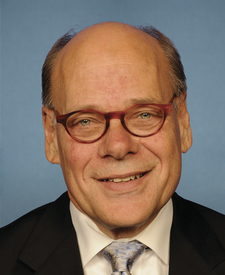
Legislative Progress
IntroducedMr. Cohen introduced the following bill; which was referred to …
Stakeholder Effects
cui bono?How this legislation distributes effects. Mention counts reflect frequency, not effect magnitude.
Attorney General, Complainants in racial profiling cases, FOIA requesters seeking officer identities
Positive-direction: Complainants in racial profiling cases, General public, Individuals subjected to racial profiling, Individuals whose data is collected during stops, Law enforcement officers, Racial and ethnic minority communities
Negative-direction: Attorney General, FOIA requesters seeking officer identities, Individual law enforcement officers, Law enforcement supervisors, Recipients of Byrne JAG and COPS grant funding, Taxpayers
Congress, Local governments seeking federal law enforcement grants, State governments
Positive-direction: Congress, State governments
Negative-direction: Local governments seeking federal law enforcement grants, State governments seeking federal law enforcement grants
Civil rights advocacy organizations, Civil rights organizations and researchers, Civil rights researchers and organizations
Institutions of higher education conducting research
Law enforcement training providers
Technology vendors for law enforcement data systems
Journalists and media organizations
Bill Structure & Actor Mappings
Who is "The Secretary" in each section?
- "the_director"
- → Director of the Institute of Education Sciences
- "the_secretary"
- → Secretary of Education
Key Definitions
Terms defined in this bill
A comprehensive program for K-12 schools that bundles together an interconnected set of tools, resources, systems, and instructional practices; integrates instructional design, pedagogical practices, operational design, and technological design; is not simply a technology platform; and may be designed for an entire school or focus on a specific subject or function.
An innovative learning model with statistically significant effects from experimental studies (strong evidence), quasi-experimental studies (moderate evidence), or correlational studies with controls (promising evidence), or a model with high-quality research rationale that is continuing to be evaluated.
An organization that designs innovative learning models and partners with schools to support implementation while sharing accountability for student outcomes.
We use a combination of our own taxonomy and classification in addition to large language models to assess meaning and potential beneficiaries. High confidence means strong textual evidence. Always verify with the original bill text.
Learn more about our methodology