Making continuing appropriations for fiscal year 2024, and for other purposes.
Analysis under review: This bill has generated analysis that may be too generic or incomplete. Clause-level evidence remains available below.
Summary
What This Bill Does
This continuing resolution keeps the federal government funded at fiscal year 2023 levels through January 11, 2024, preventing a government shutdown. It extends existing programs and appropriations while Congress negotiates full-year spending bills. The bill also includes special provisions for Ukraine military and economic assistance, immigration enforcement at the southern border, and extensions of health center funding and FAA programs.
Who Benefits and How
Ukraine receives extended military and economic support through expanded loan guarantee authority (increased from $4B to $8B) and flexible funding transfers. Community health centers and the National Health Service Corps receive continued mandatory funding ($1.13B for the CR period). Federal employees benefit from furlough avoidance provisions that prioritize personnel compensation. Airports and aviation programs receive continued funding through FAA program extensions.
Who Bears the Burden and How
Asylum seekers and migrants face stricter enforcement as the bill restricts release of certain aliens and mandates expulsion to Mexico or home countries with limited exceptions. Federal agencies face constraints on new projects or production increases during the CR period. The Department of Defense cannot initiate new production items or increase production rates above FY2023 levels.
Key Provisions
- Continues all federal appropriations at FY2023 rates through January 11, 2024
- Extends Ukraine aid authority and increases loan guarantees to $8 billion for Ukraine, NATO allies, and major non-NATO allies
- Restricts release of certain aliens and mandates expulsion procedures at the southern border
- Extends community health center funding and FAA airport improvement programs
Evidence Chain:
This summary is generated from the full bill text using AI analysis. Expand "Detailed Analysis" below for identified beneficiaries/burden bearers.
At a Glance
What This Bill Does
Provides continuing appropriations for the federal government through January 11, 2024, at fiscal year 2023 levels, while including special provisions for Ukraine assistance, immigration enforcement, and extensions of health and transportation programs.
Key Policy Areas
Government Operations, National Defense, Foreign Affairs, Immigration, Health, Transportation
Primary Purpose
Provides continuing appropriations for the federal government through January 11, 2024, at fiscal year 2023 levels, while including special provisions for Ukraine assistance, immigration enforcement, and extensions of health and transportation programs.
Policy Domains
Division A - Continuing Appropriations
Identified Gains
Contextual inference, no direct clause citation- Federal employees
- Federal contractors
- Mandatory program recipients
Contextual inference, no direct clause citation
Identified Costs
Contextual inference, no direct clause citation- Federal agencies seeking new initiatives
- Defense contractors seeking new production
Contextual inference, no direct clause citation
Division B - Ukraine Supplemental
Identified Gains
Contextual inference, no direct clause citation- Government of Ukraine
- Ukrainian military veterans
- NATO and non-NATO allies
- US defense industry
Contextual inference, no direct clause citation
Identified Costs
Contextual inference, no direct clause citation- US taxpayers
- Federal oversight agencies
Contextual inference, no direct clause citation
Division C - Immigration Provisions
Identified Gains
Contextual inference, no direct clause citation- Border security agencies
- Immigration enforcement personnel
Contextual inference, no direct clause citation
Identified Costs
Contextual inference, no direct clause citation- Asylum seekers
- Migrants at southern border
- Immigration advocacy organizations
Contextual inference, no direct clause citation
Division D - FAA Extensions
Identified Gains
Contextual inference, no direct clause citation- Airports
- Aviation industry
- Air travelers
Contextual inference, no direct clause citation
Identified Costs
Contextual inference, no direct clause citation- Aviation fuel consumers
- Air passengers paying ticket taxes
Contextual inference, no direct clause citation
Division E - Health Extensions
Identified Gains
Contextual inference, no direct clause citation- Community health centers
- Underserved communities
- National Health Service Corps
Contextual inference, no direct clause citation
Division F - TANF Extension
Identified Gains
Contextual inference, no direct clause citation- TANF recipients
- Low-income families
Contextual inference, no direct clause citation
Sponsors


Legislative Progress
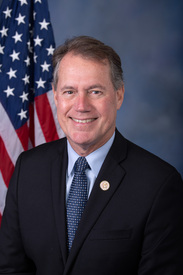
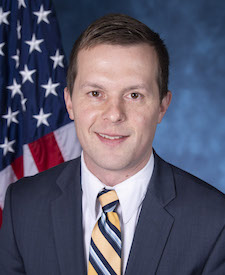
IntroducedMr. Bacon (for himself, Mr. Case, Mr. Fitzpatrick, and Mr. …
Stakeholder Effects
cui bono?How this legislation distributes effects. Mention counts reflect frequency, not effect magnitude.
CBP Office of Field Operations, Congressional budget process, Congressional oversight
Positive-direction: Congressional budget process, Congressional oversight, Department of State, Developing countries, Emergency and disaster relief programs, FAA programs, Federal civilian employees, Federal departments and agencies, Federal employees, Government of Ukraine, NATO and non-NATO allies, OMB and federal agencies, Ukraine, Ukraine and affected countries, Ukraine assistance programs, Ukrainian military veterans
Negative-direction: CBP Office of Field Operations, DHS Immigration enforcement, DHS enforcement, Department of Defense, DoD Inspector General, Executive Branch, Federal agencies, Federal programs with rescissions, Mexico
Entitlement beneficiaries, Grant recipients and nonprofits, Humanitarian aid organizations
Positive-direction: Entitlement beneficiaries, Humanitarian aid organizations, Low-income families, SNAP recipients, TANF recipients
Negative-direction: Grant recipients and nonprofits
Defense contractors, Defense contractors receiving Ukraine funds, US defense industry
Positive-direction: US defense industry
Negative-direction: Defense contractors, Defense contractors receiving Ukraine funds
Asylum seekers, Asylum seekers and migrants, Vulnerable migrants with medical conditions
Positive-direction: Vulnerable migrants with medical conditions
Negative-direction: Asylum seekers, Asylum seekers and migrants
Airlines and air cargo carriers, Airports, Aviation industry
Positive-direction: Airports, Aviation industry
Negative-direction: Airlines and air cargo carriers
State governments, State welfare agencies
Positive-direction: State welfare agencies
Negative-direction: State governments
Community health centers, National Health Service Corps
Bill Structure & Actor Mappings
Who is "The Secretary" in each section?
- "the_director"
- → Director of the Office of Management and Budget
- "the_president"
- → President of the United States
- "the_secretary"
- → Secretary of the Treasury
- "inspector_general"
- → Inspector General of the Department of Defense
- "the_director"
- → Office of Field Operations Port Director
- "the_secretary"
- → Secretary of Homeland Security
- "the_commissioner"
- → Commissioner of U.S. Customs and Border Protection
- "the_administrator"
- → Administrator of the Federal Aviation Administration
Note: 'The Secretary' refers to Secretary of the Treasury in Division B (Ukraine) but Secretary of Homeland Security in Division C (Immigration)
We use a combination of our own taxonomy and classification in addition to large language models to assess meaning and potential beneficiaries. High confidence means strong textual evidence. Always verify with the original bill text.
Learn more about our methodology