Wildfire Recovery Act
Summary
What This Bill Does
Raises the federal share for Stafford Act fire management assistance to at least 75 percent, requires rulemaking on when a higher share may be recommended, and makes predeployment of domestic assets eligible for reimbursement under that assistance.
Who Benefits and How
States, local governments, and Tribal governments responding to qualifying fires could receive a larger guaranteed federal reimbursement share and reimbursement for some predeployed assets.
Who Bears the Burden and How
Federal wildfire-assistance spending could rise, and FEMA would need to revise grant policy and complete rulemaking on criteria for recommending higher federal cost shares.
Key Provisions
- Sets the federal share of fire management assistance at no less than 75 percent of eligible costs.
- Applies the higher cost share to appropriations made on or after enactment.
- Requires presidential rulemaking through FEMA within three years on criteria for recommending an even higher federal cost share, including a financial-impact threshold metric.
- Requires FEMA to update policy so predeployment of domestic assets by States, local governments, and Tribes may be eligible for reimbursement.
Evidence Chain:
This summary is generated from the full bill text using AI analysis. Expand "Detailed Analysis" below for identified beneficiaries/burden bearers.
At a Glance
What This Bill Does
Raises the federal share for Stafford Act fire management assistance to at least 75 percent, requires rulemaking on when a higher share may be recommended, and makes predeployment of domestic assets eligible for reimbursement under that assistance.
Key Policy Areas
Disaster Relief, Wildfire, State Government
Primary Purpose
Raises the federal share for Stafford Act fire management assistance to at least 75 percent, requires rulemaking on when a higher share may be recommended, and makes predeployment of domestic assets eligible for reimbursement under that assistance.
Policy Domains
Main Provisions
Identified Gains
Contextual inference, no direct clause citation- State, local, and Tribal governments bearing wildfire response costs
Contextual inference, no direct clause citation
Identified Costs
Contextual inference, no direct clause citation- Federal disaster-assistance budgets and FEMA administrators revising policy and rules
Contextual inference, no direct clause citation
Sponsors
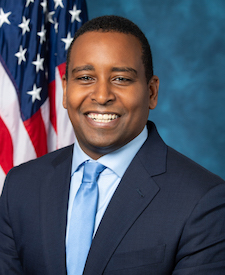

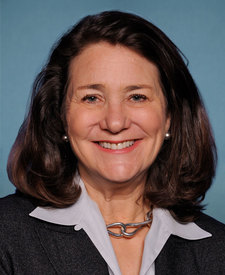
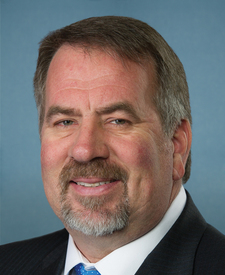
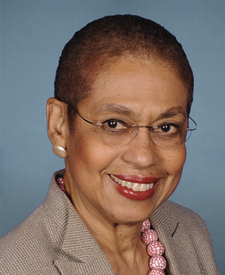
Legislative Progress
In CommitteeReferred to the Subcommittee on Economic Development, Public Buildings, and …
Mr. Neguse (for himself, Mr. LaMalfa, Ms. DeGette, Mr. Huffman, …
Referred to the House Committee on Transportation and Infrastructure.
Introduced in House
Stakeholder Effects
cui bono?How this legislation distributes effects. Mention counts reflect frequency, not effect magnitude.
State, local, and Tribal governments predeploying domestic assets for wildfire response, State, local, and Tribal governments receiving fire management assistance
FEMA officials revising grant policy and administering broader reimbursement eligibility, Federal disaster-assistance budgets funding a larger share of wildfire costs
Bill Structure & Actor Mappings
Who is "The Secretary" in each section?
- "administrator"
- → Administrator of the Federal Emergency Management Agency
We use a combination of our own taxonomy and classification in addition to large language models to assess meaning and potential beneficiaries. High confidence means strong textual evidence. Always verify with the original bill text.
Learn more about our methodology