To direct the Federal Trade Commission to require impact assessments of automated decision systems and augmented critical decision processes, and for other purposes.
Analysis under review: This bill has generated analysis that may be too generic or incomplete. Clause-level evidence remains available below.
Summary
What This Bill Does
This bill requires large companies using AI or automated decision-making systems for important decisions (like employment, housing, credit, healthcare) to conduct and document impact assessments before deploying these systems. The Federal Trade Commission (FTC) would oversee compliance, create a new Bureau of Technology, and maintain a public repository of AI systems.
Who Benefits and How
Consumers and civil rights advocates benefit through increased transparency about how AI systems affect their lives, documented testing for bias and harm, and new enforcement mechanisms to address unfair AI practices. Researchers and academics gain access to a public repository of information about deployed AI systems.
Who Bears the Burden and How
Large technology companies and businesses with over $50 million in revenue that use AI for critical decisions must conduct detailed impact assessments, document stakeholder consultations, submit summary reports to the FTC, and undergo ongoing testing. Smaller AI developers face disclosure requirements when selling to covered entities.
Key Provisions
- Mandates pre-deployment and post-deployment impact assessments for AI systems used in critical decisions
- Requires documentation of bias testing, stakeholder consultation, and performance metrics
- Establishes a Bureau of Technology within the FTC with 50+ new personnel
- Creates a publicly accessible repository of AI systems
- Enables state attorneys general to bring enforcement actions
Evidence Chain:
This summary is generated from the full bill text using AI analysis. Expand "Detailed Analysis" below for identified beneficiaries/burden bearers.
At a Glance
What This Bill Does
Requires the FTC to mandate impact assessments for automated decision systems (AI/ML) used in critical decisions affecting consumers, with reporting requirements, enforcement mechanisms, and a new Bureau of Technology.
Key Policy Areas
Technology, Consumer Protection, Artificial Intelligence, Privacy
Primary Purpose
Requires the FTC to mandate impact assessments for automated decision systems (AI/ML) used in critical decisions affecting consumers, with reporting requirements, enforcement mechanisms, and a new Bureau of Technology.
Policy Domains
Algorithmic Accountability Act
Identified Gains
Contextual inference, no direct clause citation- Consumers subject to AI-based decisions
- Civil rights advocates
- AI researchers and academics
- FTC Bureau of Technology staff
Contextual inference, no direct clause citation
Identified Costs
Contextual inference, no direct clause citation- Large technology companies
- Financial institutions using AI
- Healthcare organizations using AI
- AI/ML system developers and vendors
Contextual inference, no direct clause citation
Sponsors

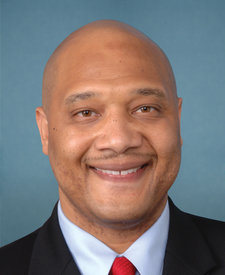



Legislative Progress
IntroducedMs. Clarke of New York (for herself, Ms. Kelly of …
Stakeholder Effects
cui bono?How this legislation distributes effects. Mention counts reflect frequency, not effect magnitude.
AI system vendors selling to covered entities, Covered entities deploying AI in critical decisions, Covered entities performing impact assessments
Positive-direction: Covered entities seeking compliance guidance, Technology policy professionals and engineers
Negative-direction: AI system vendors selling to covered entities, Covered entities deploying AI in critical decisions, Covered entities performing impact assessments, Covered entities submitting summary reports, Covered entities violating AI impact assessment requirements, Large technology companies deploying AI systems, Large technology companies facing increased enforcement
Federal Trade Commission
Federal Trade Commission faces effects in multiple directions
Consumers harmed by non-compliant AI systems, Consumers subject to AI-based critical decisions
Civil rights advocates and stakeholder groups, Consumer advocacy organizations
Financial institutions using AI for credit decisions
Healthcare organizations using AI for patient decisions
Compliance consulting and auditing firms
Bill Structure & Actor Mappings
Who is "The Secretary" in each section?
- "the_chair"
- → Chair of the Federal Trade Commission
- "covered_entity"
- → Businesses with >$50M revenue or >1M consumers data that deploy AI in critical decisions
- "the_commission"
- → Federal Trade Commission
Key Definitions
Terms defined in this bill
A process, procedure, or other activity that employs an automated decision system to make a critical decision
Any system, software, or process (including machine learning, statistics, AI) that uses computation as a basis for decisions
Entity with >$50M revenue or >1M consumer data records deploying augmented critical decision processes
Decisions in employment, education, housing, credit, healthcare, insurance, legal services, and essential utilities
We use a combination of our own taxonomy and classification in addition to large language models to assess meaning and potential beneficiaries. High confidence means strong textual evidence. Always verify with the original bill text.
Learn more about our methodology