To provide for automatic continuing appropriations.
Summary
What This Bill Does
The bill provides automatic continuing appropriations during government funding lapses, amending Title 31 USC to add new Section 1311 providing indefinite appropriations at prior-year rates with 14-day renewal periods, agency, provides new Section 1311 of Title 31 USC establishing automatic continuing appropriations at prior-year rates during funding lapses, with 14-day renewal periods, mandatory spending maintenance, transfer authority, and creates budgetary treatment of automatic continuing appropriations under the Balanced Budget and Emergency Deficit Control Act of 1985, classifying them as discretionary part-year appropriations for sequestration. It relies on appropriations, authorization, and reporting requirements. The main policy areas are Finance.
Who Benefits and How
Federal program beneficiaries (SNAP, loans, grants) could face reduced risk, Federal employees and contractors could face reduced risk, and Federal agencies could face reduced risk.
Who Bears the Burden and How
Office of Management and Budget would take on compliance duties, Congressional appropriations committees could face higher barriers, and Congressional Budget Office would take on compliance duties.
Key Provisions
- Provides automatic continuing appropriations during government funding lapses, amending Title 31 USC to add new Section 1311 providing indefinite appropriations at prior-year rates with 14-day renewal periods, agency...
- Provides new Section 1311 of Title 31 USC establishing automatic continuing appropriations at prior-year rates during funding lapses, with 14-day renewal periods, mandatory spending maintenance, transfer authority...
- Creates budgetary treatment of automatic continuing appropriations under the Balanced Budget and Emergency Deficit Control Act of 1985, classifying them as discretionary part-year appropriations for sequestration...
Evidence Chain:
This summary is generated from the full bill text using AI analysis. Expand "Detailed Analysis" below for identified beneficiaries/burden bearers with clause-level evidence links.
At a Glance
What This Bill Does
The bill provides automatic continuing appropriations during government funding lapses, amending Title 31 USC to add new Section 1311 providing indefinite appropriations at prior-year rates with 14-day renewal periods, agency, provides new Section 1311 of Title 31 USC establishing automatic continuing appropriations at prior-year rates during funding lapses, with 14-day renewal periods, mandatory spending maintenance, transfer authority, and creates budgetary treatment of automatic continuing appropriations under the Balanced Budget and Emergency Deficit Control Act of 1985, classifying them as discretionary part-year appropriations for sequestration.
Key Policy Areas
Finance
Primary Purpose
The bill provides automatic continuing appropriations during government funding lapses, amending Title 31 USC to add new Section 1311 providing indefinite appropriations at prior-year rates with 14-day renewal periods, agency, provides new Section 1311 of Title 31 USC establishing automatic continuing appropriations at prior-year rates during funding lapses, with 14-day renewal periods, mandatory spending maintenance, transfer authority, and creates budgetary treatment of automatic continuing appropriations under the Balanced Budget and Emergency Deficit Control Act of 1985, classifying them as discretionary part-year appropriations for sequestration.
Policy Domains
Whole bill
Identified Gains
- Federal program beneficiaries (SNAP, loans, grants)
- Federal employees and contractors
- Federal agencies
- States and grantees receiving federal funds
- Federal direct loan and loan guarantee recipients
Identified Costs
- Office of Management and Budget
- Congressional appropriations committees
- Congressional Budget Office
Sponsors

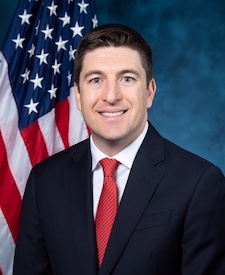
Dusty Johnson
R-SD | Primary Sponsor
Legislative Progress
IntroducedMr. Johnson of South Dakota (for himself and Mr. Steil) …
Stakeholder Effects
cui bono?How this legislation distributes effects. Mention counts reflect frequency, not effect magnitude.
Congressional Budget Office, Congressional appropriations committees, Federal agencies
Positive-direction: Federal agencies, Federal employees and contractors, States and grantees receiving federal funds
Negative-direction: Congressional Budget Office, Congressional appropriations committees, Office of Management and Budget
Federal direct loan and loan guarantee recipients
Bill Structure & Actor Mappings
Who is "The Secretary" in each section?
We use a combination of our own taxonomy and classification in addition to large language models to assess meaning and potential beneficiaries. High confidence means strong textual evidence. Always verify with the original bill text.
Learn more about our methodology