Integrated Cross-Border Law Enforcement Operations Expansion Act
Summary
What This Bill Does
The bill creates non-binding Sense of Congress directing the Secretary of Homeland Security to negotiate or amend agreements with the Government of Canada for integrated cross-border aerial, maritime, and land law enforcement, provides comprehensive amendment to both the Tariff Act of 1930 and the Homeland Security Act of 2002 that: (1) allows Secretary of State to extend Customs Service privileges and immunities to designated foreign country, and provides new Section 629A of the Tariff Act authorizing the Secretary of Homeland Security to use CBP operations and support funds to pay tort claims arising in foreign countries in connection with CBP operations, using. It relies on liability protections, exemptions, and appropriations. The main policy areas are Border Security and Defense.
Who Benefits and How
U.S. Customs and Border Protection would be affected, Department of Homeland Security would be affected, and Department of Justice would be affected.
Who Bears the Burden and How
Department of State would be affected, CBP operations and support budget could face higher costs, and CBP operations budget could face higher costs.
Key Provisions
- Creates non-binding Sense of Congress directing the Secretary of Homeland Security to negotiate or amend agreements with the Government of Canada for integrated cross-border aerial, maritime, and land law enforcement...
- Provides comprehensive amendment to both the Tariff Act of 1930 and the Homeland Security Act of 2002 that: (1) allows Secretary of State to extend Customs Service privileges and immunities to designated foreign country...
- Provides new Section 629A of the Tariff Act authorizing the Secretary of Homeland Security to use CBP operations and support funds to pay tort claims arising in foreign countries in connection with CBP operations, using...
- Exempts new Section 890E of the Homeland Security Act authorizing the Secretary of Homeland Security or Attorney General to station or deploy U.S.
Evidence Chain:
This summary is generated from the full bill text using AI analysis. Expand "Detailed Analysis" below for identified beneficiaries/burden bearers with clause-level evidence links.
At a Glance
What This Bill Does
The bill creates non-binding Sense of Congress directing the Secretary of Homeland Security to negotiate or amend agreements with the Government of Canada for integrated cross-border aerial, maritime, and land law enforcement, provides comprehensive amendment to both the Tariff Act of 1930 and the Homeland Security Act of 2002 that: (1) allows Secretary of State to extend Customs Service privileges and immunities to designated foreign country, and provides new Section 629A of the Tariff Act authorizing the Secretary of Homeland Security to use CBP operations and support funds to pay tort claims arising in foreign countries in connection with CBP operations, using.
Key Policy Areas
Border Security, Defense
Primary Purpose
The bill creates non-binding Sense of Congress directing the Secretary of Homeland Security to negotiate or amend agreements with the Government of Canada for integrated cross-border aerial, maritime, and land law enforcement, provides comprehensive amendment to both the Tariff Act of 1930 and the Homeland Security Act of 2002 that: (1) allows Secretary of State to extend Customs Service privileges and immunities to designated foreign country, and provides new Section 629A of the Tariff Act authorizing the Secretary of Homeland Security to use CBP operations and support funds to pay tort claims arising in foreign countries in connection with CBP operations, using.
Policy Domains
Whole bill
Identified Gains
- U.S. Customs and Border Protection
- Department of Homeland Security
- Department of Justice
- Foreign law enforcement officials
- Foreign law enforcement officers stationed in U.S.
Identified Costs
- Department of State
- CBP operations and support budget
- CBP operations budget
- U.S. residents in border areas
- Department of Homeland Security
Sponsors


Legislative Progress
In CommitteeReferred to the Subcommittee on Border Security and Enforcement.
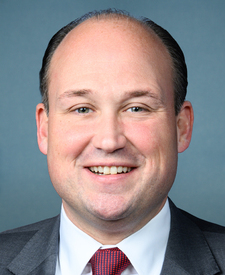
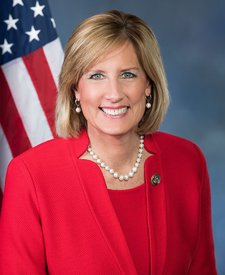
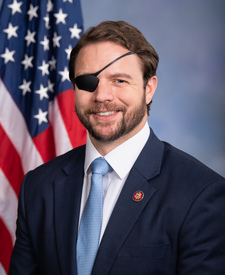
Mr. Langworthy (for himself, Mr. Alford, Mr. Weber of Texas, …
Referred to the Committee on Ways and Means, and in …
Introduced in House
Stakeholder Effects
cui bono?How this legislation distributes effects. Mention counts reflect frequency, not effect magnitude.
CBP officers deployed abroad, CBP operations and support budget, CBP operations budget
Positive-direction: CBP officers deployed abroad, Canada Border Services Agency, Customs and Border Protection, Department of Homeland Security, Department of Justice, Foreign law enforcement officers stationed in U.S., Foreign law enforcement officials, Royal Canadian Mounted Police
Negative-direction: CBP operations and support budget, CBP operations budget, Department of State
Foreign nationals harmed by CBP operations abroad, General public, Tort claimants in foreign countries
Bill Structure & Actor Mappings
Who is "The Secretary" in each section?
We use a combination of our own taxonomy and classification in addition to large language models to assess meaning and potential beneficiaries. High confidence means strong textual evidence. Always verify with the original bill text.
Learn more about our methodology