Community College Agriculture Advancement Act of 2025
Summary
What This Bill Does
The Community College Agriculture Advancement Act creates a new USDA capacity-building grant program for junior and community colleges that support agriculture advancement, including consortia or alliances of two-year public colleges. USDA must make competitive grants to help eligible entities maintain and expand workforce training, education, research, and outreach activities in agriculture and similar disciplines. The Secretary must prioritize applicants coordinating with local agriculture industry operators to provide experiential training and other student opportunities. Grant funds may help colleges compete for other federal and nonfederal grants, offer agricultural job training including farm business management, accounting, paralegal studies, and finance, disseminate information to agriculture communities and the public, provide matching funds, buy equipment and infrastructure other than building construction or renovation, support faculty growth, and develop apprenticeships and work-based learning. USDA must evaluate the program and report to House and Senate Agriculture and Appropriations committees. The bill authorizes $20 million per year for fiscal years 2026 through 2031.
Who Benefits and How
Community college agriculture programs benefit from a dedicated USDA competitive grant stream. Agriculture students benefit from experiential training, apprenticeships, work-based learning, and farm-business coursework. Local agriculture operators benefit from partnerships that build a local workforce pipeline. Rural communities benefit if two-year colleges expand agriculture education, outreach, and applied research capacity.
Who Bears the Burden and How
USDA higher education grant staff must administer competitions, priorities, evaluations, and congressional reports. Community college grant recipients must coordinate with industry operators, document eligible uses, and manage federal grant requirements. Federal taxpayers fund $20 million annually for fiscal years 2026 through 2031. Colleges seeking building renovation funds are limited because construction, alteration, repair, and renovation are excluded.
Key Provisions
- Creates USDA capacity-building grants for community college agriculture and natural-resources programs.
- Prioritizes colleges working with local agriculture operators on experiential training.
- Funds equipment, faculty development, apprenticeships, outreach, grant capacity, and agriculture business education.
- Requires USDA evaluation and reports to Agriculture and Appropriations committees.
- Authorizes $20 million annually for fiscal years 2026 through 2031.
Evidence Chain:
This summary is generated from the full bill text using AI analysis. Expand "Detailed Analysis" below for identified beneficiaries/burden bearers with clause-level evidence links.
At a Glance
What This Bill Does
Creates USDA competitive capacity-building grants for community college agriculture and natural-resources programs, prioritizes coordination with local agriculture operators for experiential training, funds equipment, faculty development, apprenticeships, outreach, and grant-competition capacity, and authorizes $20 million annually for fiscal years 2026 through 2031.
Key Policy Areas
Agriculture, Community Colleges, Workforce
Primary Purpose
Creates USDA competitive capacity-building grants for community college agriculture and natural-resources programs, prioritizes coordination with local agriculture operators for experiential training, funds equipment, faculty development, apprenticeships, outreach, and grant-competition capacity, and authorizes $20 million annually for fiscal years 2026 through 2031.
Policy Domains
Resolution provisions
Identified Gains
- Community college agriculture programs
- Agriculture students
- Local agriculture operators
- Rural communities
Identified Costs
- USDA higher education grant staff
- Community college grant recipients
- Federal taxpayers
- Colleges seeking building renovation funds
Sponsors


Legislative Progress
In CommitteeReferred to the Subcommittee on Conservation, Research, and Biotechnology.
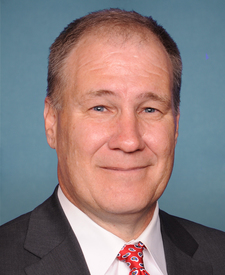
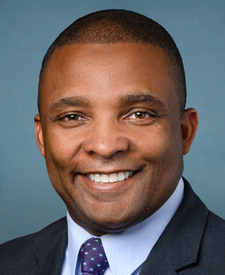
Mr. Kelly of Mississippi (for himself and Mr. Carbajal) introduced …
Referred to the House Committee on Agriculture.
Introduced in House
Stakeholder Effects
cui bono?How this legislation distributes effects. Mention counts reflect frequency, not effect magnitude.
Agriculture students, Community college agriculture programs
Bill Structure & Actor Mappings
Who is "The Secretary" in each section?
We use a combination of our own taxonomy and classification in addition to large language models to assess meaning and potential beneficiaries. High confidence means strong textual evidence. Always verify with the original bill text.
Learn more about our methodology