RRLEF Act of 2025
Summary
What This Bill Does
The RRLEF Act of 2025 uses the Byrne Justice Assistance Grant program to pressure law enforcement agencies away from firearm dealers with repeated short-time-to-crime trace patterns. Byrne JAG applicants must certify that they and their grantees or subgrantees will not transfer firearms to or buy firearms from a licensed dealer on the most recent ATF covered-dealer list. A covered licensed dealer is one where the ATF National Tracing Center traced at least 25 firearms from that business in at least two of the prior three calendar years, and those firearms had a time-to-crime of three years or less from retail sale to law-enforcement recovery in connection with an actual or suspected crime. Within 120 days and annually, the Attorney General and ATF Director must publish a covered-dealer list and notify state or local law enforcement agencies if firearms previously transferred to them were later used or suspected in crimes.
Who Benefits and How
Gun violence prevention advocates benefit because the bill targets dealers repeatedly linked to short-time-to-crime firearm traces. State law enforcement agencies benefit from ATF notifications when firearms they transferred are later tied to actual or suspected crimes. Local police departments benefit from clearer dealer-risk information before purchasing or transferring firearms with Byrne-funded programs. Byrne JAG oversight officials benefit from a concrete certification standard tied to ATF trace data.
Who Bears the Burden and How
Licensed firearm dealers on the ATF covered list lose sales and transfer opportunities with Byrne JAG applicants, grantees, and subgrantees. Byrne JAG applicants must certify compliance and police downstream grantees and subgrantees. ATF National Tracing Center staff must identify covered dealers using trace and time-to-crime data. The Attorney General must publish lists and send notifications to state and local law enforcement agencies.
Key Provisions
- Requires Byrne JAG applicants, grantees, and subgrantees to avoid firearm transfers to or purchases from ATF-listed covered dealers.
- Defines covered dealers by repeated years with at least 25 short-time-to-crime traced firearms.
- Requires ATF and the Attorney General to publish covered-dealer lists within 120 days and annually.
- Requires notifications to law enforcement agencies when transferred firearms are later used or suspected in crimes.
Evidence Chain:
This summary is generated from the full bill text using AI analysis. Expand "Detailed Analysis" below for identified beneficiaries/burden bearers with clause-level evidence links.
At a Glance
What This Bill Does
Conditions Byrne Justice Assistance Grant eligibility on applicants, grantees, and subgrantees avoiding firearm transfers to or purchases from ATF-listed licensed dealers repeatedly tied to at least 25 short-time-to-crime firearm traces, and requires annual covered-dealer lists and crime-use notifications.
Key Policy Areas
Public Safety, Firearms, Grants
Primary Purpose
Conditions Byrne Justice Assistance Grant eligibility on applicants, grantees, and subgrantees avoiding firearm transfers to or purchases from ATF-listed licensed dealers repeatedly tied to at least 25 short-time-to-crime firearm traces, and requires annual covered-dealer lists and crime-use notifications.
Policy Domains
Resolution provisions
Identified Gains
- Gun violence prevention advocates
- State law enforcement agencies
- Local police departments
- Byrne JAG oversight officials
Identified Costs
- Licensed firearm dealers on ATF list
- Byrne JAG applicants
- ATF National Tracing Center staff
- Attorney General
Sponsors
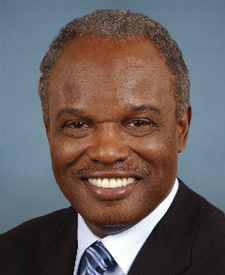
Legislative Progress
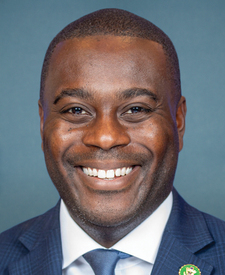
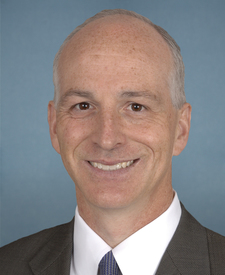
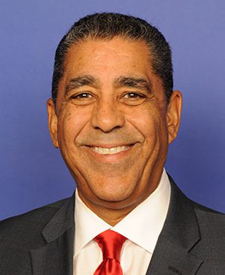
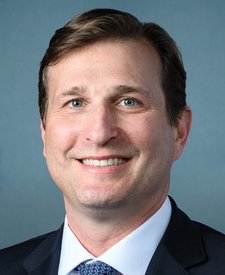
In CommitteeMr. Amo (for himself, Mr. Raskin, Mr. Johnson of Georgia, …
Referred to the House Committee on the Judiciary.
Introduced in House
Stakeholder Effects
cui bono?How this legislation distributes effects. Mention counts reflect frequency, not effect magnitude.
Byrne JAG applicants, Local police departments, State law enforcement agencies
Positive-direction: Local police departments, State law enforcement agencies
Negative-direction: Byrne JAG applicants
ATF National Tracing Center staff, Attorney General, Byrne JAG oversight officials
Bill Structure & Actor Mappings
Who is "The Secretary" in each section?
We use a combination of our own taxonomy and classification in addition to large language models to assess meaning and potential beneficiaries. High confidence means strong textual evidence. Always verify with the original bill text.
Learn more about our methodology