AWARE Act
Summary
What This Bill Does
The AWARE Act directs the Federal Trade Commission to create public education resources about minors' use of AI chatbots. Within 180 days, the FTC, consulting relevant federal agencies, must develop and make available resources for parents, educators, and minors on safe and responsible chatbot use. The resources must explain how to identify safe and unsafe chatbot use, privacy and data collection practices, and best practices for parents supervising chatbot use by minors. The FTC must model the resources on its Youville program. The bill defines AI by cross-reference to the National Artificial Intelligence Initiative Act and defines an AI chatbot as a consumer-marketed AI system that engages in interactive natural-language communication and generates or selects content in response to user text, voice, or other inputs using conversational context.
Who Benefits and How
Parents of minors benefit from FTC guidance on safe AI chatbot use, warning signs, privacy practices, and supervision. Educators benefit from public resources they can use when students interact with consumer AI chatbots. Minors using AI chatbots benefit from clearer safety and privacy education written for their use. Child online safety organizations benefit from a federal education campaign they can reference in outreach.
Who Bears the Burden and How
Federal Trade Commission staff must develop and publish AI chatbot resources within 180 days. Relevant federal agency staff must consult with the FTC on educational content. AI chatbot companies may face greater public scrutiny of privacy practices and unsafe-use risks. Schools using chatbot tools may need to update parent and student guidance around safe use.
Key Provisions
- Requires FTC educational resources on minors' safe and responsible AI chatbot use within 180 days.
- Requires resources on safe and unsafe use, privacy and data collection, and parental supervision.
- Requires FTC to model the resources on the Youville program.
- Defines AI chatbot as a consumer-facing natural-language AI system using conversational context.
Evidence Chain:
This summary is generated from the full bill text using AI analysis. Expand "Detailed Analysis" below for identified beneficiaries/burden bearers with clause-level evidence links.
At a Glance
What This Bill Does
Requires the FTC, within 180 days and in consultation with relevant federal agencies, to publish educational resources for parents, educators, and minors on safe and responsible use of AI chatbots by minors, including unsafe-use signs, privacy and data collection practices, and supervision best practices.
Key Policy Areas
Artificial Intelligence, Consumer Protection, Children
Primary Purpose
Requires the FTC, within 180 days and in consultation with relevant federal agencies, to publish educational resources for parents, educators, and minors on safe and responsible use of AI chatbots by minors, including unsafe-use signs, privacy and data collection practices, and supervision best practices.
Policy Domains
Resolution provisions
Identified Gains
- Parents of minors
- Educators
- Minors using AI chatbots
- Child online safety organizations
Identified Costs
- Federal Trade Commission staff
- Relevant federal agency staff
- AI chatbot companies
- Schools using chatbot tools
Sponsors




Legislative Progress
In CommitteeForwarded by Subcommittee to Full Committee in the Nature of …
Subcommittee Consideration and Mark-up Session Held
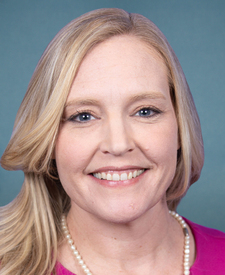
Mrs. Houchin (for herself and Mr. Auchincloss) introduced the following …
Referred to the Subcommittee on Commerce, Manufacturing, and Trade.
Referred to the House Committee on Energy and Commerce.
Introduced in House
Stakeholder Effects
cui bono?How this legislation distributes effects. Mention counts reflect frequency, not effect magnitude.
Bill Structure & Actor Mappings
Who is "The Secretary" in each section?
We use a combination of our own taxonomy and classification in addition to large language models to assess meaning and potential beneficiaries. High confidence means strong textual evidence. Always verify with the original bill text.
Learn more about our methodology