Merchant Banking Modernization Act
Summary
What This Bill Does
This bill changes the Bank Holding Company Act's merchant banking investment holding-period rule. Current law lets a financial holding company or covered affiliate make merchant banking investments under section 4(k)(7), subject to regulatory limits on how long those investments can be held. The bill requires the permitted holding period to be not less than 15 years.
The bill also protects existing merchant banking investments. For an investment already held on the date of enactment, the permitted holding period must be at least 15 years measured from the date of the initial investment. That gives financial holding companies and affiliates a longer statutory floor before they must sell or restructure qualifying merchant banking positions.
Who Benefits and How
Financial holding companies benefit because they gain authority to keep merchant banking investments for at least 15 years. Bank-affiliated private equity teams benefit from more time to grow, manage, and exit portfolio companies. Portfolio companies backed by merchant banking capital benefit from reduced pressure for an earlier sale. Bank investors benefit if longer holding periods allow better-timed exits. Federal Reserve Board supervisors benefit from a clearer statutory minimum holding period when applying merchant banking rules.
Who Bears the Burden and How
Federal Reserve Board rulemaking and supervisory staff must adjust merchant banking regulations and examinations to reflect the 15-year minimum. Competitors seeking to buy portfolio companies may lose access to assets that bank-affiliated investors can now hold longer. Consumer and financial-stability advocates bear oversight burden because longer bank-affiliated ownership can deepen ties between banking organizations and nonfinancial portfolio companies. Compliance officers at financial holding companies must track initial investment dates to apply the rule for existing investments.
Key Provisions
- Amends the Bank Holding Company Act merchant banking authority for financial holding companies and qualifying affiliates.
- Requires the permitted merchant banking investment holding period to be at least 15 years.
- Provides that existing merchant banking investments receive at least 15 years from the initial investment date.
- Directs regulatory treatment toward longer investment horizons for bank-affiliated merchant banking activity.
Evidence Chain:
This summary is generated from the full bill text using AI analysis. Expand "Detailed Analysis" below for identified beneficiaries/burden bearers with clause-level evidence links.
At a Glance
What This Bill Does
Modernizes merchant banking investment rules by requiring federal banking law to permit financial holding companies and qualifying affiliates to hold merchant banking investments for at least 15 years, including investments already held on the date of enactment.
Key Policy Areas
Banking, Private Equity, Financial Regulation
Primary Purpose
Modernizes merchant banking investment rules by requiring federal banking law to permit financial holding companies and qualifying affiliates to hold merchant banking investments for at least 15 years, including investments already held on the date of enactment.
Policy Domains
House resolution provisions
Identified Gains
- Financial holding companies
- Bank-affiliated private equity teams
- Portfolio companies backed by merchant banking capital
- Bank investors
- Federal Reserve Board supervisors
Identified Costs
- Federal Reserve Board rulemaking staff
- Federal Reserve Board supervisory staff
- Competitors seeking portfolio-company acquisitions
- Consumer advocates
- Financial-stability advocates
- Financial holding company compliance officers
Sponsors
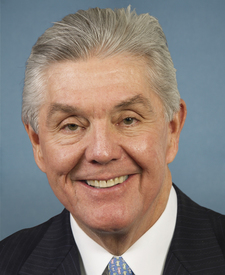

Legislative Progress
ReportedAdditional sponsor: Mr. Gottheimer
Reported with an amendment, committed to the Committee of the …
Placed on the Union Calendar, Calendar No. 320.
Reported (Amended) by the Committee on Financial Services. H. Rept. …
Committee Consideration and Mark-up Session Held
Ordered to be Reported (Amended) by the Yeas and Nays: …
Introduced in House
Referred to the House Committee on Financial Services.
Mr. Williams of Texas introduced the following bill; which was …
Stakeholder Effects
cui bono?How this legislation distributes effects. Mention counts reflect frequency, not effect magnitude.
Bank holding companies engaged in merchant banking, Federal Reserve Board of Governors, Financial holding companies with private equity operations
Positive-direction: Bank holding companies engaged in merchant banking, Financial holding companies with private equity operations
Negative-direction: Federal Reserve Board of Governors
Large diversified financial institutions
Bill Structure & Actor Mappings
Who is "The Secretary" in each section?
- "fed"
- → Federal Reserve Board
We use a combination of our own taxonomy and classification in addition to large language models to assess meaning and potential beneficiaries. High confidence means strong textual evidence. Always verify with the original bill text.
Learn more about our methodology