Stop Super PAC-Candidate Coordination Act
Summary
What This Bill Does
The Stop Super PAC-Candidate Coordination Act rewrites federal campaign finance coordination rules. It adds to FECA's contribution definition any payment by a person other than a candidate, authorized campaign, or party committee for a coordinated expenditure. New section 325 defines coordinated expenditure to include spending or covered communications made in cooperation, consultation, concert, or at the request or suggestion of a candidate, campaign, party committee, or agents, as well as republication or use of campaign materials. It preserves exceptions for news, commentary, editorials, and candidate debates or forums. It says policy discussions alone do not create coordination if there is no campaign-advertising, message, strategy, polling, resource-allocation, fundraising, or campaign-activity communication. It disregards firewalls for coordination determinations and treats a spender as coordinated if the candidate helped form it, solicits funds for it, appears at fundraising, provides donor lists, shares recent campaign consultants or staff, uses professional services tied to the campaign, or is managed by immediate family. Covered communications include express advocacy, functional equivalent advocacy, promote-support or attack-oppose communications, and election-period candidate references. The bill also bars federal candidates and officeholders from soliciting, receiving, directing, or transferring funds for Super PACs, noncompliant political committee accounts, and certain 527 organizations, except state or local party committees or state/local candidates, for elections after January 1, 2026.
Who Benefits and How
Voter organizations benefit because outside spending coordinated with candidates would be treated as candidate contributions subject to FECA limits and reporting. Campaign finance watchdog organizations benefit from clearer statutory coordination tests for Super PACs, shared consultants, fundraising ties, and republication. Federal Election Commission enforcement staff benefit from detailed rules defining coordinated spenders, covered communications, exceptions, and election periods. Candidate committees benefit when rival campaigns cannot use nominally independent unlimited-money committees as coordinated campaign arms.
Who Bears the Burden and How
Super PAC organizations bear the burden because coordinated expenditures would count as contributions to candidates and can violate contribution limits. Federal candidate committees must stop soliciting, receiving, directing, or transferring funds for covered Super PACs and 527 organizations. Campaign consultant organizations must manage four-year and two-year lookback rules for employment, professional services, and campaign relationships. Political donor organizations face less ability to route unlimited funds through outside groups that coordinate with federal candidates.
Key Provisions
- Expands FECA's contribution definition to include coordinated expenditures by outside spenders.
- Defines coordinated expenditures to cover cooperation, candidate requests, republication, shared fundraising, shared consultants, family ties, and covered communications.
- Protects exceptions for bona fide news, commentary, editorials, and candidate debates or forums.
- Requires coordination determinations to disregard firewalls.
- Prohibits federal candidates and officeholders from fundraising for Super PACs and certain 527 organizations after January 1, 2026.
Evidence Chain:
This summary is generated from the full bill text using AI analysis. Expand "Detailed Analysis" below for identified beneficiaries/burden bearers with clause-level evidence links.
At a Glance
What This Bill Does
Treats coordinated Super PAC and outside-spender expenditures as candidate contributions, defines coordination through cooperation, candidate-requested spending, republication, fundraising ties, shared consultants, family ties, covered communications, and election-period rules, and bars federal candidates and officeholders from soliciting, receiving, directing, or transferring funds for Super PACs and certain 527 organizations after January 1, 2026.
Key Policy Areas
Campaign Finance, Federal Elections, Super PACs
Primary Purpose
Treats coordinated Super PAC and outside-spender expenditures as candidate contributions, defines coordination through cooperation, candidate-requested spending, republication, fundraising ties, shared consultants, family ties, covered communications, and election-period rules, and bars federal candidates and officeholders from soliciting, receiving, directing, or transferring funds for Super PACs and certain 527 organizations after January 1, 2026.
Policy Domains
Resolution provisions
Identified Gains
- Voter organizations
- Campaign finance watchdog organizations
- Federal Election Commission enforcement staff
- Candidate committees
Identified Costs
- Super PAC organizations
- Federal candidate committees
- Campaign consultant organizations
- Political donor organizations
Sponsors
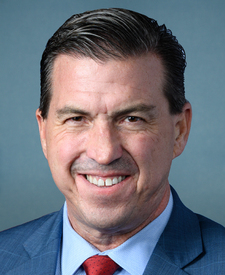
Legislative Progress
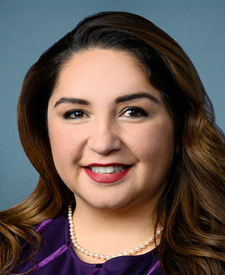
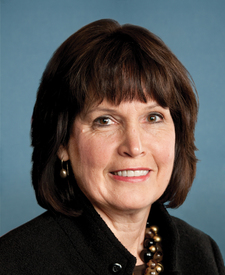
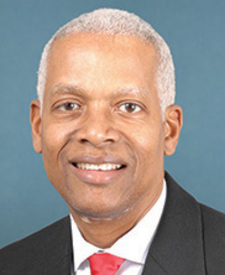
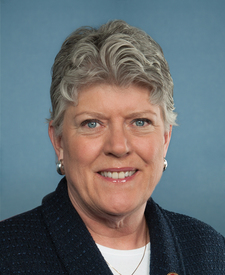
In CommitteeMrs. Ramirez (for herself, Mr. Mullin, and Ms. Tlaib) introduced …
Referred to the House Committee on House Administration.
Introduced in House
Stakeholder Effects
cui bono?How this legislation distributes effects. Mention counts reflect frequency, not effect magnitude.
Federal candidate committees, Voter organizations
Positive-direction: Voter organizations
Negative-direction: Federal candidate committees
Bill Structure & Actor Mappings
Who is "The Secretary" in each section?
We use a combination of our own taxonomy and classification in addition to large language models to assess meaning and potential beneficiaries. High confidence means strong textual evidence. Always verify with the original bill text.
Learn more about our methodology