Unhoused Voter Opportunity Through Elections Act
Summary
What This Bill Does
The Unhoused Voter Opportunity Through Elections Act creates a federal voting-rights framework for citizens without traditional housing. It bars states and political subdivisions from denying or abridging the vote because a citizen resides in a shelter, public place, treatment facility, other McKinney-Vento homeless location, or, where state law allows voting by incarcerated individuals, a prison. It gives the Attorney General and aggrieved individuals civil enforcement authority. It then amends election administration rules so ballot drop boxes must be accessible to unhoused individuals, written attestations can satisfy residence documentation, homeless shelters can be used as voting residences, criminal-justice or shelter documents can satisfy identification requirements, public election websites must explain how unhoused individuals vote, shelters and social-service agencies receive deadline notices, and the Election Assistance Commission develops best practices. It also makes emergency shelters voter registration agencies and authorizes EAC grants for mobile voting centers, direct outreach, durable documents, and contracts with service providers.
Who Benefits and How
Unhoused voter communities benefit because residence in a nontraditional abode cannot be used to deny or abridge their federal voting rights. Homeless shelter residents benefit because shelters can count as voting residences and receive election deadline outreach. Homeless service organizations benefit because states and localities may contract with experienced providers for voter registration and voting assistance. Local governments receiving grants benefit from EAC funding for mobile voting centers, outreach, and durable voting documents.
Who Bears the Burden and How
State election officials must accept specified residence and identification documentation and update public voting information for unhoused individuals. Local election administrators must account for access by unhoused individuals when operating drop boxes and voting services. Election Assistance Commission staff must develop best practices and administer grants to states and local governments. Federal taxpayers bear the cost of grant funding authorized as necessary for fiscal year 2026 and later years.
Key Provisions
- Protects citizens from voting discrimination based on residence at a nontraditional abode.
- Provides Attorney General and private civil enforcement for violations.
- Requires drop-box access, residence-documentation acceptance, shelter-address use, and outreach for unhoused individuals.
- Adds emergency shelters to National Voter Registration Act voter registration agency coverage.
- Authorizes EAC grants for mobile voting centers, direct outreach, service-provider contracts, and durable documents.
Evidence Chain:
This summary is generated from the full bill text using AI analysis. Expand "Detailed Analysis" below for identified beneficiaries/burden bearers with clause-level evidence links.
At a Glance
What This Bill Does
Protects unhoused citizens from being denied the vote because they live in a nontraditional abode and adds drop-box, residence-documentation, outreach, best-practice, and grant supports.
Key Policy Areas
Elections, Civil Rights, Housing, Federal Grants
Primary Purpose
Protects unhoused citizens from being denied the vote because they live in a nontraditional abode and adds drop-box, residence-documentation, outreach, best-practice, and grant supports.
Policy Domains
Resolution provisions
Identified Gains
- Unhoused voter communities
- Homeless shelter residents
- Homeless service organizations
- Local governments receiving grants
Identified Costs
- State election officials
- Local election administrators
- Election Assistance Commission staff
- Federal taxpayers
Sponsors
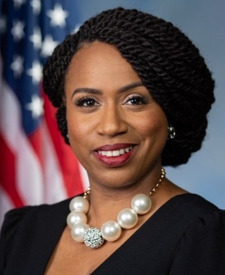
Legislative Progress
In CommitteeMs. Williams of Georgia (for herself, Mr. Cleaver, Ms. Johnson …
Referred to the Committee on House Administration, and in addition …
Introduced in House
Stakeholder Effects
cui bono?How this legislation distributes effects. Mention counts reflect frequency, not effect magnitude.
Homeless service organizations, Homeless shelter residents
Election Assistance Commission staff, State election officials
Local governments receiving grants
Bill Structure & Actor Mappings
Who is "The Secretary" in each section?
We use a combination of our own taxonomy and classification in addition to large language models to assess meaning and potential beneficiaries. High confidence means strong textual evidence. Always verify with the original bill text.
Learn more about our methodology