PHASE Act of 2025
Summary
What This Bill Does
The PHASE Act combines federal research and local infrastructure grants for pedestrian and vulnerable road user safety. NIST must transmit technology options to DOT for improving traffic control devices for vehicle operators, bicyclists, pedestrians, and other vulnerable road users, with evidence that the technology will not overwhelm or distract users and will comply with federal regulations. DOT must study physical alternatives that protect pedestrians, including crash patterns in urban areas, intelligent speed assistance, and blind-spot detection. DOT must also run a grant program for cities, municipalities, and Indian Tribes to build ADA-compliant pedestrian safety infrastructure such as crosswalk technology, accessible signals, sidewalks, curb ramps, lighting, marked crosswalks, and grade-separated crossings. The bill authorizes $5,000,000 per fiscal year.
Who Benefits and How
Pedestrians benefit from grants for safer crossings, sidewalks, lighting, accessible signals, and physical separation from vehicle traffic. Vulnerable road users benefit because DOT must study technologies and infrastructure that reduce crash exposure. Cities receiving pedestrian safety grants benefit from federal funding for ADA-compliant street safety improvements. Tribal governments benefit because Indian Tribes are eligible grant recipients for pedestrian safety infrastructure.
Who Bears the Burden and How
DOT safety staff must conduct the study, brief congressional committees, and administer the grant program. NIST transportation technology staff must identify and transmit evidence-backed traffic control device technologies. Local transportation departments must design projects that comply with ADA and federal infrastructure requirements. Federal taxpayers bear the cost of the $5,000,000 annual authorization.
Key Provisions
- Directs NIST to identify traffic control device technology that helps pedestrians, bicyclists, and vulnerable road users.
- Requires DOT to study physical pedestrian protections, crash patterns, intelligent speed assistance, and blind-spot detection.
- Creates grants for cities, municipalities, and Indian Tribes to build pedestrian safety infrastructure.
- Authorizes $5,000,000 per fiscal year for pedestrian safety grants.
Evidence Chain:
This summary is generated from the full bill text using AI analysis. Expand "Detailed Analysis" below for identified beneficiaries/burden bearers with clause-level evidence links.
At a Glance
What This Bill Does
Directs NIST and DOT to study pedestrian-safety technology and authorizes $5,000,000 per year in grants for ADA-compliant pedestrian safety infrastructure.
Key Policy Areas
Transportation, Pedestrian Safety, Technology Grants
Primary Purpose
Directs NIST and DOT to study pedestrian-safety technology and authorizes $5,000,000 per year in grants for ADA-compliant pedestrian safety infrastructure.
Policy Domains
Resolution provisions
Identified Gains
- Pedestrians
- Vulnerable road users
- Cities receiving pedestrian safety grants
- Tribal governments
Identified Costs
- DOT safety staff
- NIST transportation technology staff
- Local transportation departments
- Federal taxpayers
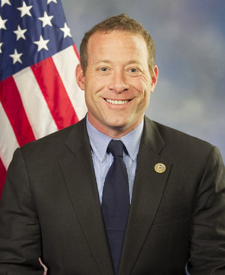
Sponsors


Legislative Progress
In CommitteeReferred to the Subcommittee on Highways and Transit.
Mrs. Torres of California (for herself and Ms. Bonamici) introduced …
Referred to the Committee on Transportation and Infrastructure, and in …
Introduced in House
Stakeholder Effects
cui bono?How this legislation distributes effects. Mention counts reflect frequency, not effect magnitude.
DOT safety staff, Tribal governments
Positive-direction: Tribal governments
Negative-direction: DOT safety staff
Cities receiving pedestrian safety grants
Bill Structure & Actor Mappings
Who is "The Secretary" in each section?
We use a combination of our own taxonomy and classification in addition to large language models to assess meaning and potential beneficiaries. High confidence means strong textual evidence. Always verify with the original bill text.
Learn more about our methodology