Ending Homelessness Act of 2025
Summary
What This Bill Does
The Ending Homelessness Act is a large housing-assistance expansion. It appropriates whatever is necessary for incremental housing choice voucher assistance in fiscal years 2025 through 2028, allocating 500,000 vouchers in 2025 and another 500,000 in each calendar year from 2026 through 2028 for extremely low-income families and families receiving SSI. Starting in fiscal year 2029, tenant-based section 8 rental assistance becomes an entitlement for eligible families, phased from the section 2 target population to low-income families by 2033. HUD must prioritize severe housing hardship, use ZIP Code fair market rents except in very tight vacancy markets, allow project-based use with tenant mobility, permit voucher use for security deposits, broker fees, and application fees, revise administrative fees, and encourage regional public housing agency consortia. The bill adds source of income to the Fair Housing Act, covering vouchers, rental subsidies, veterans benefits, Social Security, SSI, Railroad Retirement, public assistance, court-ordered support, trust or family payments, savings, investments, and other funds, while preserving veteran preferences. It also appropriates $1 billion per year from 2025 through 2029 for emergency relief grants to high-need Continuums of Care, with at least 75 percent generally for permanent supportive housing, annual HUD and U.S. Interagency Council on Homelessness reports, and Housing First requirements; $100 million per year for outreach grants funding case managers, social workers, and service coordination, not law enforcement; $1 billion per year for the Housing Trust Fund with priority for homeless households and 30-percent-of-income rent commitments; and $20 million for technical assistance aligning Medicaid, behavioral health, housing providers, State Medicaid directors, governors, and housing agencies. It permanently authorizes McKinney-Vento grants, makes private nonprofit and faith-based organizations eligible, and prioritizes jurisdictions that decriminalize homelessness.
Who Benefits and How
Extremely low-income families benefit from new vouchers in 2025 through 2028 and an entitlement pathway beginning in 2029. People experiencing homelessness benefit from voucher priority, emergency grants, permanent supportive housing requirements, outreach workers, Housing Trust Fund priority, and decriminalization incentives. SSI recipients benefit because families including an SSI recipient are part of the initial voucher target population. Public housing agencies benefit from funded administrative fees and authority to form regional consortia, use project-based vouchers, and help with deposits, broker fees, and application fees. Continuums of Care benefit from $1 billion annually in emergency relief grants and $100 million annually in outreach grants. Private nonprofit and faith-based housing organizations benefit from explicit eligibility for assistance and subgrants. Housing Trust Fund projects benefit from $1 billion annually and priority occupancy rules for homeless households.
Who Bears the Burden and How
HUD must administer voucher expansion, entitlement rules, fair-market rent changes, administrative fees, project-based flexibility, emergency grants, outreach grants, Housing Trust Fund rules, and technical assistance. Public housing agencies must scale voucher administration, payment standards, mobility, security-deposit assistance, and regional coordination. Landlords must comply with Fair Housing Act source-of-income protections for voucher and benefit recipients. Continuums of Care must target high-need grants, use at least 75 percent for permanent supportive housing unless exempt, follow Housing First where possible, report results, and limit administration to 5 percent. Local governments seeking priority must consider decriminalization and affordable-housing zoning or regulatory policies. Federal taxpayers bear the open-ended voucher entitlement costs and multiple annual appropriations.
Key Provisions
- Appropriates funding for 500,000 incremental vouchers in fiscal year 2025 and 500,000 more in each calendar year from 2026 through 2028.
- Creates a section 8 rental-assistance entitlement beginning in fiscal year 2029 and broadening to low-income families by fiscal year 2033.
- Adds source-of-income discrimination protections to the Fair Housing Act while preserving veteran preferences.
- Appropriates $1 billion annually for emergency homelessness grants and generally requires at least 75 percent for permanent supportive housing.
- Appropriates $100 million annually for outreach grants and bars using those funds for law enforcement.
- Appropriates $1 billion annually for the Housing Trust Fund and requires priority for homeless households and 30-percent-of-income rent commitments.
- Provides $20 million for technical assistance aligning Medicaid, behavioral health, and housing systems.
Evidence Chain:
This summary is generated from the full bill text using AI analysis. Expand "Detailed Analysis" below for identified beneficiaries/burden bearers with clause-level evidence links.
At a Glance
What This Bill Does
Expands federal homelessness and affordable-housing assistance by funding 500,000 new housing choice vouchers in fiscal year 2025 and 500,000 more each year through 2028, creating an entitlement to tenant-based rental assistance beginning in fiscal year 2029, adding source-of-income protections to the Fair Housing Act, appropriating $1 billion annually for emergency homelessness grants, $100 million annually for outreach grants, $1 billion annually for the Housing Trust Fund, and $20 million for health-housing technical assistance.
Key Policy Areas
Housing, Homelessness, Civil Rights
Primary Purpose
Expands federal homelessness and affordable-housing assistance by funding 500,000 new housing choice vouchers in fiscal year 2025 and 500,000 more each year through 2028, creating an entitlement to tenant-based rental assistance beginning in fiscal year 2029, adding source-of-income protections to the Fair Housing Act, appropriating $1 billion annually for emergency homelessness grants, $100 million annually for outreach grants, $1 billion annually for the Housing Trust Fund, and $20 million for health-housing technical assistance.
Policy Domains
Resolution provisions
Identified Gains
- Extremely low-income families
- People experiencing homelessness
- SSI recipient households
- Public housing agencies
- Continuums of Care
- Private nonprofit housing providers
- Housing Trust Fund developers
Identified Costs
- HUD housing program offices
- Public housing agency administrators
- Landlords
- Continuums of Care
- Local governments
- Federal taxpayers
Sponsors


Legislative Progress
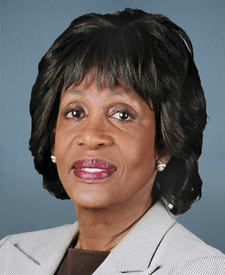
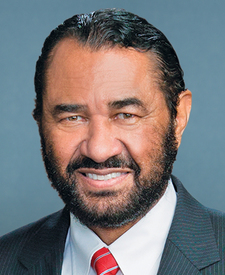
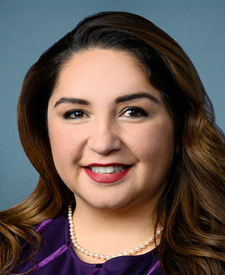
In CommitteeMs. Waters introduced the following bill; which was referred to …
Referred to the Committee on Financial Services, and in addition …
Introduced in House
Stakeholder Effects
cui bono?How this legislation distributes effects. Mention counts reflect frequency, not effect magnitude.
Continuums of Care, Extremely low-income families, Housing Trust Fund developers
Positive-direction: Continuums of Care, Extremely low-income families, Housing Trust Fund developers, People experiencing homelessness
Negative-direction: Landlords
HUD housing program offices, Public housing agencies, Public housing agency administrators
Positive-direction: Public housing agencies
Negative-direction: HUD housing program offices, Public housing agency administrators
Bill Structure & Actor Mappings
Who is "The Secretary" in each section?
We use a combination of our own taxonomy and classification in addition to large language models to assess meaning and potential beneficiaries. High confidence means strong textual evidence. Always verify with the original bill text.
Learn more about our methodology