Merchant Marine Allies Partnership Act
Summary
What This Bill Does
The Merchant Marine Allies Partnership Act creates a controlled exception to coastwise trade restrictions. A qualified vessel must be wholly owned by nationals or the government of a country on the Foreign Ally Shipping Registry, or by those entities with a U.S. national, and must be flagged in the United States or a registry country. The Transportation Secretary may authorize the vessel for up to five years to carry merchandise between U.S. coastwise points, directly or through a foreign port, and may renew the authorization. The authorization must be revoked if the vessel stops qualifying, including when a country is removed from the registry, and owners must notify DOT within 30 days of changes affecting qualification. The State Secretary, consulting the Coast Guard Commandant, maintains and may remove countries from the registry and reports removals to Congress. The Coast Guard may not enforce certain citizenship or credentialing requirements against U.S. or allied-country nationals employed on qualified vessels under an authorization. The bill also amends the Tariff Act to exempt the cost of repairs made in registry-country shipyards for documented vessels from vessel repair duty.
Who Benefits and How
Allied country vessel owners benefit from renewable access to U.S. coastwise merchandise transportation if their vessels qualify. U.S. coastwise shippers benefit if registry-country vessels add capacity on domestic routes. Allied shipyards benefit because repair costs in registry-country yards become exempt from the documented-vessel repair duty. Allied mariners benefit because Coast Guard citizenship and credentialing rules cannot be enforced against covered workers on authorized vessels.
Who Bears the Burden and How
U.S. shipbuilders face more competition from vessels built or rebuilt in registry countries. Jones Act vessel operators face competitive pressure from authorized allied-country vessels in coastwise trade. Transportation Department maritime offices must review authorizations, renewals, revocations, and owner change notices. State Department registry officials must decide which countries qualify as allies and report removals to Congress.
Key Provisions
- Creates a Foreign Ally Shipping Registry for coastwise trade eligibility.
- Authorizes qualified allied-country vessels for renewable five-year coastwise trade periods.
- Requires revocation and owner notice rules when a vessel or registry country stops qualifying.
- Limits Coast Guard citizenship and credentialing enforcement for U.S. or allied nationals on covered vessels.
- Exempts documented-vessel repairs in registry-country shipyards from vessel repair duty.
Evidence Chain:
This summary is generated from the full bill text using AI analysis. Expand "Detailed Analysis" below for identified beneficiaries/burden bearers with clause-level evidence links.
At a Glance
What This Bill Does
Creates a Foreign Ally Shipping Registry that lets qualified vessels owned by nationals or governments of allied countries and flagged in the United States or a registry country receive renewable five-year authorizations for coastwise trade, limits Coast Guard citizenship and credentialing enforcement for U.S. or allied nationals on those vessels, requires owner change notices and registry removal procedures, and exempts documented-vessel repair costs in registry-country shipyards from vessel repair duty.
Key Policy Areas
Maritime, Trade, Transportation
Primary Purpose
Creates a Foreign Ally Shipping Registry that lets qualified vessels owned by nationals or governments of allied countries and flagged in the United States or a registry country receive renewable five-year authorizations for coastwise trade, limits Coast Guard citizenship and credentialing enforcement for U.S. or allied nationals on those vessels, requires owner change notices and registry removal procedures, and exempts documented-vessel repair costs in registry-country shipyards from vessel repair duty.
Policy Domains
Resolution provisions
Identified Gains
- Allied country vessel owners
- U.S. coastwise shippers
- Allied shipyard workers
- Secretary of Transportation
Identified Costs
- U.S. shipbuilders
- Jones Act vessel operators
- Transportation Department maritime offices
- State Department registry officials
Sponsors

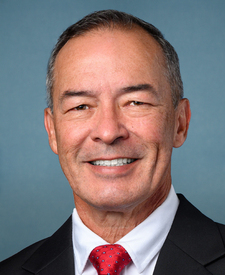
Ed Case
D-HI | Primary Sponsor
Legislative Progress
In CommitteeReferred to the Subcommittee on Coast Guard and Maritime Transportation.
Mr. Case (for himself and Mr. Moylan) introduced the following …
Referred to the Committee on Transportation and Infrastructure, and in …
Introduced in House
Sponsor introductory remarks on measure. (CR E747)
Stakeholder Effects
cui bono?How this legislation distributes effects. Mention counts reflect frequency, not effect magnitude.
Allied country vessel owners, Jones Act vessel operators
Positive-direction: Allied country vessel owners
Negative-direction: Jones Act vessel operators
Allied shipyard workers, U.S. shipbuilders
Positive-direction: Allied shipyard workers
Negative-direction: U.S. shipbuilders
State Department registry officials, Transportation Department maritime offices
Bill Structure & Actor Mappings
Who is "The Secretary" in each section?
We use a combination of our own taxonomy and classification in addition to large language models to assess meaning and potential beneficiaries. High confidence means strong textual evidence. Always verify with the original bill text.
Learn more about our methodology