Protecting Air Ambulance Services for Americans Act of 2025
Summary
What This Bill Does
The Protecting Air Ambulance Services for Americans Act changes the evidence base for Medicare air ambulance payment. It adds a new Social Security Act provision allowing the Secretary to revise the Medicare fee schedule for air ambulance services using data collected under section 106 of division BB of the 2021 Consolidated Appropriations Act and additional data required by the bill. Every three years, air ambulance providers and suppliers must submit fixed and operating costs per base, Medicare utilization, Medicare revenue, and any other information the Secretary finds appropriate. If the Secretary revises the fee schedule, the process must be transparent and consider stakeholder input. HHS must finalize and publish the 2021 air ambulance data-collection rule within six months. GAO must then study average annual operating costs per base, average cost per transport, payor mix, Medicare payment adequacy, geographic cost variation, and recommendations for improving the fee schedule.
Who Benefits and How
Air ambulance suppliers benefit if Medicare payment revisions reflect base operating costs, utilization, revenue data, and geographic cost differences. Rural Medicare beneficiaries benefit if better payment data helps maintain emergency air transport availability in high-cost areas. CMS payment officials benefit from recurring provider data and a GAO cost study before revising the fee schedule. Congressional health committees benefit from GAO recommendations on Medicare air ambulance payment adequacy.
Who Bears the Burden and How
Air ambulance providers must submit fixed-cost, operating-cost, utilization, revenue, and other required information every three years. HHS rulemaking staff must finalize the 2021 air ambulance data-collection rule within six months. GAO analysts must conduct the emergency air ambulance cost study after data collection begins. Medicare trust funds may bear higher or shifted payment costs if the fee schedule is revised upward for adequacy.
Key Provisions
- Authorizes Medicare fee schedule revisions for air ambulance services based on collected cost, utilization, and revenue data.
- Requires air ambulance providers and suppliers to submit additional data every three years.
- Requires HHS to finalize the 2021 air ambulance data-collection rule within six months.
- Requires GAO to study operating costs, transport costs, payor mix, Medicare payment adequacy, geographic variation, and fee-schedule improvements.
Evidence Chain:
This summary is generated from the full bill text using AI analysis. Expand "Detailed Analysis" below for identified beneficiaries/burden bearers with clause-level evidence links.
At a Glance
What This Bill Does
Allows the Medicare Secretary to revise the air ambulance fee schedule using existing and newly collected cost, utilization, and revenue data, requires air ambulance providers and suppliers to submit additional data every three years, requires HHS to finalize the 2021 air ambulance data-collection rule within six months, and directs GAO to report on air ambulance costs, payor mix, Medicare payment adequacy, geographic variation, and fee-schedule recommendations.
Key Policy Areas
Medicare, Emergency Medical Services, Air Ambulance
Primary Purpose
Allows the Medicare Secretary to revise the air ambulance fee schedule using existing and newly collected cost, utilization, and revenue data, requires air ambulance providers and suppliers to submit additional data every three years, requires HHS to finalize the 2021 air ambulance data-collection rule within six months, and directs GAO to report on air ambulance costs, payor mix, Medicare payment adequacy, geographic variation, and fee-schedule recommendations.
Policy Domains
Resolution provisions
Identified Gains
- Air ambulance suppliers
- Rural Medicare beneficiaries
- CMS payment officials
- Congressional health committees
Identified Costs
- Air ambulance providers
- HHS rulemaking staff
- GAO analysts
- Medicare trust funds
Sponsors




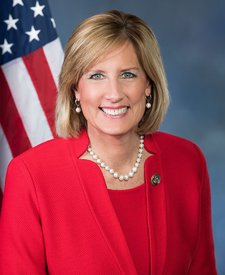
Legislative Progress
In CommitteeMr. Estes (for himself and Ms. DelBene) introduced the following …
Referred to the Committee on Energy and Commerce, and in …
Introduced in House
Stakeholder Effects
cui bono?How this legislation distributes effects. Mention counts reflect frequency, not effect magnitude.
CMS payment officials, GAO analysts, HHS rulemaking staff
Air ambulance providers, Air ambulance suppliers
Positive-direction: Air ambulance suppliers
Negative-direction: Air ambulance providers
Medicare trust funds, Rural Medicare beneficiaries
Bill Structure & Actor Mappings
Who is "The Secretary" in each section?
We use a combination of our own taxonomy and classification in addition to large language models to assess meaning and potential beneficiaries. High confidence means strong textual evidence. Always verify with the original bill text.
Learn more about our methodology