MACH Act
Summary
What This Bill Does
The MACH Act authorizes a NASA commercial hypersonics testing program. In conducting hypersonics research under title 51, the NASA Administrator may establish the Making Advancements in Commercial Hypersonics Program to facilitate testing opportunities for high-speed aircraft and technologies that advance scientific research and technology development related to hypersonic aircraft. The program cannot fund development of the technologies supported by the tests; its role is to provide testing opportunities. Within 60 days, the Administrator, acting through the Aeronautics Research Mission Directorate, must develop a strategic plan aligned with the hypersonic research roadmap required by the 2017 NASA Transition Authorization Act. NASA must coordinate ARMD with other mission directorates to identify technologies eligible for testing and must consult and seek collaboration with the Defense Secretary and FAA Administrator on program activities, including development, testing, and evaluation of high-speed aircraft and related technologies. NASA must report to House Science, House Armed Services, Senate Commerce, and Senate Armed Services within 90 days with program activities and the strategic plan, then annually on progress, testing opportunities from the previous fiscal year, and planned opportunities for the upcoming fiscal year. The bill prohibits NASA from developing, implementing, or executing agreements under the section with an entity of concern, foreign business entity, or foreign country of concern, using definitions tied to federal research-security and semiconductor statutes.
Who Benefits and How
U.S. aerospace companies benefit from NASA-facilitated testing opportunities for high-speed aircraft and hypersonic technologies. NASA aeronautics researchers benefit from a strategic program aligned with the federal hypersonics roadmap. Defense hypersonics planners benefit from NASA-DOD consultation on testing and evaluation opportunities. FAA aviation safety staff benefit from consultation on high-speed aircraft testing activities.
Who Bears the Burden and How
NASA Administrator must develop a strategic plan, coordinate mission directorates, consult DOD and FAA, and submit reports. Entities of concern and foreign business entities are barred from program agreements. Congressional science and armed services committees must review 90-day and annual reports. Federal taxpayers bear program administration and testing-opportunity costs if NASA establishes the program.
Key Provisions
- Authorizes NASA to establish the Making Advancements in Commercial Hypersonics Program.
- Limits the program to testing opportunities and bars funding technology development through the testing support.
- Requires a 60-day strategic plan aligned with NASA's hypersonic research roadmap.
- Requires NASA coordination with DOD and FAA and reports within 90 days and annually thereafter.
- Prohibits program agreements with entities of concern, foreign business entities, or foreign countries of concern.
Evidence Chain:
This summary is generated from the full bill text using AI analysis. Expand "Detailed Analysis" below for identified beneficiaries/burden bearers with clause-level evidence links.
At a Glance
What This Bill Does
Allows NASA to establish the Making Advancements in Commercial Hypersonics Program to create testing opportunities for high-speed aircraft and related technologies, requires a 60-day strategic plan aligned with NASA's hypersonic roadmap, requires coordination across NASA mission directorates and consultation with DOD and FAA, requires 90-day and annual congressional reports, and bars agreements with entities of concern, foreign business entities, or foreign countries of concern.
Key Policy Areas
Science & Space, Aerospace, Defense
Primary Purpose
Allows NASA to establish the Making Advancements in Commercial Hypersonics Program to create testing opportunities for high-speed aircraft and related technologies, requires a 60-day strategic plan aligned with NASA's hypersonic roadmap, requires coordination across NASA mission directorates and consultation with DOD and FAA, requires 90-day and annual congressional reports, and bars agreements with entities of concern, foreign business entities, or foreign countries of concern.
Policy Domains
Resolution provisions
Identified Gains
- U.S. aerospace companies
- NASA aeronautics researchers
- Defense hypersonics planners
- FAA aviation safety staff
Identified Costs
- NASA Administrator
- Entities of concern
- Foreign business entities
- Congressional science committees
- Federal taxpayers
Sponsors


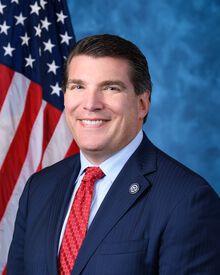

Legislative Progress
In CommitteeMr. Fong (for himself and Mr. Mullin) introduced the following …
Referred to the House Committee on Science, Space, and Technology.
Introduced in House
Stakeholder Effects
cui bono?How this legislation distributes effects. Mention counts reflect frequency, not effect magnitude.
Defense hypersonics planners, Foreign business entities, NASA aeronautics researchers
Entities of concern, FAA aviation safety staff, NASA Administrator
Bill Structure & Actor Mappings
Who is "The Secretary" in each section?
We use a combination of our own taxonomy and classification in addition to large language models to assess meaning and potential beneficiaries. High confidence means strong textual evidence. Always verify with the original bill text.
Learn more about our methodology