Foster Youth Mentoring Act of 2025
Summary
What This Bill Does
The Foster Youth Mentoring Act adds a Social Security Act grant program for mentoring children in foster care and children or young adults under 26 with foster-care experience. Congress cites research that youth with mentors are more likely to enroll in college, less likely to skip school, more likely to hold leadership positions, and may have improved adult relationships, fewer disciplinary referrals, better mental health, less substance misuse, greater life satisfaction, fewer foster-care placement changes, better transition-service use, and lower justice-system involvement. HHS must award grants to eligible nonprofits, state child welfare agencies, local educational agencies, Indian tribes or tribal organizations, and faith-based organizations. Mentoring must be structured and managed, match youth with screened and trained adult or peer volunteers, and may include one-on-one, group, or peer mentoring focused on academic support, enrichment, education success, risk-behavior reduction, or healthy relationships, with regular activities designed to last at least one year. Applications must describe outcomes, mentee age and eligibility, mentor type, setting, duration, frequency, annual matches, capacity to serve youth of color, expectant and parenting youth, indigenous youth, LGBTQ youth, and youth with disabilities, and input from young people with foster-care experience. Programs must recruit mentors reflecting youth identities, provide intensive and ongoing training on development, trauma, education rights, transition to adulthood, cultural competence, abuse reporting, confidentiality, and child welfare coordination, screen mentors with background checks excluding child-safety convictions and recent directly related convictions, engage youth and community entities, coordinate with other programs, maintain records, and cooperate with evaluations. HHS must consider youth engagement, transition-age recruitment, entity capacity, training quality, coordination, support, foster-youth numbers, and likely success. Funds may pay for training, mentor recruitment, mentor compensation including peer mentors, mentee participation costs, and youth development activities. HHS must report annually on grantees, mentors, foster-youth participants, academic achievement, waiting lists, postsecondary transition, and other evaluation information. The bill authorizes $50 million for each of fiscal years 2026 and 2027 and such sums as needed after.
Who Benefits and How
Children in foster care benefit from screened and trained mentors providing consistent relationships designed to last at least one year. Youth with foster-care experience benefit from mentoring that supports education, healthy relationships, transition services, and social-emotional development. Peer mentors with lived foster-care experience benefit from compensated roles in programs serving younger foster youth. Child welfare agencies benefit from federal grants to establish or expand mentoring networks with community partners. Nonprofit mentoring organizations benefit from grant eligibility and funding for training, recruitment, matching, and mentee participation costs.
Who Bears the Burden and How
HHS Secretary must administer grants, evaluate programs, scale awards, and submit annual reports to Congress. Eligible grantees must meet application, training, screening, consultation, coordination, recordkeeping, audit, and evaluation requirements. Mentoring programs must exclude mentors with child-safety convictions or recent convictions directly related to child safety. Federal taxpayers fund $50 million in each of fiscal years 2026 and 2027 plus later sums as appropriated.
Key Provisions
- Authorizes grants for mentoring children in foster care and young people under 26 with foster-care experience.
- Requires structured programs with screened and trained adult or peer mentors and relationships designed to last at least one year.
- Requires applications addressing youth engagement, mentor recruitment, identity-responsive capacity, training, screening, and coordination.
- Authorizes funds for mentor training, recruitment, compensation, mentee participation costs, and youth development activities.
- Requires annual HHS reports and authorizes $50 million for each of fiscal years 2026 and 2027.
Evidence Chain:
This summary is generated from the full bill text using AI analysis. Expand "Detailed Analysis" below for identified beneficiaries/burden bearers with clause-level evidence links.
At a Glance
What This Bill Does
Creates HHS grants for mentoring programs serving children in foster care and people under 26 with foster-care experience, requiring screened and trained adult or peer mentors, one-on-one, group, or peer mentoring lasting at least one year, youth-informed applications, mentor recruitment and training plans, background checks, coordination with child welfare, education, corrections, workforce, substance-use, and mental health agencies, annual reports, and $50 million for each of fiscal years 2026 and 2027 plus such sums thereafter.
Key Policy Areas
Child Welfare, Youth Mentoring, Social Welfare
Primary Purpose
Creates HHS grants for mentoring programs serving children in foster care and people under 26 with foster-care experience, requiring screened and trained adult or peer mentors, one-on-one, group, or peer mentoring lasting at least one year, youth-informed applications, mentor recruitment and training plans, background checks, coordination with child welfare, education, corrections, workforce, substance-use, and mental health agencies, annual reports, and $50 million for each of fiscal years 2026 and 2027 plus such sums thereafter.
Policy Domains
Resolution provisions
Identified Gains
- Children in foster care
- Youth with foster-care experience
- Peer mentors
- Child welfare agencies
- Nonprofit mentoring organizations
Identified Costs
- HHS Secretary
- Eligible grantees
- Mentoring programs
- Federal taxpayers
Sponsors



Legislative Progress
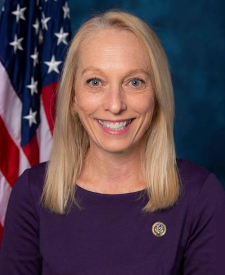
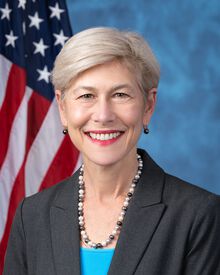
In CommitteeMs. Scanlon (for herself, Mr. Bacon, Mr. Casten, Mrs. Cherfilus-McCormick, …
Referred to the House Committee on Ways and Means.
Introduced in House
Stakeholder Effects
cui bono?How this legislation distributes effects. Mention counts reflect frequency, not effect magnitude.
Child welfare agencies, Peer mentors, Youth with foster-care experience
Eligible grantees, Nonprofit mentoring organizations
Positive-direction: Nonprofit mentoring organizations
Negative-direction: Eligible grantees
Bill Structure & Actor Mappings
Who is "The Secretary" in each section?
We use a combination of our own taxonomy and classification in addition to large language models to assess meaning and potential beneficiaries. High confidence means strong textual evidence. Always verify with the original bill text.
Learn more about our methodology