Low-Income Household Water Assistance Program Establishment Act
Summary
What This Bill Does
The Low-Income Household Water Assistance Program Establishment Act creates a federal water and wastewater affordability program. Low-income households qualify through participation in TANF, SSI, SNAP, specified veterans pension programs, LIHEAP, or income at or below the greater of 150 percent of poverty, 60 percent of state median income, or 60 percent of area median income. The HHS Secretary, consulting with the EPA Administrator, must award grants to eligible states and tribes that are eligible for or previously received LIHEAP grants. Those grants provide funds to owners and operators of public water systems or wastewater treatment works to help low-income households pay arrearages and other rates charged for drinking-water or wastewater services. HHS must allot money to states and tribes based on the share of households at or below 150 percent of poverty or spending more than 30 percent of monthly income on housing, and must reserve up to 3 percent for tribes. HHS must also provide grants to qualified nonprofit organizations helping public water systems or treatment works in rural, underserved, or tribal areas access program funds. Applicants must submit information required by HHS. Grant funds may not supplant other low-income water-affordability funding but may supplement or enhance qualifying programs. HHS must provide technical assistance so recipients can establish data-sharing agreements that streamline categorical eligibility. The bill authorizes $500 million for each of fiscal years 2026 through 2030.
Who Benefits and How
Low-income households benefit from assistance paying drinking-water and wastewater arrearages or rates. SNAP, TANF, SSI, veterans pension, and LIHEAP recipients benefit from categorical eligibility pathways. Public water systems benefit when grant funds help customers pay unpaid bills and ongoing rates. Wastewater treatment works benefit from assistance that reduces arrearages among low-income households. Indian tribes benefit from eligibility for grants and a reservation of up to 3 percent of program funds.
Who Bears the Burden and How
HHS Secretary must establish the program, allot grants, review applications, provide technical assistance, and manage $500 million annual authorizations. EPA Administrator must consult on program implementation involving public water systems and treatment works. States and tribes must administer household assistance without supplanting existing water-affordability funds. Qualified nonprofit organizations must help rural, underserved, and tribal-area systems access program funds.
Key Provisions
- Establishes the Low-Income Household Water Assistance Program at HHS in consultation with EPA.
- Authorizes grants to LIHEAP-eligible states and tribes for water and wastewater arrearage or rate assistance.
- Defines low-income households through categorical benefits or poverty, state-median-income, or area-median-income thresholds.
- Requires up to 3 percent of grant funds to be reserved for Indian tribes.
- Authorizes nonprofit access-assistance grants, technical assistance for data sharing, and $500 million annually for fiscal years 2026 through 2030.
Evidence Chain:
This summary is generated from the full bill text using AI analysis. Expand "Detailed Analysis" below for identified beneficiaries/burden bearers with clause-level evidence links.
At a Glance
What This Bill Does
Establishes a permanent Low-Income Household Water Assistance Program at HHS, in consultation with EPA, providing grants to LIHEAP-eligible states and tribes so public water systems and wastewater treatment works can help low-income households pay arrearages and rates for drinking-water or wastewater service, plus nonprofit grants for rural, underserved, and tribal access assistance, technical assistance for data sharing, and $500 million annually for fiscal years 2026 through 2030.
Key Policy Areas
Water, Social Welfare, Utilities
Primary Purpose
Establishes a permanent Low-Income Household Water Assistance Program at HHS, in consultation with EPA, providing grants to LIHEAP-eligible states and tribes so public water systems and wastewater treatment works can help low-income households pay arrearages and rates for drinking-water or wastewater service, plus nonprofit grants for rural, underserved, and tribal access assistance, technical assistance for data sharing, and $500 million annually for fiscal years 2026 through 2030.
Policy Domains
Resolution provisions
Identified Gains
- Low-income households
- SNAP recipients
- Public water systems
- Wastewater treatment works
- Indian tribes
Identified Costs
- HHS Secretary
- EPA Administrator
- States
- Tribal governments
- Qualified nonprofit organizations
Sponsors
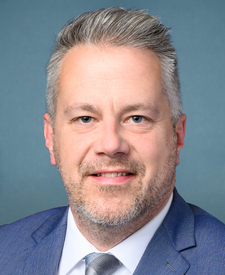

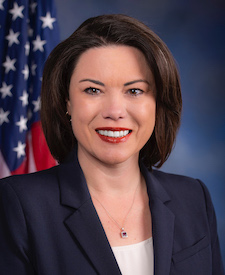


Legislative Progress
In CommitteeReferred to the Subcommittee on Water Resources and Environment.
Mr. Sorensen (for himself, Mr. Bresnahan, Ms. Schrier, Mr. Lawler, …
Referred to the Committee on Transportation and Infrastructure, and in …
Introduced in House
Stakeholder Effects
cui bono?How this legislation distributes effects. Mention counts reflect frequency, not effect magnitude.
Bill Structure & Actor Mappings
Who is "The Secretary" in each section?
We use a combination of our own taxonomy and classification in addition to large language models to assess meaning and potential beneficiaries. High confidence means strong textual evidence. Always verify with the original bill text.
Learn more about our methodology