FEMA Act of 2025
Summary
What This Bill Does
This bill establishes FEMA as a cabinet-level independent establishment in the executive branch and defines its mission as reducing loss of life and property from all hazards by leading and supporting preparedness, response, recovery, and mitigation. It provides for a Senate-confirmed Administrator who reports directly to the President, a Deputy Administrator, assistant administrators, transfer of FEMA functions, a FEMA Working Capital Fund, saving provisions, reference updates, and a Veterans Advocate. It also requires robust regional offices, including regional disability integration specialists, and directs FEMA to integrate the needs of children, underserved communities, individuals with disabilities, and other vulnerable populations with access and functional needs.
The bill then rewrites many Stafford Act and disaster-assistance rules. It creates or updates provisions on rebuilding public infrastructure, expedited repair and replacement of damaged facilities, disaster declaration damage thresholds, unified federal reviews, Federal permitting, debris removal, block grants for small disasters, preliminary damage assessments, management costs, reasonable incident periods, emergency work funding, procurement practices, crisis counseling and addiction in disasters, individual assistance, universal applications, disaster-victim information, state-managed housing, online guides, total-loss assistance, non-congregate sheltering, mitigation project plans, hazard mitigation loans, resilient buildings, utility resiliency, alerting systems, fraud and identity theft, renter challenges, workforce retention, and public-assistance dashboards.
Who Benefits and How
Disaster survivors benefit from universal individual-assistance applications, improved notices, better online guides, housing authorities, total-loss assistance, non-congregate sheltering access, and faster emergency work. State emergency management agencies, local governments, tribal governments, territories, public infrastructure owners, and utilities benefit from block grants, damage-threshold reforms, unified review, debris removal, mitigation planning, repair and rebuilding changes, and public-assistance dashboards. Veterans affected by disasters benefit from a designated FEMA Veterans Advocate. Children, individuals with disabilities, elderly residents, and other vulnerable populations benefit because FEMA must integrate access and functional needs into preparedness, response, recovery, and mitigation. Emergency responders and regional FEMA offices benefit from clearer roles, training, exercises, funding, and technical assistance.
Who Bears the Burden and How
FEMA leadership must manage an independent-agency transition, new reporting, regional-office requirements, program reforms, public dashboards, studies, working groups, and workforce-retention changes. DHS transfer staff and FEMA personnel offices must move functions, personnel, assets, contracts, grants, records, and administrative actions into the new structure. State, local, tribal, and territorial applicants must adapt to new disaster-damage thresholds, unified reviews, information-collection rules, mitigation applications, and assistance processes. GAO staff must conduct repeated reviews on the FEMA transition, preliminary damage assessments, management costs, insurance utilization, repair and rebuilding savings, alerts, and other reforms. Federal appropriators and OMB budget staff must support the new independent-agency structure and its working-capital and assistance authorities.
Key Provisions
- Establishes FEMA as an independent cabinet-level agency with a mission covering preparedness, response, recovery, and mitigation.
- Requires a Senate-confirmed FEMA Administrator, Deputy Administrator, assistant administrators, transferred functions, and saving provisions.
- Establishes a FEMA Working Capital Fund and a Veterans Advocate for disaster assistance.
- Reforms public infrastructure rebuilding, expedited repair, damage thresholds, unified federal review, and Federal permitting.
- Provides block grants for small disasters, debris-removal reforms, management-cost modernization, and preliminary-damage-assessment changes.
- Expands individual assistance through universal applications, direct assistance, notices, housing authorities, online guides, total-loss support, and non-congregate sheltering.
- Strengthens hazard mitigation plans, resilient buildings, utility resiliency, alerting systems, disaster-fraud review, workforce retention, and public-assistance dashboards.
Evidence Chain:
This summary is generated from the full bill text using AI analysis. Expand "Detailed Analysis" below for identified beneficiaries/burden bearers with clause-level evidence links.
At a Glance
What This Bill Does
Makes FEMA an independent cabinet-level agency and rewrites a broad emergency-management package covering FEMA leadership, transfers, regional offices, veterans and vulnerable populations, public infrastructure rebuilding, disaster backlogs, damage thresholds, unified federal review, debris removal, individual assistance, housing, mitigation, alerts, fraud, workforce retention, and public-assistance dashboards.
Key Policy Areas
Emergency Management, Disaster Assistance, FEMA, Public Infrastructure, Housing, Mitigation
Primary Purpose
Makes FEMA an independent cabinet-level agency and rewrites a broad emergency-management package covering FEMA leadership, transfers, regional offices, veterans and vulnerable populations, public infrastructure rebuilding, disaster backlogs, damage thresholds, unified federal review, debris removal, individual assistance, housing, mitigation, alerts, fraud, workforce retention, and public-assistance dashboards.
Policy Domains
House resolution provisions
Identified Gains
- Disaster survivors
- State emergency management agencies
- Local governments
- Tribal governments
- Territories
- Public infrastructure owners
- Utilities
- Veterans affected by disasters
- Children in disaster areas
- Individuals with disabilities
- Emergency responders
- Regional FEMA offices
Identified Costs
- FEMA leadership
- DHS transfer staff
- FEMA personnel offices
- State disaster applicants
- Local disaster applicants
- Tribal disaster applicants
- GAO staff
- Federal appropriators
- OMB budget staff
Sponsors
Legislative Progress
ReportedOrdered to be Reported (Amended) by the Yeas and Nays: …
Committee Consideration and Mark-up Session Held
Subcommittee on Economic Development, Public Buildings, and Emergency Management Discharged
Referred to the Subcommittee on Economic Development, Public Buildings, and …
Referred to the Subcommittee on Emergency Management and Technology.
Referred to the Committee on Transportation and Infrastructure, and in …
Introduced in House
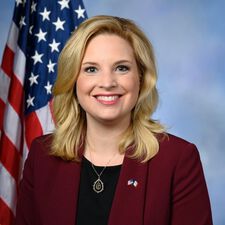
Mr. Graves (for himself, Mr. Larsen of Washington, Mr. Webster …
Stakeholder Effects
cui bono?How this legislation distributes effects. Mention counts reflect frequency, not effect magnitude.
Borrowers making prepayments, Borrowers who repay defaulted loans, Defaulted borrowers
Positive-direction: Borrowers making prepayments, Borrowers who repay defaulted loans, Defaulted student loan borrowers, Disaster assistance applicants, Disaster assistance applicants with pending cases, Disaster victims, Disaster victims applying for assistance, Disaster victims in temporary housing, Disaster victims needing housing, Disaster victims with mental health or substance use issues, Displaced disaster victims, Existing federal student loan borrowers, Federal student loan borrowers, Future student loan borrowers, General public, Homeless individuals affected by disasters, Homeowners needing emergency repairs, Homeowners with disaster damage, Homeowners with total loss, Private student loan borrowers, Renters affected by disasters, Vulnerable disaster victims
Negative-direction: Defaulted borrowers, Taxpayers
Building code officials, Disaster assistance applicants, Disaster recovery applicants
Positive-direction: Disaster assistance applicants, Disaster recovery applicants, Emergency management personnel, Local governments, State and local emergency management agencies, State and local governments, State and local governments adopting modern codes, State and local governments applying for mitigation grants, State and local governments with pending disaster applications, State and local governments with strong mitigation programs, State and tribal governments, State governments, State governments with mitigation plans
Negative-direction: Building code officials, States without mitigation programs
Disaster assistance programs, Emergency alerting systems, FEMA
Positive-direction: Disaster assistance programs, Emergency alerting systems, FEMA disaster workforce, FEMA employees, Indian tribal governments, Tribal governments, Wildfire management agencies
Negative-direction: FEMA, FEMA regional administrators, Federal agencies, Federal agencies with environmental review authority, Federal student loan program, Government Accountability Office
Construction and engineering firms, Disaster recovery projects, Home repair contractors
Emergency management community, Emergency response personnel
Electric utilities, Stormwater pumping station operators
Environmental review processes, Licensed engineers, architects, and cost estimators
Positive-direction: Licensed engineers, architects, and cost estimators
Negative-direction: Environmental review processes
Economically distressed communities, Rural areas
Bill Structure & Actor Mappings
Who is "The Secretary" in each section?
- "gao"
- → Government Accountability Office
- "fema"
- → Federal Emergency Management Agency
We use a combination of our own taxonomy and classification in addition to large language models to assess meaning and potential beneficiaries. High confidence means strong textual evidence. Always verify with the original bill text.
Learn more about our methodology