Independent Acting IGs Act of 2025
Summary
What This Bill Does
The Independent Acting IGs Act revises title 5 rules for vacancies in Senate-confirmed Inspector General offices. It adds a 180-of-the-prior-365-days service requirement for certain officials in the succession chain, including first assistants, principal deputy inspectors general, and deputy inspectors general. If a Senate-confirmed IG position is vacant, the first assistant serves as acting IG. If the first assistant position is vacant or the first assistant is unable, unavailable, or declines to serve, an acting IG is appointed through a special process. A randomly selected court of appeals judge from the circuit where the IG office is headquartered appoints the acting IG. Within 14 days after the vacancy trigger, the CIGIE Chair convenes a three-IG committee to recommend at least two candidates; within 14 days after convening, the committee submits the list; within 14 days after receiving it, the judge appoints the acting IG. The judge has sole authority until the vacancy is filled. The bill also states that amended section 403(h), not the ordinary Vacancies Reform Act default in section 3347, governs IG vacancies, and it gives force and effect to a prior House-passed technical provision before the amendments take effect.
Who Benefits and How
Inspector General independence advocates benefit from tighter limits on who can serve as acting IG. Career first assistants with recent service benefit from a clearer statutory priority to serve as acting IG. CIGIE benefits from a formal committee role recommending acting IG candidates when the first assistant cannot serve. Congressional oversight committees benefit from a succession process less dependent on ad hoc executive appointments.
Who Bears the Burden and How
Presidents lose flexibility to select acting inspectors general outside the revised succession and judge-appointment process. CIGIE Chair must convene a three-inspector-general recommendation committee within 14 days after the covered vacancy trigger. Court of appeals judges may be assigned responsibility to appoint acting inspectors general from the candidate list. Inspector General offices must track recent service history for first assistants, principal deputies, and deputy inspectors general.
Key Provisions
- Requires certain acting Inspector General successors to have served at least 180 of the prior 365 days.
- Provides that the first assistant serves as acting IG when a Senate-confirmed IG position is vacant.
- Creates a judge-appointed acting IG process when the first assistant cannot serve.
- Requires the CIGIE Chair to convene a three-IG committee that recommends at least two candidates.
- Limits ordinary Vacancies Reform Act displacement by making amended section 403(h) govern IG vacancies.
Evidence Chain:
This summary is generated from the full bill text using AI analysis. Expand "Detailed Analysis" below for identified beneficiaries/burden bearers with clause-level evidence links.
At a Glance
What This Bill Does
Tightens acting Inspector General succession by requiring first assistants, principal deputies, and deputy IGs to have served at least 180 of the prior 365 days, and creates a judge-appointed acting IG process when the first assistant cannot serve.
Key Policy Areas
Inspectors General, Government Oversight, Vacancies
Primary Purpose
Tightens acting Inspector General succession by requiring first assistants, principal deputies, and deputy IGs to have served at least 180 of the prior 365 days, and creates a judge-appointed acting IG process when the first assistant cannot serve.
Policy Domains
Resolution provisions
Identified Gains
- Inspector General independence advocates
- Career first assistants
- CIGIE
- Congressional oversight committees
Identified Costs
- President of the United States
- CIGIE Chair
- Court of appeals judges
- Inspector General offices
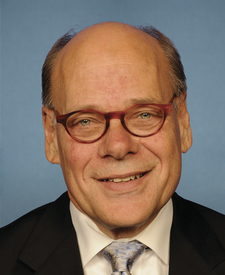
Sponsors
Legislative Progress
In CommitteeMr. Cohen introduced the following bill; which was referred to …
Referred to the House Committee on Oversight and Government Reform.
Introduced in House
Stakeholder Effects
cui bono?How this legislation distributes effects. Mention counts reflect frequency, not effect magnitude.
CIGIE, CIGIE Chair, Inspector General independence advocates
Bill Structure & Actor Mappings
Who is "The Secretary" in each section?
We use a combination of our own taxonomy and classification in addition to large language models to assess meaning and potential beneficiaries. High confidence means strong textual evidence. Always verify with the original bill text.
Learn more about our methodology