Securing Global Telecommunications Act
Summary
What This Bill Does
The Securing Global Telecommunications Act directs the State Department to lead a secure telecom diplomacy strategy. The findings identify Huawei and Chinese Communist Party-linked firms as risks to global mobile networks and argue that U.S. leadership at the International Telecommunication Union and multilateral financing are needed to support trusted vendors. Within 90 days, the Secretary of State must submit a Strategy to Secure Global Telecommunications Infrastructure to House and Senate foreign affairs and commerce committees. The State Department must consult the Export-Import Bank, Development Finance Corporation, USAID, Trade and Development Agency, FCC, and NTIA. The strategy must cover mobile networks, Open RAN, rip-and-replace financing, developing-country and emerging-economy cooperation, collaboration with trusted companies, data centers, and other ICT infrastructure. Separate 90-day reports must describe Chinese and Russian strategies to expand ITU jurisdiction over internet governance, leverage private-sector actors and Huawei market power to influence ITU standards, elections, candidate selection, and other levers of power, and identify opportunities for allied coordination through joint financing, development finance initiatives, and diplomacy encouraging secure telecom infrastructure in countries using untrusted providers.
Who Benefits and How
Open RAN vendors benefit from a U.S. strategy to promote trusted mobile networks and counter Huawei market leadership. Export-Import Bank of the United States benefits from a strategy that identifies financing tools for trusted telecom bids and rip-and-replace projects. U.S. International Development Finance Corporation benefits from coordinated development-finance roles for secure ICT infrastructure. House Foreign Affairs Committee and Senate Foreign Relations Committee benefit from strategy and influence reports within 90 days.
Who Bears the Burden and How
The Secretary of State must lead the strategy, consult six federal entities, and deliver three reports within 90 days. Federal Communications Commission and NTIA must contribute communications expertise to the State-led strategy. Chinese telecom-aligned actors face greater scrutiny of ITU influence efforts and market-leverage strategies. Huawei and other untrusted vendors face U.S. diplomatic and financing efforts to reduce their role in global networks.
Key Provisions
- Requires a Strategy to Secure Global Telecommunications Infrastructure within 90 days.
- Directs State to consult EXIM, DFC, USAID, USTDA, FCC, and NTIA on secure telecom financing and technical policy.
- Requires strategy sections on mobile networks, Open RAN, rip-and-replace financing, trusted vendors, data centers, and developing-country cooperation.
- Requires a report on Chinese and Russian influence at the International Telecommunication Union, including Huawei leverage and internet-governance standards.
- Requires a multilateral coordination report on allied financing, development finance, and diplomacy for secure ICT infrastructure.
Evidence Chain:
This summary is generated from the full bill text using AI analysis. Expand "Detailed Analysis" below for identified beneficiaries/burden bearers with clause-level evidence links.
At a Glance
What This Bill Does
Requires a 90-day State Department strategy and reports to promote secure global telecommunications infrastructure, counter Huawei and Chinese or Russian influence at the International Telecommunication Union, and coordinate allied financing for trusted ICT vendors.
Key Policy Areas
Telecommunications, China, Foreign Affairs
Primary Purpose
Requires a 90-day State Department strategy and reports to promote secure global telecommunications infrastructure, counter Huawei and Chinese or Russian influence at the International Telecommunication Union, and coordinate allied financing for trusted ICT vendors.
Policy Domains
Resolution provisions
Identified Gains
- Open RAN vendors
- Export-Import Bank of the United States
- U.S. International Development Finance Corporation
- House Foreign Affairs Committee
- Senate Foreign Relations Committee
Identified Costs
- Secretary of State
- Federal Communications Commission
- NTIA
- Chinese telecom-aligned actors
- Huawei
Sponsors

Legislative Progress
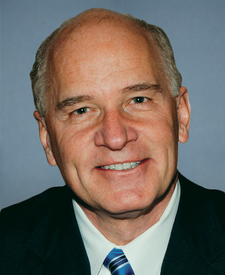
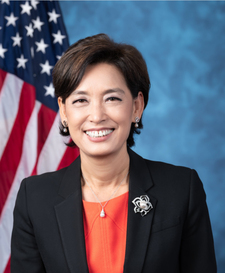
In CommitteeMr. Keating (for himself and Mrs. Kim) introduced the following …
Referred to the House Committee on Foreign Affairs.
Introduced in House
Stakeholder Effects
cui bono?How this legislation distributes effects. Mention counts reflect frequency, not effect magnitude.
Development Finance Corporation project teams, Export-Import Bank financing teams, Federal Communications Commission
Huawei, Open RAN vendors
Positive-direction: Open RAN vendors
Negative-direction: Huawei
Bill Structure & Actor Mappings
Who is "The Secretary" in each section?
We use a combination of our own taxonomy and classification in addition to large language models to assess meaning and potential beneficiaries. High confidence means strong textual evidence. Always verify with the original bill text.
Learn more about our methodology