PARTNER Act
Summary
What This Bill Does
The House-engrossed PARTNER Act authorizes the President, on terms and conditions the President determines, to extend the International Organizations Immunities Act (IOIA) to four named bodies: the Association of Southeast Asian Nations (ASEAN), European Organization for Nuclear Research (CERN), Pacific Islands Forum and Caribbean Community (CARICOM). They would be eligible for the same statutory treatment available to covered public international organizations in which the United States participates under a treaty or congressional authority. The bill supplies an eligibility pathway; executive action and the existing legal conditions determine the protections actually extended. It does not require the United States to join these organizations, appropriate membership dues, fund a research project or automatically immunize every associated person.
Section 6 separately authorizes extension, or an agreement extending, member-state UN-mission privileges to the African Union's permanent observer mission to the United Nations in New York and its members, subject to corresponding obligations. Existing authority for the African Union Mission to the United States remains. These are distinct missions and distinct statutory treatment, not a new blanket immunity for every African Union member country.
Who Benefits and How
ASEAN, CERN, the Pacific Islands Forum and CARICOM could receive legal and operational protections in the United States, including covered immunity from suit and judicial process, protections for property and archives and specified customs, import-tax, registration and official-communication treatment. Their qualifying representatives, officers and employees may receive the IOIA protections applicable to their status, including official-capacity immunity. Existing personnel-notification and State Department acceptance requirements, nationality-related qualifications for particular privileges, and waivers remain relevant. The African Union UN observer mission and its members gain a separate route to the treatment enjoyed by member-state permanent missions to the United Nations.
Those protections can reduce exposure and administrative friction in carrying out organizational functions. They are not universal immunity from every claim or a general exemption from all US law. Under the Supreme Court's Jam v. International Finance Corp. decision, the IOIA's default organizational suit immunity tracks the restrictive immunity foreign governments enjoy, including applicable exceptions; an individual dispute still requires analysis of the relevant immunity, waiver and underlying legal instruments.
Who Bears the Burden and How
Private claimants seeking remedies against the covered international organizations, or against protected personnel for official acts, may face additional procedural barriers if protections are extended and apply to their claim. Courts and enforcement agencies must observe applicable immunity, archive and property protections, while retaining authority where an exception or waiver permits proceedings. The Department of State must administer accepted personnel and mission treatment under the existing framework; covered customs and registration authorities may have to apply corresponding exemptions. These are contingent consequences of executive implementation, not a specified new appropriation or fixed fiscal cost.
The President retains authority under the IOIA to condition, limit, withhold, withdraw or revoke covered treatment. IOIA personnel immunity generally concerns acts within official functions, and the statute expressly does not confer diplomatic status beyond the privileges it specifies. The House removed the adjective diplomatic from four organization-section headings while leaving their operative IOIA eligibility language unchanged. That heading change clarifies presentation rather than withdrawing substantive protections. The preferred House and Senate-referral texts are identical.
Key Provisions
- Section 2 authorizes IOIA eligibility for the Association of Southeast Asian Nations through a new statutory Section 18, subject to presidential terms and the ordinary framework's conditions.
- Section 3 authorizes the same IOIA pathway for the European Organization for Nuclear Research through new statutory Section 19. It does not award CERN a research grant or confer privileges on unrelated nuclear businesses.
- Section 4 authorizes the Pacific Islands Forum pathway through new statutory Section 20; Section 5 authorizes the Caribbean Community pathway through new statutory Section 21. Member countries do not independently receive all organizational privileges merely because of membership.
- Section 6 expands the President's existing African Union mission authority to the permanent observer mission at the United Nations in New York and its members, using member-state permanent UN missions as the comparator and retaining corresponding conditions and obligations.
- The Act provides discretionary executive authority without an implementation deadline or guaranteed extension. Existing organizational waivers, restrictions, personnel acceptance and function-based immunity limits continue to matter.
- House changes remove diplomatic only from the four IOIA headings and matching contents entries. The operative eligibility paragraphs are unchanged, and outer amendment sections plus their separately extracted statutory sections represent four authorizations, not eight.
Evidence Chain:
This summary is generated from the full bill text using AI analysis. Expand "Detailed Analysis" below for identified beneficiaries/burden bearers with clause-level evidence links.
At a Glance
What This Bill Does
Authorize presidential extension of International Organizations Immunities Act protections to ASEAN, CERN, the Pacific Islands Forum and Caribbean Community, and separate UN-mission-equivalent protections for the African Union observer mission.
Key Policy Areas
International Affairs, Government Operations
Primary Purpose
Authorize presidential extension of International Organizations Immunities Act protections to ASEAN, CERN, the Pacific Islands Forum and Caribbean Community, and separate UN-mission-equivalent protections for the African Union observer mission.
Policy Domains
PARTNER Act
Identified Gains
- Association of Southeast Asian Nations
- European Organization for Nuclear Research
- Pacific Islands Forum
- Caribbean Community
- African Union permanent observer mission to the United Nations
- Qualifying employees of covered international organizations
Identified Costs
- Department of State
- US courts administering international-organization immunity
- Private claimants suing covered international organizations
Sponsors
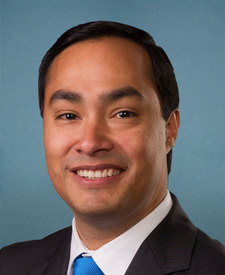



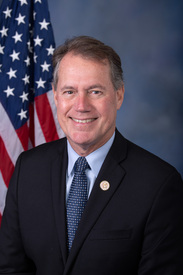
Legislative Progress
Passed HouseReceived; read twice and referred to the Committee on Foreign …
Passed House (inferred from eh version)
Received in the Senate and Read twice and referred to …
The title of the measure was amended. Agreed to without …
Motion to reconsider laid on the table Agreed to without …
On motion to suspend the rules and pass the bill, …
Passed/agreed to in House: On motion to suspend the rules …
DEBATE - The House proceeded with forty minutes of debate …
Considered under suspension of the rules. (consideration: CR H3734-3736)
Mr. Baumgartner moved to suspend the rules and pass the …
Stakeholder Effects
cui bono?How this legislation distributes effects. Mention counts reflect frequency, not effect magnitude.
African Union permanent observer mission to the United Nations, Association of Southeast Asian Nations, Caribbean Community
Positive-direction: African Union permanent observer mission to the United Nations, Association of Southeast Asian Nations, Caribbean Community, European Organization for Nuclear Research, Pacific Islands Forum
Negative-direction: Department of State
African Union UN observer mission members, Private claimants against the African Union UN observer mission, Private claimants suing Association of Southeast Asian Nations
Positive-direction: African Union UN observer mission members, Private claimants suing Association of Southeast Asian Nations, Private claimants suing Caribbean Community, Private claimants suing European Organization for Nuclear Research, Private claimants suing Pacific Islands Forum
Negative-direction: Private claimants against the African Union UN observer mission
Bill Structure & Actor Mappings
Who is "The Secretary" in each section?
- "President"
- → President of the United States
- "Secretary in incorporated IOIA"
- → Secretary of State
- "African Union permanent observer mission"
- → African Union permanent observer mission to the United Nations in New York
- "African Union Mission to the United States"
- → Existing bilateral mission covered by 22 U.S.C. 288f-2(b)
Note: Outer Sections 2-5 insert statutory Sections 18-21, which are also extracted separately. Classify the inserted operative sections without counting the wrapper text as independent duplicate protections.
Key Definitions
Terms defined in this bill
Privileges and immunities enjoyed by permanent missions of UN member states and their members, with corresponding conditions and obligations, rather than the separate bilateral diplomatic-mission comparator.
The protections available under the International Organizations Immunities Act, subject to executive designation and terms, statutory exceptions and waivers; not automatic blanket diplomatic status.
We use a combination of our own taxonomy and classification in addition to large language models to assess meaning and potential beneficiaries. High confidence means strong textual evidence. Always verify with the original bill text.
Learn more about our methodology