To establish within the Department of Health and Human Services a Division on Community Safety, and for other purposes.
Analysis under review: This bill has generated analysis that may be too generic or incomplete. Clause-level evidence remains available below.
Summary
Creates a Division on Community Safety within HHS headed by an Assistant Secretary, with four grant programs totaling .5 billion over FY2026-2030: B for community-led organizations, .5B for local governments, .5B for states, and .5B for first responder hiring. All funded activities must use qualified approaches to community safety defined as nonpunitive alternatives to law enforcement and incarceration. Establishes a National Advisory Committee including formerly incarcerated individuals and an Interagency Task Force to audit all federal carceral spending. Requires 30% rural set-asides and minimum /hour wages for grant-funded hires.
Evidence Chain:
This summary is generated from the full bill text using AI analysis. Expand "Detailed Analysis" below for identified beneficiaries/burden bearers.
At a Glance
What This Bill Does
Establish a Division on Community Safety within HHS to fund and coordinate non-punitive approaches to public safety as alternatives to law enforcement and incarceration
Who Benefits
- Community-based organizations
- Community health workers
- Formerly incarcerated individuals
Who Bears Costs
- Federal taxpayers
- Law enforcement agencies (potential funding shifts)
- Prosecutors and courts (reduced role)
Key Policy Areas
Criminal Justice, Public Health, Social Services
Primary Purpose
Establish a Division on Community Safety within HHS to fund and coordinate non-punitive approaches to public safety as alternatives to law enforcement and incarceration
Policy Domains
Legislative Strategy
"Create a new HHS division and four grant programs totaling .5B to build non-carceral community safety infrastructure"
Sponsors

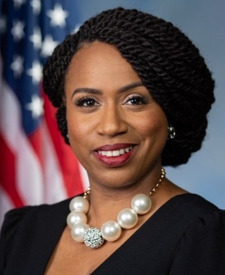
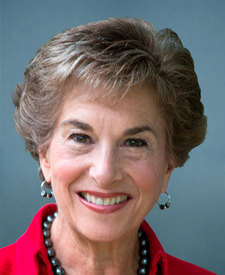
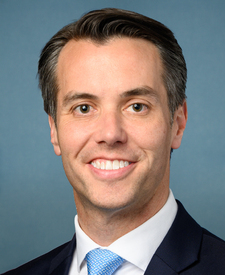
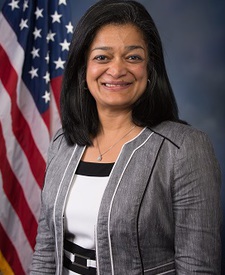
Legislative Progress
IntroducedMs. Lee of Pennsylvania (for herself, Ms. Pressley, Ms. Schakowsky, …
Stakeholder Effects
cui bono?How this legislation distributes effects. Mention counts reflect frequency, not effect magnitude.
Communities disproportionately harmed by criminal legal system, Communities with high incarceration rates, Community safety researchers and practitioners
Community-based organizations, Community-based safety organizations, Local community-based organizations
Department of Health and Human Services, Federal agencies funding law enforcement and incarceration, Law enforcement agencies
Positive-direction: State and local governments, State governments, Units of local government
Negative-direction: Department of Health and Human Services, Federal agencies funding law enforcement and incarceration, Law enforcement agencies
Community health workers, Non-police first responders
Community safety training programs, Schools implementing trauma-informed care
Bill Structure & Actor Mappings
Who is "The Secretary" in each section?
- "the_secretary"
- → Secretary of Health and Human Services
- "the_secretary"
- → Secretary of HHS
- "assistant_secretary"
- → Assistant Secretary for Community Safety
- "the_secretary"
- → Secretary of HHS
Key Definitions
Terms defined in this bill
Public or private nonprofit of demonstrated effectiveness representative of a community
Individual with relevant experience who responds to crises meeting qualified approaches definition
Evidence-informed, nonpunitive approaches using alternatives to law enforcement, courts, prosecution, probation, child welfare, involuntary treatment, and immigration enforcement
We use a combination of our own taxonomy and classification in addition to large language models to assess meaning and potential beneficiaries. High confidence means strong textual evidence. Always verify with the original bill text.
Learn more about our methodology