Save Local Business Act
Summary
What This Bill Does
The Save Local Business Act changes the federal joint-employer standard under two major labor statutes. It amends the National Labor Relations Act so an employer may be treated as a joint employer of another employer's workers only if each employer directly, actually, and immediately exercises significant control over essential terms and conditions of employment. The bill lists examples of those essential terms: hiring, firing, pay and benefits, day-to-day supervision, work schedules, job positions, tasks, and discipline. It then applies the same standard to the Fair Labor Standards Act for wage-and-hour purposes.
The practical effect is to make indirect influence, reserved contractual authority, brand standards, routine quality controls, or ordinary business-to-business oversight less likely to create joint-employer status unless the putative joint employer actually controls core employment decisions in a direct and immediate way. That matters for franchising, staffing, subcontracting, logistics, construction, hospitality, and other business models where one company contracts with another company whose employees perform work connected to the first company's operations.
Who Benefits and How
Franchise brands benefit because brand standards and business guidance are less likely to trigger joint-employer bargaining duties or wage liability without direct control over workers. Lead companies using subcontracted labor benefit from reduced exposure to joint-employer claims. Staffing agencies, subcontracting employers, franchisees, small business owners, logistics contractors, construction contractors, and hospitality franchisors benefit from clearer boundaries around who is responsible for NLRA bargaining obligations and FLSA wage-and-hour liability.
Who Bears the Burden and How
Workers seeking joint liability, workers seeking bargaining leverage across franchise systems, labor unions organizing franchise structures, labor unions organizing contractor structures, the National Labor Relations Board, Department of Labor wage-hour enforcement staff, and plaintiffs' attorneys bear burdens because they must prove direct, actual, immediate, and significant control over core employment terms before a second business can be held responsible. The bill can reduce recovery options, restrict bargaining pressure, and require more evidence about hiring, firing, pay, scheduling, supervision, and discipline.
Key Provisions
- Amends the NLRA employer definition to require direct, actual, immediate, and significant control for joint-employer status.
- Amends the Fair Labor Standards Act employer definition to use the same direct-control joint-employer standard.
- Limits joint-employer status to control over hiring, firing, pay, benefits, supervision, scheduling, job assignments, or discipline.
- Restricts broader joint-employer theories based on indirect influence or reserved authority alone.
- Provides a narrower statutory standard for franchising, staffing, subcontracting, and similar business arrangements.
Evidence Chain:
This summary is generated from the full bill text using AI analysis. Expand "Detailed Analysis" below for identified beneficiaries/burden bearers with clause-level evidence links.
At a Glance
What This Bill Does
Narrows when businesses can be treated as joint employers under the National Labor Relations Act and Fair Labor Standards Act by requiring each employer to exercise direct, actual, immediate, and significant control over essential employment terms.
Key Policy Areas
Labor, Small Business, Franchising
Primary Purpose
Narrows when businesses can be treated as joint employers under the National Labor Relations Act and Fair Labor Standards Act by requiring each employer to exercise direct, actual, immediate, and significant control over essential employment terms.
Policy Domains
Substantive provisions
Identified Gains
- Franchise brands
- Lead companies using subcontracted labor
- Staffing agencies
- Subcontracting employers
- Franchisees
- Small business owners
- Logistics contractors
- Construction contractors
- Hospitality franchisors
Identified Costs
- Workers seeking joint liability
- Workers seeking bargaining leverage across franchise systems
- Labor unions organizing franchise structures
- Labor unions organizing contractor structures
- National Labor Relations Board
- Department of Labor wage-hour enforcement staff
- Plaintiffs attorneys
Sponsors
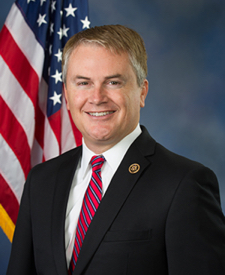


Legislative Progress
Passed HouseRule H. Res. 988 passed House.
Rules Committee Resolution H. Res. 988 Reported to House. Rule …
Additional sponsors: Mr. Hern of Oklahoma and Mr. Onder
Reported with an amendment, committed to the Committee of the …
Placed on the Union Calendar, Calendar No. 368.
Reported (Amended) by the Committee on Education and Workforce. H. …
Ordered to be Reported in the Nature of a Substitute …
Committee Consideration and Mark-up Session Held
Mr. Comer introduced the following bill; which was referred to …
Referred to the House Committee on Education and Workforce.
Stakeholder Effects
cui bono?How this legislation distributes effects. Mention counts reflect frequency, not effect magnitude.
Lead companies using subcontracted labor, Staffing agencies
Labor unions organizing contractor structures, Labor unions organizing franchise structures
Department of Labor wage-hour enforcement staff, National Labor Relations Board
Bill Structure & Actor Mappings
Who is "The Secretary" in each section?
- "dol"
- → Department of Labor
- "nlrb"
- → National Labor Relations Board
We use a combination of our own taxonomy and classification in addition to large language models to assess meaning and potential beneficiaries. High confidence means strong textual evidence. Always verify with the original bill text.
Learn more about our methodology