PROTECT USA Act of 2025
Summary
What This Bill Does
The PROTECT USA Act is a blocking statute against foreign sustainability due-diligence rules. It defines entities integral to U.S. national interests to include certain federal contractors, U.S. and territorial business entities, foreign subsidiaries, raw-material and fossil-fuel producers, manufacturers, defense producers, critical-mineral producers, and entities identified by the President. Covered entities may not comply with foreign laws requiring environmental or social impact assessments, action on identified impacts, and reporting on operations or value chains, unless the action is otherwise lawful under U.S. law or ordinary business. A covered entity facing hardship may petition the President for an exemption, and the President must decide in writing within 30 days, considering essential value chains, local economic effects, U.S. impact, and divestment issues. The bill also prohibits adverse action against covered entities for compliance with the Act, bars U.S. recognition of foreign court judgments tied to foreign sustainability due-diligence regulations unless Congress says otherwise, authorizes civil actions with equitable relief, punitive damages, attorney fees, costs, compensatory damages including amounts paid under foreign rules, and other relief, and subjects violators to civil penalties up to $1 million plus possible federal award or contract ineligibility for up to three years.
Who Benefits and How
U.S. critical mineral producers benefit because foreign sustainability due-diligence rules could not force compliance absent exemption or U.S. authority. U.S. manufacturing companies benefit from a federal shield against foreign value-chain reporting and social-impact mandates. Defense industrial base suppliers benefit because covered national-interest entities receive protection from adverse action and foreign judgments. Extractive sector companies benefit because the bill includes agriculture, fossil fuels, mining, timber, and material processing activities.
Who Bears the Burden and How
Foreign sustainability regulators lose practical leverage over covered U.S. national-interest entities. People taking adverse action against covered entities face civil lawsuits, damages, penalties up to $1 million, and possible federal contracting ineligibility. The President must decide hardship exemption petitions within 30 days and consider economic, supply-chain, divestment, and U.S. impacts. U.S. courts must refuse recognition of covered foreign sustainability due-diligence judgments unless Congress authorizes recognition.
Key Provisions
- Prohibits covered U.S. national-interest entities from complying with foreign sustainability due-diligence regulations.
- Creates a presidential hardship exemption process with written decisions due within 30 days.
- Blocks adverse action and U.S. recognition of covered foreign judgments while authorizing civil suits and damages.
- Establishes civil penalties up to $1 million and possible federal award or contract ineligibility for up to three years.
Evidence Chain:
This summary is generated from the full bill text using AI analysis. Expand "Detailed Analysis" below for identified beneficiaries/burden bearers with clause-level evidence links.
At a Glance
What This Bill Does
Bars covered U.S. raw-material, manufacturing, defense, and critical-mineral entities from complying with foreign sustainability due-diligence regulations, creates presidential hardship exemptions, blocks adverse action and foreign-judgment recognition, and adds civil penalties up to $1 million.
Key Policy Areas
Trade, Manufacturing, Foreign Regulation
Primary Purpose
Bars covered U.S. raw-material, manufacturing, defense, and critical-mineral entities from complying with foreign sustainability due-diligence regulations, creates presidential hardship exemptions, blocks adverse action and foreign-judgment recognition, and adds civil penalties up to $1 million.
Policy Domains
Resolution provisions
Identified Gains
- U.S. critical mineral manufacturers
- U.S. manufacturing employers
- Defense industrial base contractors
- Federal contractors in extractive sectors
Identified Costs
- Foreign government agencies
- People taking adverse action against covered entities
- President of the United States
- U.S. district courts
Legislative Progress
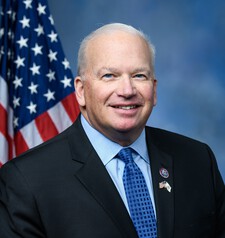
In CommitteeMr. Fitzgerald introduced the following bill; which was referred to …
Referred to the Committee on Energy and Commerce, and in …
Introduced in House
Stakeholder Effects
cui bono?How this legislation distributes effects. Mention counts reflect frequency, not effect magnitude.
Foreign sustainability regulators, President of the United States
People taking adverse action against covered entities
Bill Structure & Actor Mappings
Who is "The Secretary" in each section?
We use a combination of our own taxonomy and classification in addition to large language models to assess meaning and potential beneficiaries. High confidence means strong textual evidence. Always verify with the original bill text.
Learn more about our methodology