To amend the Department of Agriculture Reorganization Act of 1994 to establish the Rural Innovation and Partnership Administration and to amend the Consolidated Farm and Rural Development Act to establish the Rural Future Partnership Fund to invest in the rural areas of the United States to achieve their preferred future while maximizing their contribution to the well-being of the United States, and for other purposes.
Analysis under review: This bill has generated analysis that may be too generic or incomplete. Clause-level evidence remains available below.
Summary
What This Bill Does
The Rebuild Rural America Act creates a massive federal investment program called the Rural Future Partnership Fund, authorizing $10 billion per year from 2022-2026 to support economic development in rural communities. It establishes a new agency within USDA - the Rural Innovation and Partnership Administration - to manage these grants, and empowers local governments to form 'rural partnership councils' that create and implement development plans for their regions.
Who Benefits and How
Rural communities and their residents are the primary beneficiaries, gaining access to flexible block grant funding for infrastructure (broadband, water systems), housing development, workforce training, and economic development projects. Local governments, Indian Tribes, and regional planning organizations gain authority and resources to direct their own development priorities. Rural businesses, cooperatives, healthcare providers, and educational institutions can receive assistance through the councils. High-poverty areas (20%+ poverty rate) receive triple the standard per-capita funding allocation.
Who Bears the Burden and How
Federal taxpayers fund the $10 billion annual appropriation. The USDA must hire additional staff (minimum 3 new employees per state office) and build administrative infrastructure costing $100 million annually. Rural partnership councils face planning, reporting, and performance measurement requirements, though these are positioned as capacity-building rather than burdens.
Key Provisions
- Authorizes $10 billion annually for rural partnership block grants distributed based on population, with 3x funding for high-poverty areas
- Creates Rural Innovation and Partnership Administration within USDA to manage the fund
- Establishes eligibility criteria for rural partnership councils composed of local governments, tribes, nonprofits, and educational institutions
- Allows flexible use of funds for infrastructure, housing, healthcare, workforce development, business support, and climate resilience
- Waives matching fund requirements for projects in high-poverty census tracts
- Creates Rural Future Leadership Institute for training regional leaders
Evidence Chain:
This summary is generated from the full bill text using AI analysis. Expand "Detailed Analysis" below for identified beneficiaries/burden bearers with clause-level evidence links.
At a Glance
What This Bill Does
Creates a Rural Future Partnership Fund providing $10 billion annually in flexible block grants to rural communities for comprehensive economic development, infrastructure, and capacity building through locally-driven regional planning.
Key Policy Areas
Rural Development, Economic Development, Agriculture, Infrastructure, Housing, Workforce Development
Primary Purpose
Creates a Rural Future Partnership Fund providing $10 billion annually in flexible block grants to rural communities for comprehensive economic development, infrastructure, and capacity building through locally-driven regional planning.
Policy Domains
Rebuild Rural America Act of 2023
Identified Gains
- Rural communities
- Local governments
- Indian Tribes
- Rural businesses
- Cooperatives
- Educational institutions
- Healthcare providers
- High-poverty areas
Identified Costs
- Federal taxpayers
- USDA (administrative burden)
Legislative Progress
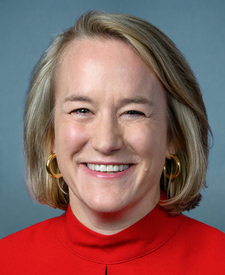
IntroducedMs. Budzinski introduced the following bill; which was referred to …
Stakeholder Effects
cui bono?How this legislation distributes effects. Mention counts reflect frequency, not effect magnitude.
High-poverty rural communities (20%+ poverty rate), Local governments in micropolitan statistical areas, Regional planning organizations
Positive-direction: High-poverty rural communities (20%+ poverty rate), Local governments in micropolitan statistical areas, Regional planning organizations, Rural communities, Rural communities eligible for block grants, Rural communities seeking federal assistance, Rural community leaders and planners, Rural partnership councils, Rural partnership councils (local governments in micropolitan areas)
Negative-direction: State governments
Congress (oversight), USDA Rural Development, USDA Rural Development mission area
Positive-direction: Congress (oversight), USDA Rural Innovation and Partnership Administration
Negative-direction: USDA Rural Development, USDA Rural Development mission area
Institutions of higher education including land-grant universities, Land-grant colleges and universities, Rural workforce training programs
Nonprofit organizations providing technical assistance, Technical assistance providers (nonprofits, universities)
Rural broadband and telecommunications providers, Rural broadband providers
Rural housing developers, Rural housing providers
Bill Structure & Actor Mappings
Who is "The Secretary" in each section?
- "council"
- → Rural partnership council (local government entity)
- "the_secretary"
- → Secretary of Agriculture, acting through the Administrator of Rural Innovation and Partnerships
- "the_administrator"
- → Administrator of Rural Innovation and Partnerships
Key Definitions
Terms defined in this bill
A rural partnership council established under section 385C(a) - composed of local governments, tribes, educational institutions, and nonprofits
An entity with demonstrated national or regional capacity to deliver rural planning activities, including federally recognized Indian Tribes, institutions of higher education, nonprofit organizations, or private organizations
A block grant awarded under this subtitle for 5-year terms, renewable
Housing for a family where the cost does not exceed 30 percent of 120 percent of the median income in the area
Indian country as defined in 18 USC 1151, including Alaska Native lands
We use a combination of our own taxonomy and classification in addition to large language models to assess meaning and potential beneficiaries. High confidence means strong textual evidence. Always verify with the original bill text.
Learn more about our methodology