DLARA
Summary
What This Bill Does
DLARA, the Disaster Loan Accountability and Reform Act, reforms oversight of Small Business Administration disaster lending. It updates monthly disaster-loan reports so Congress receives depletion forecasts, dates when funds will hit 10 percent of the most recent appropriation, and explanations of changes in obligation and expenditure assumptions. It blocks official travel funds for the SBA Administrator if required reports are late. It requires Presidential budget submissions to include separate statements for SBA disaster-loan subsidy costs, COVID-EIDL loan subsidy costs, and related administrative costs compared with 10-year averages. When available disaster-loan subsidy balances fall below 10 percent of average annual need, SBA must notify Congress within 24 hours and may limit obligations to collateral-backed amounts until more money is appropriated. GAO must report on the disaster loan account and on 2023 and 2024 disaster-loan rule changes. The SBA Inspector General must review the recent funding shortfall, missed reports, obligation divergences, internal controls, reorganization effects, and corrective actions. SBA must report within 30 days on forecasting fixes and every 90 days until corrections are implemented.
Who Benefits and How
Congressional Small Business and Appropriations Committees benefit from earlier warnings about disaster-loan fund depletion and clearer budget assumptions. SBA disaster loan oversight staff benefit from required GAO and Inspector General reviews that identify forecasting and control problems. Federal taxpayers benefit if better forecasting reduces emergency shortfalls and misallocated subsidy costs. Disaster survivors applying for loans benefit if improved budgeting prevents sudden program interruptions. GAO analysts and SBA Inspector General auditors benefit from explicit review mandates and data access.
Who Bears the Burden and How
The SBA Administrator must submit monthly reports, 24-hour shortfall notices, responses to GAO, and forecasting-correction reports, and loses official travel funds if monthly reports are late. SBA disaster-loan budget staff must produce 10-year averages, depletion forecasts, subsidy estimates, and implementation plans. SBA disaster loan borrowers may face limits when subsidy balances drop below the 10 percent trigger. GAO must conduct two reports. The SBA Inspector General must investigate the funding shortfall and internal controls.
Key Provisions
- Requires monthly disaster-loan reports with depletion dates and assumption changes.
- Adds Presidential budget statements comparing SBA disaster-loan and COVID-EIDL costs to 10-year averages.
- Requires 24-hour congressional notice when disaster-loan subsidy balances fall below 10 percent of average annual need.
- Allows temporary disaster-loan obligation limits during subsidy shortfalls.
- Requires GAO reports on the disaster loan account and recent rule changes.
- Requires an SBA Inspector General funding-shortfall review and recurring SBA forecasting-correction reports.
Evidence Chain:
This summary is generated from the full bill text using AI analysis. Expand "Detailed Analysis" below for identified beneficiaries/burden bearers with clause-level evidence links.
At a Glance
What This Bill Does
Tightens SBA disaster loan budget accountability by requiring monthly reports with depletion forecasts, Presidential budget statements comparing requested disaster-loan and COVID-EIDL costs to 10-year averages, congressional notice when disaster-loan subsidy balances fall below 10 percent of average need, temporary loan-obligation limits during shortfalls, GAO reports, an SBA Inspector General review, and quarterly forecasting-correction reports.
Key Policy Areas
Small Business, Disaster Assistance, Federal Oversight
Primary Purpose
Tightens SBA disaster loan budget accountability by requiring monthly reports with depletion forecasts, Presidential budget statements comparing requested disaster-loan and COVID-EIDL costs to 10-year averages, congressional notice when disaster-loan subsidy balances fall below 10 percent of average need, temporary loan-obligation limits during shortfalls, GAO reports, an SBA Inspector General review, and quarterly forecasting-correction reports.
Policy Domains
House resolution provisions
Identified Gains
- Congressional Small Business Committees
- Congressional Appropriations Committees
- SBA disaster loan oversight staff
- Federal taxpayers
- Disaster survivors applying for loans
- GAO analysts
Identified Costs
- SBA Administrator
- SBA disaster-loan budget staff
- SBA disaster loan borrowers
- Government Accountability Office
- SBA Inspector General
Sponsors


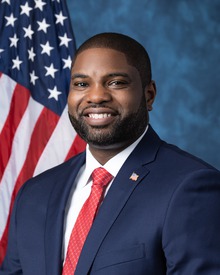
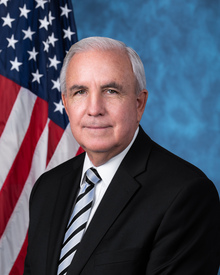

Legislative Progress
ReportedPlaced on the Union Calendar, Calendar No. 603.
Committee on the Budget discharged.
Reported (Amended) by the Committee on Small Business. H. Rept. …
Reported (Amended) by the Committee on Small Business. H. Rept. …
Additional sponsors: Mr. LaMalfa, Mr. Taylor, Mr. Harrigan, Mr. Flood, …
Reported from the Committee on Small Business with an amendment
Ordered to be Reported in the Nature of a Substitute …
Committee Consideration and Mark-up Session Held
Referred to the Committee on Small Business, and in addition …
Introduced in House
Stakeholder Effects
cui bono?How this legislation distributes effects. Mention counts reflect frequency, not effect magnitude.
Congressional Appropriations Committees, Congressional Small Business Committees, Government Accountability Office
Positive-direction: Congressional Appropriations Committees, Congressional Small Business Committees, Taxpayers
Negative-direction: Government Accountability Office, SBA Administrator, SBA Inspector General, SBA disaster-loan budget staff
Bill Structure & Actor Mappings
Who is "The Secretary" in each section?
- "gao"
- → Government Accountability Office
- "sba"
- → Small Business Administration
- "inspector_general"
- → SBA Inspector General
We use a combination of our own taxonomy and classification in addition to large language models to assess meaning and potential beneficiaries. High confidence means strong textual evidence. Always verify with the original bill text.
Learn more about our methodology