To provide a path to end homelessness in the United States, and for other purposes.
Analysis under review: This bill has generated analysis that may be too generic or incomplete. Clause-level evidence remains available below.
Summary
What This Bill Does
This bill, To provide a path to end homelessness in the United States, and for other purposes., changes federal law or congressional policy affecting civil-rights stakeholders and affected communities. The main policy domain is Civil Rights, Finance, Housing.
Who Benefits and How
civil-rights stakeholders and affected communities may benefit from new authority, funding, eligibility, regulatory clarity, or reduced risk created by the bill.
Who Bears the Burden and How
federal implementing agencies, civil-rights stakeholders and affected communities may take on implementation duties, reporting obligations, compliance costs, or oversight responsibilities.
Key Provisions
- Section H9EAA91B499ED4185B39321CA556BA155: 1. Short title; table of contents This Act may be cited as the Ending Homelessness Act of 2023. The table of contents for this Act is as follows:
- Section H2D039847F3BE4B208EA5B9A402471391: 2. Expansion of housing choice voucher program There is appropriated out of any money in the Treasury not otherwise appropriated, for providing incremental...
- Section H963192D57E5F4E0C8B3BA751E4F0EB4B: 3. Entitlement program for housing choice vouchers During fiscal year 2028 and each fiscal year thereafter, any family that is otherwise eligible for...
- Section H6780BA899338498DB8532B91D3A8AECD: 4. Repeal of ineligibility criteria Effective October 1, 2027, section 6 of the United States Housing Act of 1937 (42 U.S.C. 1437d) is amended— in subsection...
- Section H7935DDD57E774BCC99EAAE5B8C12D60F: 5. Prohibiting housing discrimination based on source of income The Fair Housing Act (42 U.S.C. 3601 et seq.) is amended— in section 802 (42 U.S.C. 3602), by...
Evidence Chain:
This summary is generated from the full bill text using AI analysis. Expand "Detailed Analysis" below for identified beneficiaries/burden bearers with clause-level evidence links.
At a Glance
What This Bill Does
This bill, To provide a path to end homelessness in the United States, and for other purposes., changes federal law or congressional policy affecting civil-rights stakeholders and affected communities.
Key Policy Areas
Civil Rights, Finance, Housing
Primary Purpose
This bill, To provide a path to end homelessness in the United States, and for other purposes., changes federal law or congressional policy affecting civil-rights stakeholders and affected communities.
Policy Domains
Whole bill
Identified Gains
- civil-rights stakeholders and affected communities
Identified Costs
- federal implementing agencies
- civil-rights stakeholders and affected communities
Sponsors
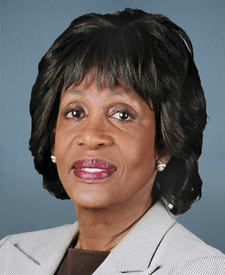
Legislative Progress
IntroducedMs. Waters introduced the following bill; which was referred to …
Impact analysis is available but no clear stakeholder effects identified. View clause-level analysis →
Bill Structure & Actor Mappings
Who is "The Secretary" in each section?
- "secretary_of_health_and_human_services"
- → Secretary of Health and Human Services
- "secretary_of_housing_and_urban_development"
- → Secretary of Housing and Urban Development
Key Definitions
Terms defined in this bill
the following: For fiscal year 2028, a family that meets the requirements under section 2(b) of this Act. For fiscal year 2029, a family having an income that— meets the requirements under section 2(b) of this Act
We use a combination of our own taxonomy and classification in addition to large language models to assess meaning and potential beneficiaries. High confidence means strong textual evidence. Always verify with the original bill text.
Learn more about our methodology