Fairness in Vineyard Data Act
Summary
What This Bill Does
The Fairness in Vineyard Data Act directs the Secretary of Agriculture, through the National Agricultural Statistics Service, to conduct a grape-production survey in each state within one year. The survey must include total acreage plus production, utilization, and acreage by type, variety, county, and year planted, and USDA must publish the results online. Beginning two years after enactment and annually for three more years, NASS must publish data from the five states with the highest grape production in the preceding year. The bill authorizes $2.5 million for fiscal year 2026 for the initial survey and data publication and $1.5 million per year for fiscal years 2027 through 2030 for the annual top-state data.
Who Benefits and How
Vineyard operators benefit from more detailed public data on grape acreage, variety, utilization, county, and planting year. Wine grape growers benefit because production data can improve market planning and regional comparisons. Agricultural economists benefit from standardized NASS grape data across states and leading production regions. State agriculture departments benefit from published data that can support extension, marketing, and crop-planning work.
Who Bears the Burden and How
The National Agricultural Statistics Service must conduct and publish the initial nationwide grape-production survey. The Secretary of Agriculture must publish annual top-five grape-state data for four years after the initial survey. Federal taxpayers fund $2.5 million in fiscal year 2026 and $1.5 million per year from fiscal years 2027 through 2030. Grape producers responding to surveys must provide production, utilization, acreage, variety, county, and planting-year information.
Key Provisions
- Requires a nationwide grape-production survey within one year of enactment.
- Requires data on acreage, production, utilization, type, variety, county, and year planted.
- Requires NASS to publish survey results and annual data from the five highest-production states.
- Authorizes $2.5 million for fiscal year 2026 and $1.5 million for each fiscal year 2027 through 2030.
Evidence Chain:
This summary is generated from the full bill text using AI analysis. Expand "Detailed Analysis" below for identified beneficiaries/burden bearers with clause-level evidence links.
At a Glance
What This Bill Does
Requires USDA's National Agricultural Statistics Service to survey grape production by state, type, variety, county, and year planted, then publish top-state data annually with $8.5 million authorized through 2030.
Key Policy Areas
Agriculture, Data, Wine Industry
Primary Purpose
Requires USDA's National Agricultural Statistics Service to survey grape production by state, type, variety, county, and year planted, then publish top-state data annually with $8.5 million authorized through 2030.
Policy Domains
Resolution provisions
Identified Gains
- Vineyard operators
- Wine grape growers
- Agricultural economists
- State agriculture departments
Identified Costs
- National Agricultural Statistics Service
- Secretary of Agriculture
- Federal taxpayers
- Grape producers responding to surveys
Sponsors
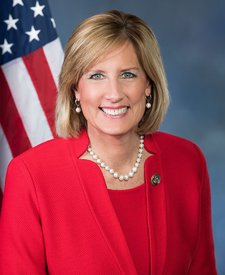

Legislative Progress
In CommitteeMs. Tenney (for herself and Mr. Morelle) introduced the following …
Referred to the House Committee on Agriculture.
Introduced in House
Stakeholder Effects
cui bono?How this legislation distributes effects. Mention counts reflect frequency, not effect magnitude.
Grape producers responding to surveys, Vineyard operators, Wine grape growers
Bill Structure & Actor Mappings
Who is "The Secretary" in each section?
We use a combination of our own taxonomy and classification in addition to large language models to assess meaning and potential beneficiaries. High confidence means strong textual evidence. Always verify with the original bill text.
Learn more about our methodology