No Gratuities for Governing Act of 2025
Summary
What This Bill Does
The No Gratuities for Governing Act amends 18 U.S.C. 666, the federal anti-corruption statute for organizations and state, local, or Tribal governments receiving federal funds. It raises the maximum imprisonment term for existing covered bribery offenses from 10 years to 15 years and adds a gratuities offense. The new language covers knowingly and purposefully giving, offering, promising, demanding, seeking, receiving, accepting, or agreeing to accept anything of value of $1,000 or more for or because of an official act connected to business, transactions, or series of transactions worth $5,000 or more. The bill responds to concerns that post-act gratuities can escape federal corruption liability even when federal funds are involved.
Who Benefits and How
Federal anti-corruption prosecutors benefit because section 666 would cover gratuities tied to official acts, not only bribes. Taxpayers funding federal programs benefit from stronger deterrence against payoff schemes in federally funded organizations and governments. Good-government watchdogs benefit from clearer statutory language after judicial narrowing of gratuity theories. Honest local officials benefit because the bill strengthens penalties against peers who monetize official acts.
Who Bears the Burden and How
State and local officials receiving covered gratuities face new federal criminal exposure. People offering covered gratuities face prosecution for payments of $1,000 or more tied to official acts. Organizations receiving federal funds must train agents on the expanded section 666 gratuities prohibition. Criminal defense attorneys must defend more public-corruption cases under the broadened statute.
Key Provisions
- Raises the maximum prison term for covered section 666 offenses from 10 years to 15 years.
- Creates a gratuities offense for $1,000 or more given or accepted because of an official act.
- Applies the offense to $5,000 or greater business, transaction, or series of transactions involving federally funded entities.
- Extends federal corruption law to state, local, Tribal, agency, and organization agents receiving federal funds.
Evidence Chain:
This summary is generated from the full bill text using AI analysis. Expand "Detailed Analysis" below for identified beneficiaries/burden bearers with clause-level evidence links.
At a Glance
What This Bill Does
Expands federal program-bribery law to criminalize gratuities of $1,000 or more tied to official acts in $5,000 federally funded transactions and raises the maximum prison term to 15 years.
Key Policy Areas
Criminal Justice, Public Corruption, Federal Grants
Primary Purpose
Expands federal program-bribery law to criminalize gratuities of $1,000 or more tied to official acts in $5,000 federally funded transactions and raises the maximum prison term to 15 years.
Policy Domains
Resolution provisions
Identified Gains
- Federal anti-corruption prosecutors
- Taxpayers funding federal programs
- Good-government watchdogs
- Honest local officials
Identified Costs
- State officials receiving covered gratuities
- People offering covered gratuities
- Organizations receiving federal funds
- Criminal defense attorneys
Sponsors
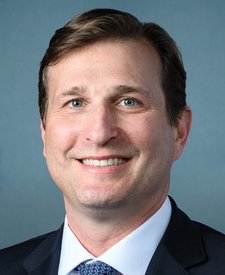
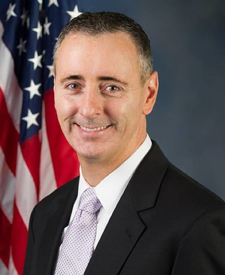
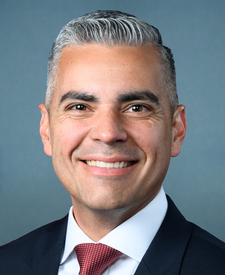
Legislative Progress
In CommitteeMr. Goldman of New York (for himself and Mr. Ciscomani) …
Referred to the House Committee on the Judiciary.
Introduced in House
Stakeholder Effects
cui bono?How this legislation distributes effects. Mention counts reflect frequency, not effect magnitude.
Federal anti-corruption prosecutors, State officials receiving covered gratuities
Positive-direction: Federal anti-corruption prosecutors
Negative-direction: State officials receiving covered gratuities
Bill Structure & Actor Mappings
Who is "The Secretary" in each section?
We use a combination of our own taxonomy and classification in addition to large language models to assess meaning and potential beneficiaries. High confidence means strong textual evidence. Always verify with the original bill text.
Learn more about our methodology