Preventing Crimes Against Veterans Act of 2025
Summary
What This Bill Does
The Preventing Crimes Against Veterans Act adds a new criminal offense to chapter 63 of title 18 for fraud involving veterans' benefits. A person who knowingly executes or attempts a scheme to defraud an individual of veterans' benefits, or to defraud in connection with obtaining those benefits for the individual, can be fined, imprisoned for up to five years, or both. The definition covers benefits provided by federal law for veterans, dependents, and survivors. The bill gives prosecutors a tailored tool for scams that target benefit payments, claims assistance, or benefit access for veterans' families.
Who Benefits and How
Veterans receiving federal benefits benefit because scams against their benefits become a specific federal crime. Veterans' dependents benefit because survivor and dependent benefits are included in the protected benefit definition. Veterans' survivors benefit from federal fraud protection when benefits are targeted after a veteran's death. Federal prosecutors benefit from a tailored charge for schemes involving veterans' benefits.
Who Bears the Burden and How
Fraud defendants targeting veterans face fines and up to five years of imprisonment. Veterans benefits scammers lose room to exploit gaps between general fraud statutes and benefits-specific conduct. Justice Department prosecutors must investigate and prove knowing benefit-fraud schemes under the new section. Federal courts must sentence and manage cases under the new veterans-benefits fraud offense.
Key Provisions
- Creates a new title 18 offense for fraud regarding veterans' benefits.
- Covers schemes to defraud veterans, dependents, or survivors of benefits provided by federal law.
- Authorizes fines, imprisonment for up to five years, or both.
- Adds the new offense to the chapter 63 table of sections as section 1352.
Evidence Chain:
This summary is generated from the full bill text using AI analysis. Expand "Detailed Analysis" below for identified beneficiaries/burden bearers with clause-level evidence links.
At a Glance
What This Bill Does
Creates a federal veterans-benefits fraud offense punishable by fines or up to five years in prison for schemes to defraud veterans, dependents, or survivors of federal benefits.
Key Policy Areas
Veterans, Fraud, Criminal Justice
Primary Purpose
Creates a federal veterans-benefits fraud offense punishable by fines or up to five years in prison for schemes to defraud veterans, dependents, or survivors of federal benefits.
Policy Domains
Resolution provisions
Identified Gains
- Veterans receiving federal benefits
- Veterans' dependents
- Veterans' survivors
- Federal prosecutors
Identified Costs
- Fraud defendants targeting veterans
- Veterans benefits scammers
- Justice Department prosecutors
- Federal courts
Sponsors



Legislative Progress
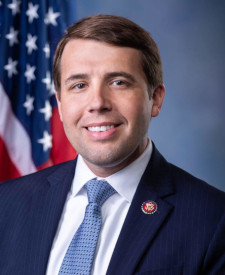
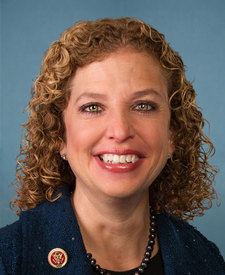
In CommitteeMr. Fitzpatrick (for himself and Ms. Scanlon) introduced the following …
Referred to the House Committee on the Judiciary.
Introduced in House
Stakeholder Effects
cui bono?How this legislation distributes effects. Mention counts reflect frequency, not effect magnitude.
Veterans receiving federal benefits, Veterans' dependents, Veterans' survivors
Bill Structure & Actor Mappings
Who is "The Secretary" in each section?
We use a combination of our own taxonomy and classification in addition to large language models to assess meaning and potential beneficiaries. High confidence means strong textual evidence. Always verify with the original bill text.
Learn more about our methodology