Supporting Trade and Rebuilding Opportunity for National Growth Act
Summary
What This Bill Does
The STRONG Act increases Small Business Administration lending ceilings. It raises a key 7(a) amount from $3.75 million to $7.5 million and the gross 7(a) loan cap from $5 million to $10 million. It also raises development-company loan limits from $5 million or $5.5 million to $10 million. The policy effect is larger federally backed credit capacity for small businesses and certified development-company projects that have outgrown older statutory caps, with corresponding exposure for SBA oversight and federal credit subsidy costs.
Who Benefits and How
SBA 7(a) borrowers benefit because larger projects can fit inside the guaranteed-loan program rather than seeking only private credit. Small business borrowers benefit because higher caps can finance expansions, equipment, real estate, and working capital needs above current limits. Certified development companies benefit because larger section 504-style projects can be supported under the increased loan ceilings. SBA lenders benefit because they can originate larger federally supported loans for eligible small business customers.
Who Bears the Burden and How
The Small Business Administration must manage larger guaranteed-loan exposure and update lending guidance. Federal credit subsidy taxpayers bear additional risk if larger guaranteed loans default. SBA loan reviewers must evaluate larger transactions and collateral packages. Competing private lenders may lose deals that move into higher-cap SBA lending channels.
Key Provisions
- Raises a major SBA 7(a) amount from $3.75 million to $7.5 million.
- Raises the gross 7(a) loan cap from $5 million to $10 million.
- Raises development-company loan limits from $5 million or $5.5 million to $10 million.
- Expands federally supported credit capacity for larger small-business and economic-development projects.
Evidence Chain:
This summary is generated from the full bill text using AI analysis. Expand "Detailed Analysis" below for identified beneficiaries/burden bearers.
At a Glance
What This Bill Does
Doubles major SBA 7(a) and development-company loan caps, raising 7(a) loan authority to $7.5 million and $10 million gross exposure and CDC loan limits to $10 million.
Key Policy Areas
Small Business, Credit, Economic Development
Primary Purpose
Doubles major SBA 7(a) and development-company loan caps, raising 7(a) loan authority to $7.5 million and $10 million gross exposure and CDC loan limits to $10 million.
Policy Domains
Resolution provisions
Identified Gains
Contextual inference, no direct clause citation- SBA 7(a) borrowers
- Small business borrowers
- Certified development companies
- SBA lenders
Contextual inference, no direct clause citation
Identified Costs
Contextual inference, no direct clause citation- Small Business Administration
- Federal credit subsidy taxpayers
- SBA loan reviewers
- Competing private lenders
Contextual inference, no direct clause citation
Sponsors



Legislative Progress
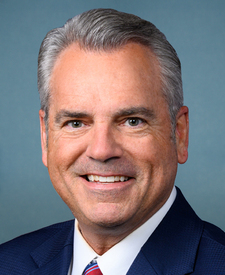
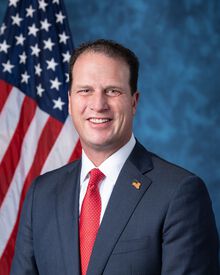
In CommitteeMr. Alford (for himself and Mr. Wied) introduced the following …
Referred to the House Committee on Small Business.
Introduced in House
Stakeholder Effects
cui bono?How this legislation distributes effects. Mention counts reflect frequency, not effect magnitude.
SBA 7(a) borrowers, Small business borrowers
Bill Structure & Actor Mappings
Who is "The Secretary" in each section?
We use a combination of our own taxonomy and classification in addition to large language models to assess meaning and potential beneficiaries. High confidence means strong textual evidence. Always verify with the original bill text.
Learn more about our methodology