Addressing Hostile and Antisemitic Conduct by the Republic of South Africa Act of 2025
Summary
What This Bill Does
The Addressing Hostile and Antisemitic Conduct by the Republic of South Africa Act uses foreign assistance restrictions, sanctions, reporting, and termination conditions to pressure the South African government over conduct Congress characterizes as antisemitic, anti-Israel, and corrupt. It bars direct assistance to the Government of South Africa unless the Secretary of State certifies that the government has ceased formal support for international legal actions unfairly targeting Israel or Jewish individuals, addressed corruption, and engaged constructively with U.S. diplomats. It exempts humanitarian aid and NGO-run public health programs. It also requires the President to impose Global Magnitsky sanctions on covered South African officials, requires a State Department report within 90 days and annual updates for three years, and ends sections 4 and 5 only after presidential certification.
Who Benefits and How
Israeli diplomatic interests benefit because the bill pressures South Africa to stop formal support for legal actions targeting Israel. Jewish communities targeted through international forums benefit from sanctions and reporting aimed at officials using public office for antisemitic conduct. U.S. taxpayers benefit because direct aid to the South African government is barred unless certification conditions are met. Humanitarian and NGO public health programs benefit from explicit carveouts preserving aid not routed as direct government assistance.
Who Bears the Burden and How
The Government of South Africa loses access to direct U.S. assistance while certification conditions remain unmet. South African officials covered by the Global Magnitsky criteria face sanctions exposure. The Secretary of State must make certification decisions and submit reports on South African conduct and U.S. assistance. U.S. diplomatic staff must manage a more confrontational aid and sanctions posture while maintaining permitted engagement.
Key Provisions
- Prohibits direct assistance to the Government of South Africa absent Secretary of State certification.
- Requires Global Magnitsky sanctions on covered current or former South African officials.
- Requires a State Department report within 90 days and annual updates for three years.
- Preserves humanitarian aid, NGO-administered public health programs, private charity, diplomatic engagement, and unrelated trade rules.
Evidence Chain:
This summary is generated from the full bill text using AI analysis. Expand "Detailed Analysis" below for identified beneficiaries/burden bearers with clause-level evidence links.
At a Glance
What This Bill Does
Cuts off direct U.S. assistance to the Government of South Africa and mandates Global Magnitsky sanctions on South African officials tied to antisemitic conduct, anti-Israel targeting, or gross corruption until presidential certification conditions are met.
Key Policy Areas
Foreign Affairs, Sanctions, Human Rights
Primary Purpose
Cuts off direct U.S. assistance to the Government of South Africa and mandates Global Magnitsky sanctions on South African officials tied to antisemitic conduct, anti-Israel targeting, or gross corruption until presidential certification conditions are met.
Policy Domains
Resolution provisions
Identified Gains
- Israeli diplomatic interests
- Jewish communities targeted through international forums
- U.S. taxpayers
- Humanitarian aid organizations
Identified Costs
- Government of South Africa
- South African officials
- Secretary of State
- U.S. diplomatic staff
Legislative Progress
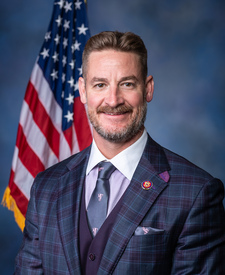
In CommitteeMr. Steube introduced the following bill; which was referred to …
Referred to the Committee on Foreign Affairs, and in addition …
Introduced in House
Stakeholder Effects
cui bono?How this legislation distributes effects. Mention counts reflect frequency, not effect magnitude.
Government of South Africa, Secretary of State, South African officials
Jewish communities targeted through international forums
Bill Structure & Actor Mappings
Who is "The Secretary" in each section?
We use a combination of our own taxonomy and classification in addition to large language models to assess meaning and potential beneficiaries. High confidence means strong textual evidence. Always verify with the original bill text.
Learn more about our methodology