Lowering Broadband Costs for Consumers Act of 2025
Summary
What This Bill Does
The Lowering Broadband Costs for Consumers Act changes who pays into and who can receive support from the Universal Service Fund. Within 18 months, the FCC must complete a rulemaking expanding the USF contribution base so broadband providers and edge providers contribute on an equitable and nondiscriminatory basis to universal service mechanisms. Edge providers include digital advertising services, search engines, social media platforms, streaming services, app stores, cloud computing services, over-the-top messaging, videoconferencing, video gaming, and e-commerce platforms. An edge provider is exempt if it transmitted less than 3 percent of U.S. broadband data during the most recent year and earned less than $5 billion in U.S. revenue, and the FCC may exempt edge or broadband providers when contributions would be de minimis. The FCC may later revise contribution rules. Within 18 months, the FCC must also adopt a new high-cost USF mechanism that provides specific, predictable, and sufficient support for expenses an eligible telecommunications carrier broadband provider incurs providing supported services in high-cost areas when those expenses are not otherwise recovered through affordable end-user rates or other USF support. Only one eligible telecommunications carrier per area can receive support from the new mechanism. FCC enforces the Act using Communications Act powers.
Who Benefits and How
Broadband consumers benefit if a broader contribution base reduces pressure on traditional telecommunications fees or supports lower costs. High-cost area providers benefit from a new USF support mechanism for unrecovered supported-service expenses. Eligible telecommunications carriers benefit if they are selected as the single supported carrier in a high-cost area. Small edge providers benefit from exemptions tied to less than 3 percent of U.S. broadband data and under $5 billion in U.S. revenue.
Who Bears the Burden and How
Large edge providers must contribute to the Universal Service Fund if FCC rules include them and no exemption applies. Broadband providers must contribute under the expanded USF contribution base. FCC USF staff must complete two rulemakings within 18 months and enforce contribution and support rules. Nonselected eligible carriers in a high-cost area cannot receive support from the new mechanism. End users of edge services may bear pass-through costs if providers recover USF contributions through prices.
Key Provisions
- Requires FCC rulemaking within 18 months to expand USF contributions to broadband and edge providers.
- Exempts edge providers below 3 percent of U.S. broadband data and $5,000,000,000 in U.S. revenue.
- Allows de minimis exemptions for edge or broadband providers or classes.
- Requires a new high-cost support mechanism for unrecovered broadband supported-service expenses.
- Limits new high-cost support to one eligible telecommunications carrier per area.
- Provides FCC enforcement authority under the Communications Act.
Evidence Chain:
This summary is generated from the full bill text using AI analysis. Expand "Detailed Analysis" below for identified beneficiaries/burden bearers with clause-level evidence links.
At a Glance
What This Bill Does
Requires the FCC within 18 months to reform the Universal Service Fund contribution base so broadband providers and edge providers contribute equitably and nondiscriminatorily, exempts edge providers transmitting less than 3 percent of U.S. broadband data and earning under $5,000,000,000 in U.S. revenue and de minimis providers or provider classes, authorizes later FCC revisions, requires within 18 months a new high-cost USF mechanism providing specific, predictable, and sufficient support for eligible telecommunications carrier broadband providers' unrecovered supported-service expenses in high-cost areas, limits that support to one eligible telecommunications carrier per area, and gives the FCC Communications Act enforcement powers.
Key Policy Areas
Broadband, Universal Service, Telecommunications
Primary Purpose
Requires the FCC within 18 months to reform the Universal Service Fund contribution base so broadband providers and edge providers contribute equitably and nondiscriminatorily, exempts edge providers transmitting less than 3 percent of U.S. broadband data and earning under $5,000,000,000 in U.S. revenue and de minimis providers or provider classes, authorizes later FCC revisions, requires within 18 months a new high-cost USF mechanism providing specific, predictable, and sufficient support for eligible telecommunications carrier broadband providers' unrecovered supported-service expenses in high-cost areas, limits that support to one eligible telecommunications carrier per area, and gives the FCC Communications Act enforcement powers.
Policy Domains
Resolution provisions
Identified Gains
- Broadband consumers
- High-cost area providers
- Eligible telecommunications carriers
- Small edge providers
Identified Costs
- Large edge providers
- Broadband providers
- FCC USF staff
- Nonselected eligible carriers
- End users of edge services
Sponsors
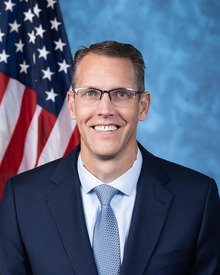
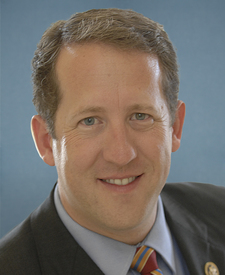
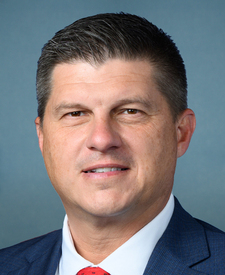

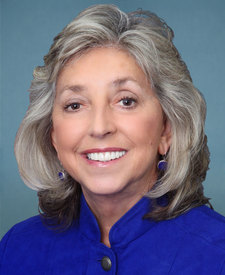
Legislative Progress
In CommitteeMr. Feenstra (for himself, Ms. Leger Fernandez, Mr. Mann, Mr. …
Referred to the House Committee on Energy and Commerce.
Introduced in House
Stakeholder Effects
cui bono?How this legislation distributes effects. Mention counts reflect frequency, not effect magnitude.
Broadband consumers, Broadband providers, Eligible telecommunications carriers
Positive-direction: Broadband consumers, Eligible telecommunications carriers, High-cost area providers
Negative-direction: Broadband providers, Nonselected eligible carriers
Large edge providers, Small edge providers
Positive-direction: Small edge providers
Negative-direction: Large edge providers
Bill Structure & Actor Mappings
Who is "The Secretary" in each section?
We use a combination of our own taxonomy and classification in addition to large language models to assess meaning and potential beneficiaries. High confidence means strong textual evidence. Always verify with the original bill text.
Learn more about our methodology