POST Act of 2025
Summary
What This Bill Does
The POST Act tightens the revenue rule for proprietary institutions of higher education. A for-profit college would qualify only if it receives at least 15 percent of its revenue from sources other than federal education assistance funds. The bill defines federal education assistance funds broadly as federal funds disbursed or delivered to or on behalf of a student to attend the institution, not only title IV aid. It also defines alternative financing agreements involving students and the institution, ownership-tree entities, commonly owned entities, related entities, or affiliates, so institutions cannot easily count related financing as independent non-federal revenue. Revenue calculations must use cash-basis accounting and include only specified categories such as tuition, fees, required institutional charges, certain supervised educational activities, federal job-training contracts for low-income individuals, and funds paid by students or unrelated parties for qualifying non-title-IV programs that do not overlap with eligible programs. The Education Department must publish, for each proprietary institution receiving title IV aid, the amount and percentage of revenue from federal education assistance funds and from other sources based on audited financial statements. The amendments take effect in the second full award year after enactment.
Who Benefits and How
Students at proprietary colleges benefit from stronger limits on schools that rely overwhelmingly on federal education assistance. Federal taxpayers benefit if for-profit colleges must show more non-federal market support before receiving federal aid. Education Department oversight staff benefit from public federal and non-federal revenue disclosures based on audited statements. Competing nonprofit colleges benefit if for-profit schools face stricter federal-aid eligibility rules.
Who Bears the Burden and How
Proprietary colleges must derive at least 15 percent of revenue from sources other than federal education assistance funds. College ownership affiliates cannot easily use related alternative financing to inflate non-federal revenue. Alternative financing providers tied to institutions face stricter treatment in revenue calculations. For-profit college compliance staff must calculate cash-basis revenue under the new definitions and audited disclosure rules. Schools failing the 85/15 rule risk losing proprietary institution eligibility.
Key Provisions
- Requires proprietary colleges to receive at least 15 percent of revenue from non-federal education assistance sources.
- Defines federal education assistance funds broadly beyond title IV funds.
- Defines alternative financing agreements involving institutional owners, affiliates, common ownership, or related entities.
- Limits revenue calculations to specified cash-basis categories.
- Requires public Education Department data on federal and non-federal revenue amounts and percentages.
- Applies beginning in the second full award year after enactment.
Evidence Chain:
This summary is generated from the full bill text using AI analysis. Expand "Detailed Analysis" below for identified beneficiaries/burden bearers with clause-level evidence links.
At a Glance
What This Bill Does
Rewrites the proprietary-institution 85/15 rule so a for-profit college qualifies only if at least 15 percent of revenue comes from sources other than federal education assistance funds, defines alternative financing agreements involving students and institutions, owners, affiliates, or related entities, defines federal education assistance funds as federal funds disbursed or delivered to or on behalf of a student to attend the institution, tightens cash-basis revenue calculations and exclusions, requires Education Department public data on each proprietary institution's federal and non-federal revenue amounts and percentages from audited financial statements, and applies beginning in the second full award year after enactment.
Key Policy Areas
Higher Education, Student Aid, For-Profit Colleges
Primary Purpose
Rewrites the proprietary-institution 85/15 rule so a for-profit college qualifies only if at least 15 percent of revenue comes from sources other than federal education assistance funds, defines alternative financing agreements involving students and institutions, owners, affiliates, or related entities, defines federal education assistance funds as federal funds disbursed or delivered to or on behalf of a student to attend the institution, tightens cash-basis revenue calculations and exclusions, requires Education Department public data on each proprietary institution's federal and non-federal revenue amounts and percentages from audited financial statements, and applies beginning in the second full award year after enactment.
Policy Domains
Resolution provisions
Identified Gains
- Students at proprietary colleges
- Federal taxpayers
- Education Department oversight staff
- Competing nonprofit colleges
Identified Costs
- Proprietary colleges
- College ownership affiliates
- Alternative financing providers
- For-profit college compliance staff
- Schools failing the 85/15 rule
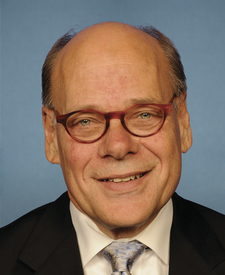
Sponsors
Legislative Progress
In CommitteeMr. Cohen introduced the following bill; which was referred to …
Referred to the House Committee on Education and Workforce.
Introduced in House
Stakeholder Effects
cui bono?How this legislation distributes effects. Mention counts reflect frequency, not effect magnitude.
College ownership affiliates, Competing nonprofit colleges, For-profit college compliance staff
Positive-direction: Students at proprietary colleges
Negative-direction: College ownership affiliates, For-profit college compliance staff, Proprietary colleges, Schools failing the 85/15 rule
Bill Structure & Actor Mappings
Who is "The Secretary" in each section?
We use a combination of our own taxonomy and classification in addition to large language models to assess meaning and potential beneficiaries. High confidence means strong textual evidence. Always verify with the original bill text.
Learn more about our methodology