Protecting Private Job Creators Act
Summary
What This Bill Does
This bill responds to the Securities and Exchange Commission's treatment of Rule 15c2-11 in fixed-income markets. The findings say Rule 15c2-11 was historically understood as an OTC equity-market disclosure rule, that fixed-income markets operate differently, and that applying the rule to Rule 144A fixed-income securities would change long-standing requirements without a separate rulemaking or cost-benefit analysis. The operative section then provides that 17 C.F.R. 240.15c2-11 does not apply to quotations of fixed-income securities.
The bill defines fixed-income security broadly to include notes, bonds, debentures, certificates of deposit for a security, certificates of deposit, asset-backed securities, other evidence of indebtedness, and convertible debt instruments or securities with warrants or subscription rights. The effect is to keep broker-dealers from having to satisfy Rule 15c2-11 quotation requirements when publishing quotations for debt securities, including Rule 144A debt sold to qualified institutional buyers.
Who Benefits and How
Fixed-income broker-dealers benefit because they no longer need to apply Rule 15c2-11 review and information requirements to bond and debt quotation activity. Rule 144A debt issuers benefit because their securities can continue trading in institutional markets without additional quotation-related compliance barriers. Qualified institutional buyer bond investors benefit from market liquidity if broker-dealers keep quoting fixed-income securities. Private companies issuing debt securities benefit from reduced risk that secondary-market quotation restrictions increase borrowing costs.
Who Bears the Burden and How
Securities and Exchange Commission staff lose authority to apply Rule 15c2-11 to fixed-income quotations. Investor protection advocates bear a transparency burden if some fixed-income securities trade with less quotation-linked information review. Compliance officers at broker-dealers still need to distinguish covered fixed-income quotations from OTC equity quotations. OTC equity-market participants do not receive the exemption and remain under the existing quotation rule.
Key Provisions
- Provides that SEC Rule 15c2-11 does not apply to quotations of fixed-income securities.
- Provides a fixed-income security definition covering notes, bonds, debentures, certificates of deposit, asset-backed securities, and other indebtedness.
- Provides coverage for convertible debt and debt securities carrying warrants or subscription rights.
- Uses findings to distinguish fixed-income markets from OTC equity markets and Rule 144A information practices.
Evidence Chain:
This summary is generated from the full bill text using AI analysis. Expand "Detailed Analysis" below for identified beneficiaries/burden bearers with clause-level evidence links.
At a Glance
What This Bill Does
Exempts quotations of fixed-income securities from SEC Rule 15c2-11, preventing the rule from applying to Rule 144A debt and other fixed-income quotation markets after no-action relief expires.
Key Policy Areas
Capital Markets, Securities Regulation, Debt Finance
Primary Purpose
Exempts quotations of fixed-income securities from SEC Rule 15c2-11, preventing the rule from applying to Rule 144A debt and other fixed-income quotation markets after no-action relief expires.
Policy Domains
House resolution provisions
Identified Gains
- Fixed-income broker-dealers
- Rule 144A debt issuers
- Qualified institutional buyer bond investors
- Private company finance officers
Identified Costs
- Securities and Exchange Commission staff
- Investor protection advocates
- Broker-dealer compliance officers
- OTC equity-market participants
Sponsors

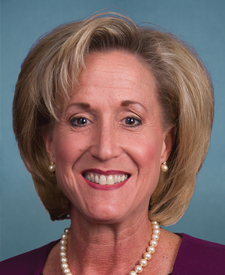

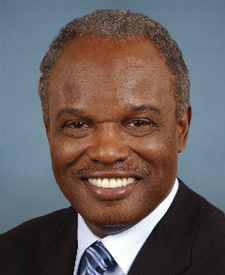

Legislative Progress
ReportedPlaced on the Union Calendar, Calendar No. 448.
Reported (Amended) by the Committee on Financial Services. H. Rept. …
Additional sponsors: Mr. Gottheimer, Mr. David Scott of Georgia, Mrs. …
Reported with an amendment, committed to the Committee of the …
Ordered to be Reported (Amended) by the Yeas and Nays: …
Committee Consideration and Mark-up Session Held
Committee Consideration and Mark-up Session Held
Mr. Downing (for himself and Mr. Fields) introduced the following …
Referred to the House Committee on Financial Services.
Introduced in House
Stakeholder Effects
cui bono?How this legislation distributes effects. Mention counts reflect frequency, not effect magnitude.
Fixed-income broker-dealers, Investor protection advocates, Qualified institutional buyer bond investors
Positive-direction: Fixed-income broker-dealers, Qualified institutional buyer bond investors, Rule 144A debt issuers
Negative-direction: Investor protection advocates
Bill Structure & Actor Mappings
Who is "The Secretary" in each section?
- "sec"
- → Securities and Exchange Commission
We use a combination of our own taxonomy and classification in addition to large language models to assess meaning and potential beneficiaries. High confidence means strong textual evidence. Always verify with the original bill text.
Learn more about our methodology