JUST Act of 2025
Summary
What This Bill Does
The JUST Act restructures civil-rights accountability inside USDA. The Agriculture Secretary must ensure appropriate corrective action against USDA officials or employees found by USDA administrative findings, federal administrative or judicial proceedings, civil-rights settlements, USDA Inspector General audits or investigations, or Office of Special Counsel investigations to have engaged in discrimination, retaliation, harassment, civil-rights violations, or related misconduct while administering USDA programs. Covered misconduct includes failing to provide or accurately provide service receipts, failing to give requested program information, failing to timely process applications, or delaying program services. Corrective action can include policy changes, removal, suspension without pay, reduction in grade or pay, or reprimand. The bill establishes a Senate-confirmed Assistant Secretary of Agriculture for Civil Rights responsible for compliance across USDA agencies and programs, civil-rights administration for employees and program participants, and incorporation of civil-rights components into strategic planning. Within 120 days, USDA must create an Office of Legal Advisor for Civil Rights reporting directly to the Assistant Secretary, serving as the sole office providing civil-rights legal advice and complaint-investigation support, and barred from defending USDA against discrimination claims. The Assistant Secretary gains authority to grant equitable relief to civil-rights complainants in USDA program complaints and direct farm ownership, operating, or emergency loan complaints, without prior approval and reversible only by the Secretary. USDA must also create an independent Office of the Civil Rights Ombudsperson within 120 days to help producers and customers navigate civil-rights review, understand appeals and informal hearings, raise equitable-access issues, obtain needed departmental records within 60 days, and report annually to House and Senate Agriculture Committees. Finally, National Appeals Division hearings must place the burden on the agency to prove by substantial evidence that its adverse decision was valid.
Who Benefits and How
Farmers facing USDA discrimination benefit from corrective-action requirements and independent civil-rights leadership. Socially disadvantaged producers benefit from stronger receipt, application-processing, program-information, and equitable-relief protections. USDA program participants benefit from an Ombudsperson who can help navigate civil-rights review and appeals. Civil-rights complainants in USDA loan programs benefit because the Assistant Secretary can grant equitable relief without prior internal approval. National Appeals Division appellants benefit because USDA agencies bear the burden of proving adverse decisions by substantial evidence.
Who Bears the Burden and How
USDA employees found to commit covered misconduct face reprimand, suspension, grade or pay reduction, removal, or policy corrective action. USDA leadership must establish the Assistant Secretary position, legal advisor office, and independent Ombudsperson office. USDA agencies must provide Ombudsperson record requests within 60 days and adjust to annual oversight reports. USDA agency counsel lose control over civil-rights legal advice where the new Legal Advisor office is responsible. USDA agencies face a higher hearing burden in National Appeals Division cases.
Key Provisions
- Requires corrective action for USDA employee civil-rights misconduct and service failures.
- Establishes a Senate-confirmed Assistant Secretary of Agriculture for Civil Rights.
- Creates an Office of Legal Advisor for Civil Rights within 120 days and bars it from defending USDA discrimination claims.
- Authorizes the Assistant Secretary to grant equitable relief in program and farm-loan civil-rights complaints.
- Creates an independent Civil Rights Ombudsperson office with records access and annual reports.
- Requires USDA agencies to prove adverse decisions by substantial evidence in National Appeals Division hearings.
Evidence Chain:
This summary is generated from the full bill text using AI analysis. Expand "Detailed Analysis" below for identified beneficiaries/burden bearers with clause-level evidence links.
At a Glance
What This Bill Does
Strengthens USDA civil-rights accountability by requiring corrective action for USDA employees found to commit discrimination, retaliation, harassment, civil-rights violations, receipt failures, misinformation, or service delays; establishing a Senate-confirmed Assistant Secretary of Agriculture for Civil Rights and independent legal advisor office; expanding equitable relief authority; creating an independent Civil Rights Ombudsperson with records access and annual reports; and shifting National Appeals Division hearing burden of proof to USDA agencies.
Key Policy Areas
Agriculture, Civil Rights, Government Accountability
Primary Purpose
Strengthens USDA civil-rights accountability by requiring corrective action for USDA employees found to commit discrimination, retaliation, harassment, civil-rights violations, receipt failures, misinformation, or service delays; establishing a Senate-confirmed Assistant Secretary of Agriculture for Civil Rights and independent legal advisor office; expanding equitable relief authority; creating an independent Civil Rights Ombudsperson with records access and annual reports; and shifting National Appeals Division hearing burden of proof to USDA agencies.
Policy Domains
Resolution provisions
Identified Gains
- Farmers facing USDA discrimination
- Socially disadvantaged producers
- USDA program participants
- Civil-rights complainants
- National Appeals Division appellants
Identified Costs
- USDA employees committing misconduct
- USDA leadership
- USDA agencies
- USDA agency counsel
- USDA National Appeals staff
Sponsors

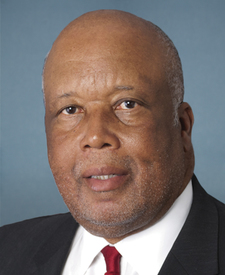
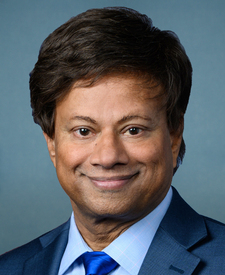
Legislative Progress
In CommitteeMr. Jackson of Illinois (for himself and Mr. Thompson of …
Referred to the House Committee on Agriculture.
Introduced in House
Stakeholder Effects
cui bono?How this legislation distributes effects. Mention counts reflect frequency, not effect magnitude.
Farmers facing USDA discrimination, National Appeals Division appellants, Socially disadvantaged producers
USDA agencies, USDA agency counsel, USDA leadership
Bill Structure & Actor Mappings
Who is "The Secretary" in each section?
We use a combination of our own taxonomy and classification in addition to large language models to assess meaning and potential beneficiaries. High confidence means strong textual evidence. Always verify with the original bill text.
Learn more about our methodology