To amend the Fair Labor Standards Act of 1938 to provide for an increase to the minimum wage, and for other purposes.
Summary
What This Bill Does
The bill amends FLSA Section 6(a)(1) to phase the federal minimum wage from $7.25/hour to $17.00/hour over three years ($10.25 in year 1, $13.75 in year 2, $17.00 in year 3), creates phases out all FLSA subminimum wage categories over three years, and amends FLSA Section 3(m)(2) to phase tipped employee base cash wage from the current $2.13/hour to full parity with the standard minimum wage over three years ($7.09/$12.05/$17.00, then full amount). It relies on rate increase, reporting requirements, indexing formula, and authorization revocation. The main policy areas are Labor, Agriculture, Social Welfare, and Trade.
Who Benefits and How
Tipped workers (restaurant servers, bartenders, hotel staff) could gain revenue opportunities, Low-wage workers earning at or below the federal minimum wage could gain revenue opportunities, and Low-income workers aged 19-24 without qualifying children could gain revenue opportunities.
Who Bears the Burden and How
Restaurant and hospitality employers could face higher costs, Sheltered workshops and employers using Section 14(c) certificates could face higher costs, and Federal Treasury could face higher costs.
Key Provisions
- Amends FLSA Section 6(a)(1) to phase the federal minimum wage from $7.25/hour to $17.00/hour over three years ($10.25 in year 1, $13.75 in year 2, $17.00 in year 3).
- Creates phases out all FLSA subminimum wage categories over three years.
- Amends FLSA Section 3(m)(2) to phase tipped employee base cash wage from the current $2.13/hour to full parity with the standard minimum wage over three years ($7.09/$12.05/$17.00, then full amount).
- Creates doubles the civil penalty for FLSA violations from $1,100 to $2,200 per violation by amending Section 16(e)(2). Takes effect 120 days after enactment (faster timeline than the wage provisions).
- Authorizes the Secretary of Labor to make grants to eligible State, local, and Tribal governments for two purposes: (1) developing and enforcing wage laws and regulations, and (2) improving compliance with wage laws...
Evidence Chain:
This summary is generated from the full bill text using AI analysis. Expand "Detailed Analysis" below for identified beneficiaries/burden bearers with clause-level evidence links.
At a Glance
What This Bill Does
The bill amends FLSA Section 6(a)(1) to phase the federal minimum wage from $7.25/hour to $17.00/hour over three years ($10.25 in year 1, $13.75 in year 2, $17.00 in year 3), creates phases out all FLSA subminimum wage categories over three years, and amends FLSA Section 3(m)(2) to phase tipped employee base cash wage from the current $2.13/hour to full parity with the standard minimum wage over three years ($7.09/$12.05/$17.00, then full amount).
Key Policy Areas
Labor, Agriculture, Social Welfare, Trade
Primary Purpose
The bill amends FLSA Section 6(a)(1) to phase the federal minimum wage from $7.25/hour to $17.00/hour over three years ($10.25 in year 1, $13.75 in year 2, $17.00 in year 3), creates phases out all FLSA subminimum wage categories over three years, and amends FLSA Section 3(m)(2) to phase tipped employee base cash wage from the current $2.13/hour to full parity with the standard minimum wage over three years ($7.09/$12.05/$17.00, then full amount).
Policy Domains
Sections 2-5 -- Minimum Wage Increase, Subminimum Wage Elimination, Tipped Employees, and Civil Penalties
Identified Gains
- Tipped workers (restaurant servers, bartenders, hotel staff)
- Low-wage workers earning at or below the federal minimum wage
- Low-income workers aged 19-24 without qualifying children
- Workers with disabilities currently paid subminimum wages under Section 14(c) certificates
- Low-income childless workers (all ages, doubled credit rate)
Identified Costs
- Restaurant and hospitality employers
- Sheltered workshops and employers using Section 14(c) certificates
- Federal Treasury
- Employers who violate Fair Labor Standards Act provisions
- Employers in labor-intensive low-wage industries
Sponsors
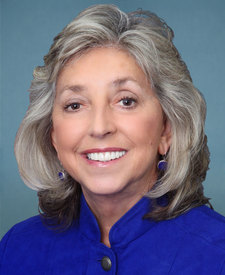
Legislative Progress
IntroducedMs. Titus introduced the following bill; which was referred to …
Stakeholder Effects
cui bono?How this legislation distributes effects. Mention counts reflect frequency, not effect magnitude.
Bureau of Labor Statistics, Department of Labor Wage and Hour Division (enhanced deterrent tool), Federal Treasury
Positive-direction: Department of Labor Wage and Hour Division (enhanced deterrent tool), Local government wage enforcement agencies, State government wage enforcement agencies, Tribal governments
Negative-direction: Bureau of Labor Statistics, Federal Treasury, Internal Revenue Service (eligibility verification for foster/homeless youth), Secretary of Labor (loss of subminimum wage certificate authority)
Employers subject to state/local wage enforcement (increased scrutiny), Employers who violate Fair Labor Standards Act provisions, Labor organizations representing hospitality workers
Positive-direction: Labor organizations representing hospitality workers, Low-income childless workers (all ages, doubled credit rate), Low-income workers aged 19-24 without qualifying children, Low-wage workers earning at or below the federal minimum wage, Young workers in training positions currently paid subminimum youth wages
Negative-direction: Employers subject to state/local wage enforcement (increased scrutiny), Employers who violate Fair Labor Standards Act provisions
Employers in labor-intensive low-wage industries, Employers of youth trainees and apprentices, Managers and supervisors in tipped industries (prohibited from taking employee tips)
Positive-direction: Tipped workers (restaurant servers, bartenders, hotel staff)
Negative-direction: Employers in labor-intensive low-wage industries, Employers of youth trainees and apprentices, Managers and supervisors in tipped industries (prohibited from taking employee tips), Restaurant and hospitality employers
Sheltered workshops and employers using Section 14(c) certificates, Workers with disabilities currently paid subminimum wages under Section 14(c) certificates
Positive-direction: Workers with disabilities currently paid subminimum wages under Section 14(c) certificates
Negative-direction: Sheltered workshops and employers using Section 14(c) certificates
Hospitality industry employers (hotels, restaurants, gaming), Hotel and lodging employers
Bill Structure & Actor Mappings
Who is "The Secretary" in each section?
- "the_secretary"
- → Secretary of Labor
- "the_secretary"
- → Secretary of Labor
- "the_secretary"
- → Secretary of the Treasury
Note: The Secretary in Sections 2-8 refers to the Secretary of Labor; in Section 9 (EITC provisions) the Secretary refers to the Secretary of the Treasury (standard IRC convention).
Key Definitions
Terms defined in this bill
Has the meaning given in section 3(c) of the Fair Labor Standards Act of 1938 (29 U.S.C. 3(c)).
The government of an Indian Tribe as defined in section 4(e) of the Indian Self-Determination and Education Assistance Act (25 U.S.C. 5304(e)).
An individual who is an eligible student during at least 5 calendar months during the taxable year.
The median hourly wage for the most recent four-quarter period for which data are available that precedes the relevant 1-year period.
The 1-year period for which the minimum wage is being determined under the auto-indexing subsection.
Age 19 generally; age 24 for specified students (excluding foster/homeless youth); age 18 for qualified former foster youth or qualified homeless youth.
An individual who certifies they are either an unaccompanied homeless child or youth, or unaccompanied, at risk of homelessness, and self-supporting.
An individual who was in foster care on or after age 14 under a plan supervised by an entity administering or eligible to administer a part B or part E title IV Social Security Act plan.
We use a combination of our own taxonomy and classification in addition to large language models to assess meaning and potential beneficiaries. High confidence means strong textual evidence. Always verify with the original bill text.
Learn more about our methodology