Veterans Skilled Trades Transition Act
Summary
What This Bill Does
The Veterans Skilled Trades Transition Act is a reporting bill focused on military credential transfer. Within 180 days, the Defense Secretary, in consultation with the Veterans Affairs Secretary and Labor Secretary, must submit a report that builds on the 2018 DoD Credentialing Utilization report. The report must assess how many veterans successfully transfer eligible professional credentials into civilian jobs, identify which certifications are most commonly used for post-military civilian employment, including airplane mechanics, and assess other barriers veterans face when transferring military mechanical skills to state certifications. The bill defines applicable licensing authority, eligible professional credential, servicemember, and State, so the inquiry is specifically about the bridge between title 10 credentialing payments and state civilian licensing.
Who Benefits and How
Veterans with military mechanical credentials benefit from congressional attention to licensing barriers that block civilian employment. Veteran airplane mechanics benefit because the report must examine certifications commonly used after military service. State licensing boards benefit from data that can identify where military training maps cleanly to civilian credentials. Veterans workforce organizations benefit from a federal report they can use to push credential-recognition reforms.
Who Bears the Burden and How
Department of Defense credentialing staff must compile updated credential-transfer and employment data. VA workforce staff and Labor Department staff must consult on the report. State licensing authorities may face scrutiny if their rules make military skill transfer difficult. Congressional veterans committees must use the report if they pursue follow-up licensing legislation.
Key Provisions
- Requires a Defense Department report within 180 days on veteran credential transfer into civilian jobs.
- Requires assessment of which military-funded certifications are most commonly used after service.
- Requires assessment of barriers to transferring military mechanical skills to state certifications.
- Uses VA and Labor consultation to connect military credentialing with civilian workforce policy.
Evidence Chain:
This summary is generated from the full bill text using AI analysis. Expand "Detailed Analysis" below for identified beneficiaries/burden bearers with clause-level evidence links.
At a Glance
What This Bill Does
Requires the Defense Secretary, with VA and Labor consultation, to report to Congress within 180 days on how many veterans transfer military-acquired professional credentials to civilian jobs, which certifications are most used after service, and what barriers keep mechanical skills such as aircraft maintenance from becoming state civilian credentials.
Key Policy Areas
Veterans, Workforce, Occupational Licensing
Primary Purpose
Requires the Defense Secretary, with VA and Labor consultation, to report to Congress within 180 days on how many veterans transfer military-acquired professional credentials to civilian jobs, which certifications are most used after service, and what barriers keep mechanical skills such as aircraft maintenance from becoming state civilian credentials.
Policy Domains
Resolution provisions
Identified Gains
- Veterans with mechanical credentials
- Veteran airplane mechanics
- State licensing boards
- Veterans workforce organizations
Identified Costs
- Defense credentialing staff
- VA workforce staff
- Labor Department staff
- State licensing authorities
Legislative Progress
In CommitteeReferred to the Subcommittee on Economic Opportunity.
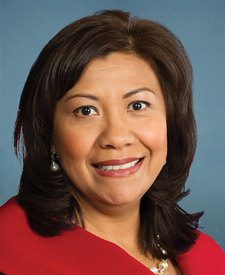
Mrs. Torres of California introduced the following bill; which was …
Referred to the Committee on Armed Services, and in addition …
Introduced in House
Stakeholder Effects
cui bono?How this legislation distributes effects. Mention counts reflect frequency, not effect magnitude.
Bill Structure & Actor Mappings
Who is "The Secretary" in each section?
We use a combination of our own taxonomy and classification in addition to large language models to assess meaning and potential beneficiaries. High confidence means strong textual evidence. Always verify with the original bill text.
Learn more about our methodology