Connor’s Law
Summary
What This Bill Does
Connor's Law turns the federal English-language qualification for commercial motor vehicle drivers into a mandatory out-of-service enforcement rule. Commercial motor vehicle operators must read and speak English sufficiently to converse with the general public, understand highway traffic signs and signals in English, respond to official inquiries, and make entries on reports and records. If an authorized enforcement officer determines a driver does not satisfy 49 CFR 391.11(b)(2), the officer must declare the operator out of service. The bill does not alter other out-of-service authority under federal law, regulations, or the North American Standard Out-of-Service Criteria.
Who Benefits and How
Highway users benefit if commercial drivers can understand English traffic signs, signals, and official safety instructions. State commercial vehicle inspectors benefit from a clear statutory duty to issue out-of-service orders for noncompliance. Motor carriers with English-proficient drivers benefit from clearer enforcement expectations across jurisdictions. Crash-victim safety advocates benefit from a rule framed around communication and road-sign comprehension.
Who Bears the Burden and How
Commercial motor vehicle drivers with limited English proficiency face removal from service when inspectors find noncompliance. Motor carriers must ensure drivers meet the English-language qualification before dispatch. State enforcement agencies must train officers and apply out-of-service orders consistently. Freight shippers may face delays if a driver is declared out of service during inspection.
Key Provisions
- Requires commercial motor vehicle drivers to read and speak English sufficiently for public, sign, inquiry, and record duties.
- Requires enforcement officers to declare noncompliant drivers out of service.
- Uses existing 49 CFR 391.11(b)(2) as the language-qualification standard.
- Preserves other federal and North American Standard out-of-service authorities.
Evidence Chain:
This summary is generated from the full bill text using AI analysis. Expand "Detailed Analysis" below for identified beneficiaries/burden bearers with clause-level evidence links.
At a Glance
What This Bill Does
Requires commercial motor vehicle operators to be able to read and speak English well enough to converse with the public, understand highway signs and signals, answer official inquiries, and make required reports and records, and requires enforcement officers to place noncompliant drivers out of service.
Key Policy Areas
Transportation, Trucking, Highway Safety
Primary Purpose
Requires commercial motor vehicle operators to be able to read and speak English well enough to converse with the public, understand highway signs and signals, answer official inquiries, and make required reports and records, and requires enforcement officers to place noncompliant drivers out of service.
Policy Domains
Resolution provisions
Identified Gains
- Highway users
- State commercial vehicle inspectors
- Motor carriers
- Crash-victim safety advocates
Identified Costs
- Drivers with limited English proficiency
- Motor carriers
- State enforcement agencies
- Freight shippers
Sponsors


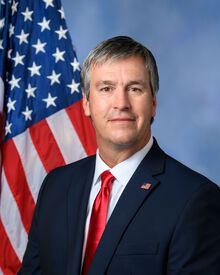


Legislative Progress
In CommitteeReferred to the Subcommittee on Highways and Transit.
Mr. Taylor (for himself, Ms. Hageman, Mr. Collins, Mr. Gosar, …
Referred to the House Committee on Transportation and Infrastructure.
Introduced in House
Stakeholder Effects
cui bono?How this legislation distributes effects. Mention counts reflect frequency, not effect magnitude.
Crash-victim safety advocates, Drivers with limited English proficiency, Highway users
Positive-direction: Crash-victim safety advocates, Highway users
Negative-direction: Drivers with limited English proficiency, Motor carriers, State enforcement agencies
Bill Structure & Actor Mappings
Who is "The Secretary" in each section?
We use a combination of our own taxonomy and classification in addition to large language models to assess meaning and potential beneficiaries. High confidence means strong textual evidence. Always verify with the original bill text.
Learn more about our methodology