CRISIS Act of 2025
Summary
What This Bill Does
The CRISIS Act of 2025 authorizes the Secretary of Homeland Security, or the Secretary of State in consultation with Homeland Security, to grant special immigrant status to certain Russian nationals with doctoral degrees in STEM fields who seek to work in the United States. Eligible principal applicants must be Russian nationals, hold a U.S. doctoral degree or equivalent foreign degree in a covered STEM field, otherwise qualify for an immigrant visa and admission, and clear background checks and screening. Spouses and children accompanying or following to join the principal applicant may also qualify.
The bill caps the program at 3,000 principal applicants per year for fiscal years 2026 through 2029, directs the government to process petitions within 90 days when practicable, exempts admitted applicants from ordinary immigrant-visa numerical limits, requires refugee-equivalent vetting and interviews within 180 days, and requires records containing biographic, biometric, criminal-conviction, and vetting-history information. The admission authority sunsets on the last day of the fourth full fiscal year after enactment, while approved petitions can continue to support visa or adjustment applications after that date.
Who Benefits and How
Russian STEM doctoral graduates benefit from a dedicated special immigrant pathway that does not require a U.S. job offer and is exempt from ordinary numerical visa limits. Spouses and children benefit from derivative eligibility to accompany or follow the principal applicant. U.S. employers, universities, laboratories, and technology sectors benefit from access to advanced computing, AI, biotechnology, cybersecurity, semiconductors, quantum, energy, space, and other STEM talent. U.S. national-security agencies benefit if the program attracts highly trained Russian technical experts away from Russia.
Who Bears the Burden and How
DHS and State Department immigration officers must process petitions, visa applications, and adjustment applications under a 90-day practicability target. DHS must create refugee-equivalent vetting requirements within 180 days, conduct interviews, maintain biographic and biometric records, and track vetting history for each applicant while the application is pending. The Secretary of Defense must consult on recordkeeping and screening issues. Applicants must clear background checks, screening, and admissibility review before receiving status.
Key Provisions
- Authorizes special immigrant status for Russian nationals with STEM doctoral degrees seeking work in the United States.
- Extends derivative eligibility to spouses and children accompanying or following to join the principal applicant.
- Caps principal admissions at 3,000 per year for fiscal years 2026 through 2029 and exempts them from ordinary numerical limits.
- Requires petition processing within 90 days when practicable and refugee-equivalent vetting within 180 days.
- Requires DHS recordkeeping, lists covered STEM fields, waives any job-offer requirement, and sunsets admission authority after four full fiscal years.
Evidence Chain:
This summary is generated from the full bill text using AI analysis. Expand "Detailed Analysis" below for identified beneficiaries/burden bearers with clause-level evidence links.
At a Glance
What This Bill Does
Creates temporary special immigrant status for up to 3,000 Russian STEM doctoral graduates per year and their spouses and children, with expedited processing, cap exemptions, refugee-equivalent vetting, recordkeeping, and a four-fiscal-year sunset.
Key Policy Areas
Immigration, Science, National Security, Workforce
Primary Purpose
Creates temporary special immigrant status for up to 3,000 Russian STEM doctoral graduates per year and their spouses and children, with expedited processing, cap exemptions, refugee-equivalent vetting, recordkeeping, and a four-fiscal-year sunset.
Policy Domains
Special immigrant status for Russian STEM doctoral graduates
Identified Gains
- Russian STEM doctoral graduates
- Spouses of eligible Russian STEM graduates
- U.S. STEM employers
- U.S. research universities
- U.S. national-security agencies
Identified Costs
- DHS immigration officers
- State Department consular officers
- Defense Department screening consultants
- Russian STEM applicants undergoing vetting
Sponsors
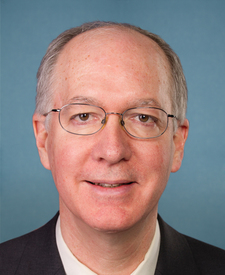
Bill Foster
D-IL | Primary Sponsor
Legislative Progress
In CommitteeMr. Foster (for himself and Mr. Obernolte) introduced the following …
Referred to the House Committee on the Judiciary.
Introduced in House
Stakeholder Effects
cui bono?How this legislation distributes effects. Mention counts reflect frequency, not effect magnitude.
Russian STEM applicants undergoing vetting, Spouses of eligible Russian STEM graduates
DHS immigration officers, State Department consular officers
Bill Structure & Actor Mappings
Who is "The Secretary" in each section?
- "dhs"
- → Secretary of Homeland Security
- "state"
- → Secretary of State
- "defense"
- → Secretary of Defense
- "applicant"
- → Russian STEM doctoral graduate
Key Definitions
Terms defined in this bill
A Russian national with a U.S. doctoral degree or equivalent foreign degree in a covered STEM field who seeks admission to work in that field.
Includes advanced computing, AI, robotics, biotechnology, cybersecurity, hypersonics, quantum information, renewable energy, semiconductors, space technologies, and other listed technical fields.
We use a combination of our own taxonomy and classification in addition to large language models to assess meaning and potential beneficiaries. High confidence means strong textual evidence. Always verify with the original bill text.
Learn more about our methodology