Global Fairness in Drug Pricing Act
Summary
What This Bill Does
The Global Fairness in Drug Pricing Act requires HHS, working with CMS and other federal agencies, to propose a rulemaking plan within 30 days to impose most-favored-nation price targets on pharmaceutical manufacturers so U.S. patient prices are comparable to prices in comparably developed countries. HHS must certify to Congress that importation under Federal Food, Drug, and Cosmetic Act section 804(j) poses no public health and safety risk and will significantly reduce prescription drug costs for U.S. patients, and must describe circumstances where individual importation waivers from developed low-cost countries will be consistently granted. The Attorney General and the FTC Chair must undertake antitrust enforcement against anticompetitive practices by pharmaceutical manufacturers, using Sherman Act sections 1 and 2 and FTC Act section 5 as appropriate. HHS must facilitate direct-to-consumer purchasing programs for manufacturers selling to U.S. patients at prices determined under the MFN rulemaking. Commerce and USTR must study whether manufacturer acts, policies, or practices are unreasonable or discriminatory because they impair national security, force U.S. patients to subsidize global pharmaceutical markets, or otherwise disadvantage U.S. patients.
Who Benefits and How
U.S. prescription-drug patients benefit if MFN targets, importation waivers, antitrust enforcement, and direct purchasing reduce prices. Medicare and CMS programs benefit if lower manufacturer prices reduce federal drug spending. Developed-country importation channels benefit from a clearer path for individual importation waivers. Direct-to-consumer drug purchasing programs benefit if HHS facilitates manufacturer sales at MFN-based prices.
Who Bears the Burden and How
Pharmaceutical manufacturers face MFN price targets, antitrust scrutiny, import competition, direct-purchasing pressure, and trade-policy review. HHS and CMS staff must propose rulemaking, certify importation safety and savings, define waiver circumstances, and facilitate purchasing programs. DOJ Antitrust Division and FTC staff must pursue anticompetitive-practice enforcement where consistent with law. Commerce and USTR staff must study discriminatory manufacturer practices and national-security or trade effects.
Key Provisions
- Requires HHS and CMS to propose most-favored-nation drug price targets within 30 days.
- Requires HHS to certify that section 804(j) importation is safe and significantly lowers U.S. patient costs.
- Requires HHS to describe when individual importation waivers from developed low-cost countries will be granted.
- Directs DOJ and FTC to enforce antitrust laws against anticompetitive pharmaceutical manufacturer practices.
- Directs HHS to facilitate direct-to-consumer purchasing at MFN-based prices.
- Requires Commerce and USTR to study discriminatory manufacturer practices affecting U.S. patients and national security.
Evidence Chain:
This summary is generated from the full bill text using AI analysis. Expand "Detailed Analysis" below for identified beneficiaries/burden bearers with clause-level evidence links.
At a Glance
What This Bill Does
Directs HHS to pursue most-favored-nation prescription-drug price targets, certify and implement individual importation waivers from developed low-cost countries, directs DOJ and FTC to enforce antitrust law against pharmaceutical manufacturers, directs HHS to facilitate direct-to-consumer purchasing at MFN prices, and requires Commerce and USTR to study discriminatory manufacturer practices that shift global drug costs onto U.S. patients.
Key Policy Areas
Prescription Drugs, Health Care, Antitrust, Trade
Primary Purpose
Directs HHS to pursue most-favored-nation prescription-drug price targets, certify and implement individual importation waivers from developed low-cost countries, directs DOJ and FTC to enforce antitrust law against pharmaceutical manufacturers, directs HHS to facilitate direct-to-consumer purchasing at MFN prices, and requires Commerce and USTR to study discriminatory manufacturer practices that shift global drug costs onto U.S. patients.
Policy Domains
Resolution provisions
Identified Gains
- U.S. prescription-drug patients
- Medicare programs
- Importation pharmacies
- Direct-to-consumer drug purchasing programs
Identified Costs
- Pharmaceutical manufacturers
- HHS drug-pricing staff
- DOJ Antitrust Division
- FTC competition staff
- Commerce trade analysts
- USTR staff
Sponsors



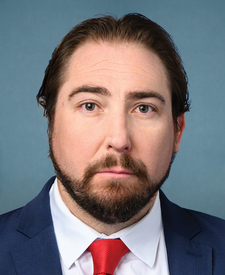

Legislative Progress
In CommitteeMr. Khanna (for himself, Mrs. Luna, Ms. Kaptur, and Mr. …
Referred to the Committee on Energy and Commerce, and in …
Introduced in House
Stakeholder Effects
cui bono?How this legislation distributes effects. Mention counts reflect frequency, not effect magnitude.
Direct-to-consumer drug purchasing programs, Importation pharmacies, Pharmaceutical manufacturers
Positive-direction: Direct-to-consumer drug purchasing programs, Importation pharmacies
Negative-direction: Pharmaceutical manufacturers
DOJ Antitrust Division, FTC competition staff, HHS drug-pricing staff
Bill Structure & Actor Mappings
Who is "The Secretary" in each section?
We use a combination of our own taxonomy and classification in addition to large language models to assess meaning and potential beneficiaries. High confidence means strong textual evidence. Always verify with the original bill text.
Learn more about our methodology