To amend the Small Business Act to eliminate certain requirements relating to the award of construction subcontracts within the county or State of performance.
Summary
What This Bill Does
This bill repeals paragraph (11) of section 8(a) of the Small Business Act. That paragraph is the rule requiring certain construction subcontracts under the 8(a) program to be awarded within the county or state of performance. Repeal removes the geographic subcontracting restriction for covered 8(a) construction work. The practical effect is to give 8(a) prime contractors and federal procurement officials more flexibility in choosing subcontractors based on availability, capability, price, or other procurement needs rather than local geography. The tradeoff is that local subcontractors near the project site lose a statutory preference or set-aside pathway attached to the location of performance.
Who Benefits and How
8(a) construction prime contractors benefit from more flexibility to use subcontractors outside the county or state where work is performed. Out-of-state construction subcontractors benefit because they can compete for 8(a) construction subcontracts previously constrained by location. Federal contracting officers benefit from simpler subcontracting geography rules for 8(a) construction awards. Small disadvantaged construction firms with regional capacity benefit if they can bid across more project locations.
Who Bears the Burden and How
Local construction subcontractors lose a geographic preference for covered 8(a) construction subcontracting. SBA 8(a) program staff must update guidance and oversight after repeal. Community advocates for local project participation may see less guaranteed local subcontracting. Construction subcontractors near federal project sites face broader competition.
Key Provisions
- Repeals Small Business Act section 8(a)(11).
- Removes the requirement relating to award of construction subcontracts within the county or state of performance.
- Allows covered 8(a) construction subcontracting to use nonlocal subcontractors.
Evidence Chain:
This summary is generated from the full bill text using AI analysis. Expand "Detailed Analysis" below for identified beneficiaries/burden bearers with clause-level evidence links.
At a Glance
What This Bill Does
Repeals the Small Business Act section 8(a) construction-subcontracting requirement tied to the county or state of performance, giving 8(a) construction prime contractors more flexibility to select subcontractors outside the project county or state.
Key Policy Areas
Small Business, Federal Contracting, Construction
Primary Purpose
Repeals the Small Business Act section 8(a) construction-subcontracting requirement tied to the county or state of performance, giving 8(a) construction prime contractors more flexibility to select subcontractors outside the project county or state.
Policy Domains
Resolution provisions
Identified Gains
- 8(a) construction prime contractors
- Out-of-state construction subcontractors
- Federal contracting officers
- Small disadvantaged construction firms
Identified Costs
- Local construction subcontractors
- SBA 8(a) program staff
- Community advocates
- Construction subcontractors near project sites
Sponsors


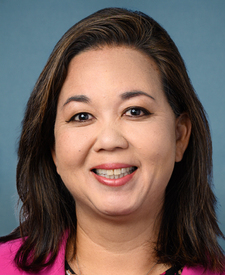


Legislative Progress
In CommitteeMr. Begich (for himself, Mr. Cole, Ms. Tokuda, Mr. Stauber, …
Referred to the House Committee on Small Business.
Introduced in House
Stakeholder Effects
cui bono?How this legislation distributes effects. Mention counts reflect frequency, not effect magnitude.
8(a) construction prime contractors, Local construction subcontractors, Out-of-state construction subcontractors
Positive-direction: 8(a) construction prime contractors, Out-of-state construction subcontractors, Small disadvantaged construction firms
Negative-direction: Local construction subcontractors
Federal contracting officers, SBA 8(a) program staff
Positive-direction: Federal contracting officers
Negative-direction: SBA 8(a) program staff
Bill Structure & Actor Mappings
Who is "The Secretary" in each section?
We use a combination of our own taxonomy and classification in addition to large language models to assess meaning and potential beneficiaries. High confidence means strong textual evidence. Always verify with the original bill text.
Learn more about our methodology