When Minutes Count for Emergency Medical Patients Act
Summary
What This Bill Does
The When Minutes Count for Emergency Medical Patients Act requires the Center for Medicare and Medicaid Innovation to include a When Minutes Count for EMS Patients model. The model provides supplemental payment for ground and air ambulance services under Medicare for specified life-sustaining EMS medications and blood products that require immediate administration by EMS professionals to individuals with emergency medical conditions. Applicants must show they can provide quality-of-care, outcomes, emergency department, inpatient, ICD-10, and NEMSIS data. HHS must select at least one eligible entity in each HHS region and, where feasible, at least one of each EMS agency type. Payments are in addition to ordinary ambulance payments, paid monthly or quarterly, and based on costs to maintain sufficient supplies of shortage-prone EMS medications, acquire, store, maintain, transport, administer, and manage blood products, serve all patients in the primary service area, and maintain software and data integration. HHS must evaluate effects on medication and blood-product use, patient outcomes, Medicare and Medicaid morbidity and mortality, and related measures after the model ends. MedPAC must report within two years on EMS payment, EMS medical directors, EMS professionals, quality assurance, modernized EMS treat-in-place or alternate-destination care, and payment models for physician medical direction and oversight.
Who Benefits and How
EMS patients benefit because ambulance providers can be paid to maintain life-sustaining medications and blood products before emergencies occur. Ground ambulance providers benefit from supplemental Medicare payments beyond ordinary section 1834 ambulance payments. Air ambulance providers benefit from the same model payments for blood products, EMS medications, storage, transport, and data systems. EMS medical directors benefit because MedPAC must evaluate whether Medicare payment supports medical direction and oversight.
Who Bears the Burden and How
CMMI staff must implement the model across HHS regions and EMS agency types. Participating EMS agencies must submit quality, outcome, ICD-10, NEMSIS, emergency department, and inpatient data. MedPAC staff must complete a two-year EMS payment and quality report. Federal taxpayers bear the cost of supplemental monthly or quarterly model payments.
Key Provisions
- Adds the When Minutes Count for EMS Patients Model to CMMI's required model list.
- Authorizes supplemental Medicare payments for EMS medications and blood products requiring immediate administration.
- Requires participant data on quality, outcomes, emergency department care, inpatient care, ICD-10, and NEMSIS dispositions.
- Requires regional and geographic diversity in model participation and a post-model HHS report.
- Requires a MedPAC report on EMS medical direction, professionals, quality assurance, and Medicare EMS payment modernization.
Evidence Chain:
This summary is generated from the full bill text using AI analysis. Expand "Detailed Analysis" below for identified beneficiaries/burden bearers with clause-level evidence links.
At a Glance
What This Bill Does
Adds a CMMI model for supplemental Medicare payments to ground and air ambulance providers for immediate EMS medications and blood products, with regional participation, data reporting, lump-sum payments, a post-model HHS report, a MedPAC EMS payment report, and EMTALA guidance.
Key Policy Areas
Medicare, Emergency Medical Services, Ambulance
Primary Purpose
Adds a CMMI model for supplemental Medicare payments to ground and air ambulance providers for immediate EMS medications and blood products, with regional participation, data reporting, lump-sum payments, a post-model HHS report, a MedPAC EMS payment report, and EMTALA guidance.
Policy Domains
Resolution provisions
Identified Gains
- EMS patients
- Ground ambulance providers
- Air ambulance providers
- EMS medical directors
Identified Costs
- CMMI staff
- Participating EMS agencies
- MedPAC staff
- Federal taxpayers
Sponsors

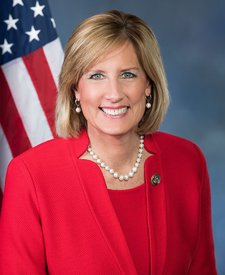


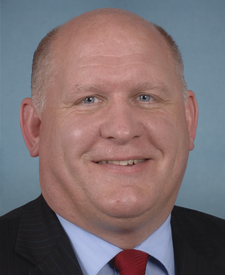
Legislative Progress
In CommitteeMr. Hudson (for himself and Mrs. Dingell) introduced the following …
Referred to the Committee on Energy and Commerce, and in …
Introduced in House
Stakeholder Effects
cui bono?How this legislation distributes effects. Mention counts reflect frequency, not effect magnitude.
Air ambulance providers, EMS medical directors, EMS patients
Positive-direction: Air ambulance providers, EMS medical directors, EMS patients, Ground ambulance providers
Negative-direction: Participating EMS agencies
Bill Structure & Actor Mappings
Who is "The Secretary" in each section?
We use a combination of our own taxonomy and classification in addition to large language models to assess meaning and potential beneficiaries. High confidence means strong textual evidence. Always verify with the original bill text.
Learn more about our methodology