Water Affordability, Transparency, Equity, and Reliability Act of 2025
Summary
What This Bill Does
The Water Affordability, Transparency, Equity, and Reliability Act creates a dedicated federal water trust fund. It raises the corporate tax rate from 21 percent to 24.5 percent for taxable years after 2024 and appropriates the resulting revenue increase to a Water Affordability, Transparency, Equity, and Reliability Trust Fund, capped annually at the larger of $35 billion or one-twentieth of EPA's identified 20-year drinking-water and clean-water needs. Trust Fund allocations include 42 percent for Clean Water Act state revolving fund capitalization grants, 42 percent for Safe Drinking Water Act state revolving fund capitalization grants, 3 percent for school drinking-water infrastructure, 3 percent for Indian Health Service water, sewer, and sanitation facilities, 1 percent for USDA household water well grants, 0.5 percent for USDA colonia water grants, and 0.5 percent for Labor Department water operator job training. The bill orders an EPA and DOJ Civil Rights Division study of water affordability, disconnections, discriminatory practices, civil-rights violations, regionalization participation, people without water or sewer service, liens, foreclosures, and disparate impacts. It raises household well funding to $348.5 million annually, allows clean-water and drinking-water revolving funds to support public acquisition of privately owned treatment works or community water systems, blocks some funding for projects serving new communities or subdivisions, expands lead-free school drinking infrastructure grants to $1.05 billion through 2027, requires drinking-water set-asides for disadvantaged communities, creates water workforce grants with at least half the funds targeted to low-income, high-poverty, high-unemployment, communities of color, Tribal, indigenous, or worker-organization groups, and raises colonia drinking-water assistance to $100 million for 2025 through 2029.
Who Benefits and How
Public water systems benefit from large new clean-water and drinking-water revolving fund capitalization grants. Disadvantaged communities benefit from drinking-water set-asides, affordability study attention, and targeted water workforce grants. Schools benefit from $1.05 billion for lead-free drinking fountains, coolers, bottle filling stations, monitoring, and reporting. Tribal sanitation projects benefit from Trust Fund allocations to Indian Health Service water, sewer, and solid waste facilities. Water workers benefit from Labor Department grants for pre-apprenticeships, apprenticeships, and job training in drinking water, wastewater, stormwater, and related sectors.
Who Bears the Burden and How
Corporations bear the cost of the corporate tax rate increase from 21 percent to 24.5 percent. EPA water program staff must administer trust-fund allocations, revolving fund changes, lead-free school grants, affordability studies, and civil-rights data collection. Private water utilities face new acquisition risk because revolving funds may support purchases from willing or unwilling sellers and contract-cancellation costs. States receiving water funds must comply with new project limits, set-asides, reporting, regionalization, and public-participation expectations. Labor Department grant staff must run the water operator jobs training program and track employment outcomes.
Key Provisions
- Creates the Water Affordability, Transparency, Equity, and Reliability Trust Fund using revenue from a 24.5 percent corporate tax rate.
- Funds clean-water and drinking-water revolving funds, school lead-free drinking infrastructure, household wells, IHS sanitation facilities, colonias, and water workforce training.
- Requires EPA and DOJ study of water affordability, disconnections, discrimination, civil-rights violations, regionalization, liens, foreclosures, and service gaps.
- Expands public acquisition authority for privately owned treatment works and community water systems through revolving funds.
- Requires water operator training grants with targeted support for low-income communities, communities of color, Tribal communities, indigenous communities, and worker organizations.
Evidence Chain:
This summary is generated from the full bill text using AI analysis. Expand "Detailed Analysis" below for identified beneficiaries/burden bearers with clause-level evidence links.
At a Glance
What This Bill Does
Raises the corporate tax rate to 24.5 percent to fund a Water Affordability, Transparency, Equity, and Reliability Trust Fund, then directs large allocations to clean-water and drinking-water revolving funds, lead-free school drinking infrastructure, household wells, Indian Health Service sanitation facilities, water operator jobs training, colonias, affordability and civil-rights studies, and public acquisition of private water systems.
Key Policy Areas
Water Infrastructure, Tax, Environmental Justice, Labor
Primary Purpose
Raises the corporate tax rate to 24.5 percent to fund a Water Affordability, Transparency, Equity, and Reliability Trust Fund, then directs large allocations to clean-water and drinking-water revolving funds, lead-free school drinking infrastructure, household wells, Indian Health Service sanitation facilities, water operator jobs training, colonias, affordability and civil-rights studies, and public acquisition of private water systems.
Policy Domains
Resolution provisions
Identified Gains
- Public water systems
- Disadvantaged communities
- Schools
- Tribal sanitation projects
- Water workers
- Colonias
Identified Costs
- Corporations
- EPA water program staff
- Private water utilities
- States receiving water funds
- Labor Department grant staff
- USDA rural water staff
Sponsors


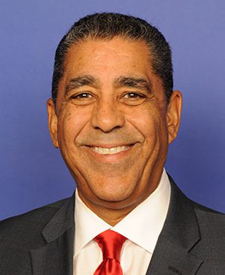


Legislative Progress
In CommitteeMrs. Watson Coleman (for herself, Mr. Khanna, Ms. Balint, Mr. …
Referred to the Subcommittee on Water Resources and Environment.
Referred to the Committee on Transportation and Infrastructure, and in …
Introduced in House
Stakeholder Effects
cui bono?How this legislation distributes effects. Mention counts reflect frequency, not effect magnitude.
EPA water program staff, Labor Department grant staff
Bill Structure & Actor Mappings
Who is "The Secretary" in each section?
We use a combination of our own taxonomy and classification in addition to large language models to assess meaning and potential beneficiaries. High confidence means strong textual evidence. Always verify with the original bill text.
Learn more about our methodology